

Beyond the Surface: Unpacking the Philosophical Divide Between Quality and Relation
Understanding the fundamental distinctions in how we perceive and describe reality is a cornerstone of philosophical inquiry. Among these, the difference between Quality and Relation stands out as particularly crucial, guiding our understanding of objects, properties, and their interactions. At its core, Quality describes the intrinsic, inherent characteristics of a thing – what kind of thing it is – while Relation describes how one thing stands in connection to or in comparison with another. Grasping this distinction, deeply explored throughout the Great Books of the Western World, from Aristotle's Categories to later empiricist and rationalist debates, is essential for clear thought, sound Logic, and a nuanced appreciation of the world's complexities.
The Intrinsic Nature: What is Quality?
When we speak of Quality in a philosophical sense, we are referring to those inherent attributes, properties, or characteristics that define a thing's nature, independent of its connection to other things. It answers the question, "What is it like?" or "What kind of thing is it?" These are the features that describe an entity's "suchness."
- Definition: A Quality is an intrinsic characteristic or attribute that belongs to a subject, making it what it is. It is a property that can be predicated of a single entity without necessarily referring to anything else.
- Examples:
- The redness of an apple.
- The smoothness of a stone.
- The knowledge of a scholar.
- The heat of a flame.
- The squareness of a block.
Philosophers, notably Aristotle in his Categories, classified Quality as one of the fundamental ways in which things can be described. It’s about the inherent features that make an entity distinct in itself, rather than how it relates to something external.
The Interconnected Web: What is Relation?
In contrast, Relation moves beyond the singular entity to describe the connections, comparisons, or dependencies between two or more things. It answers the question, "How does this thing stand with respect to another?" or "What is its connection to something else?" Relations are inherently relational; they require at least two terms to make sense.
- Definition: A Relation is a connection, comparison, or interaction that exists between two or more entities. It describes how one thing is positioned, linked, or compared to another.
- Examples:
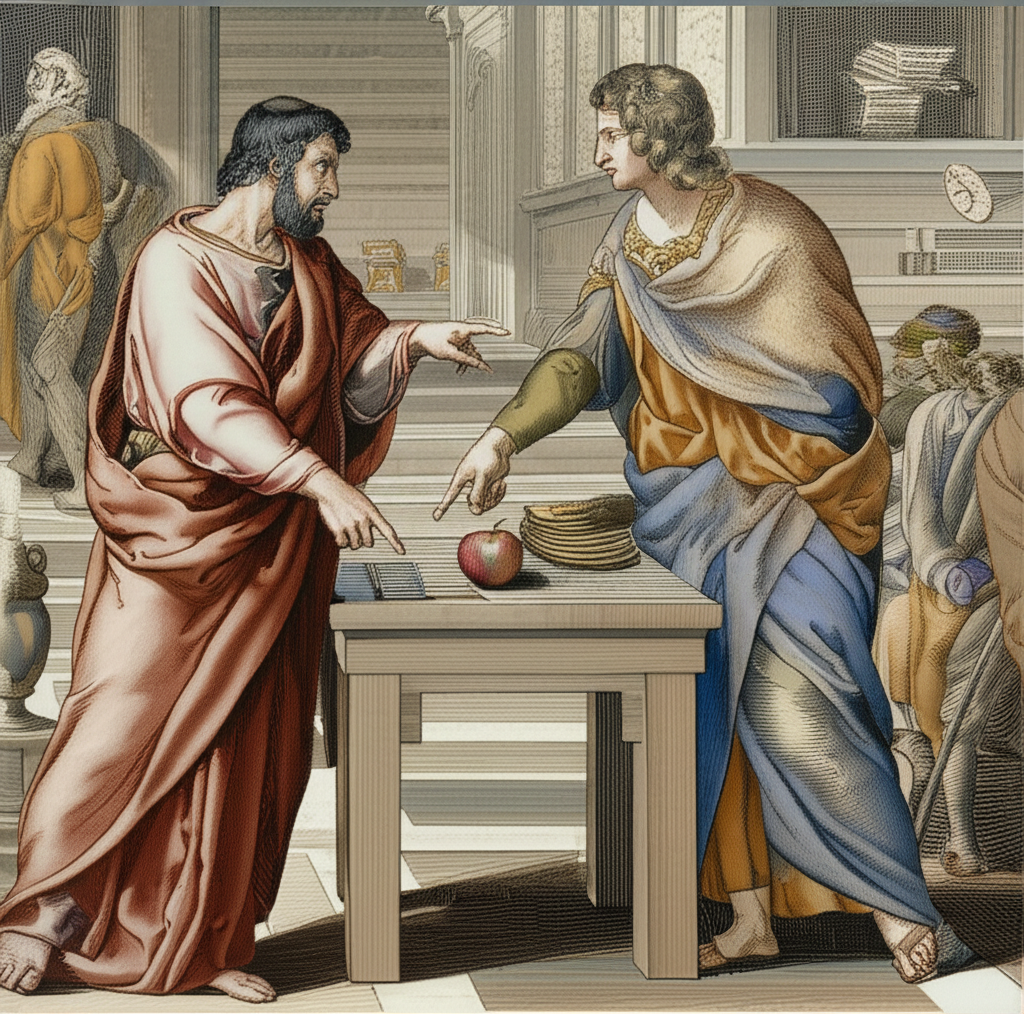
- The apple is on the table.
- John is taller than Mary.
- The son is of the father.
- The cause is of the effect.
- Object A is similar to Object B.
Like Quality, Relation is another of Aristotle's ten categories, highlighting its fundamental role in our understanding of existence. It underscores the idea that nothing truly exists in isolation; everything is part of a larger, interconnected fabric of reality.
Bridging the Divide: Quality vs. Relation in Philosophical Thought
The distinction between Quality and Relation is not merely semantic; it has profound implications for Logic, metaphysics, and epistemology. Confusing the two can lead to flawed arguments and a misunderstanding of how the world is structured.
| Feature | Quality | Relation |
|---|---|---|
| Focus | Intrinsic attributes of a single entity | Connection/comparison between entities |
| Description | "What it is" / "What kind of thing it is" | "How it stands to another" / "Ofness" |
| Independence | Can exist independently of other things | Necessarily involves at least two things |
| Alteration | Can change without necessarily affecting others | Changes if one of the related terms changes |
| Logical Form | Monadic predicate (e.g., "Socrates is wise") | Dyadic/Polyadic predicate (e.g., "Socrates is taller than Plato") |
| Example | The ball is round. | The ball is under the chair. |
Consider the statement: "The sun is bright." Here, "bright" describes an intrinsic Quality of the sun. It tells us something about the sun itself. Now consider: "The sun is larger than the Earth." Here, "larger than" is a Relation that describes a comparison between the sun and the Earth. The sun's brightness doesn't depend on the Earth, but its "larger than" status absolutely does.
Why This Matters: The Deeper Implications for Understanding Reality
The philosophical distinction between Quality and Relation has been a recurring theme in the Great Books because of its foundational importance across various domains:
- Metaphysics: How do we categorize reality? Are properties inherent to substances, or are they always relational? This distinction helps us understand debates about substance, accidents, and the nature of being itself.
- Epistemology: How do we know what we know? Do we perceive qualities directly, and then infer relations, or are relations equally primary in our understanding? Thinkers like Locke, discussing simple and complex ideas, or Hume, differentiating "relations of ideas" from "matters of fact," grappled with these very concepts.
- Logic and Language: For sound reasoning, it is critical to correctly identify whether a statement is asserting a quality or a relation. Misattributing a quality as a relation (or vice versa) can lead to fallacies and illogical conclusions. Our language often blurs these lines, making philosophical clarity even more essential. For instance, "heavy" can be a quality, but "heavier than" is a relation.
Understanding this difference allows us to articulate more precisely what we mean when we describe the world. It helps us avoid muddling intrinsic properties with comparative or dependent connections, leading to clearer thought and more robust philosophical arguments.
Conclusion
The concepts of Quality and Relation are more than just academic terms; they are fundamental categories through which we apprehend and articulate reality. From the ancient Greeks who first systematically categorized them, to the modern analytic philosophers who continue to refine our understanding, this distinction remains a vital tool. By discerning what a thing is (its quality) from how it stands to another (its relation), we equip ourselves with a powerful framework for critical thinking, enabling us to navigate the intricate landscape of philosophical inquiry and the complexities of our everyday experience with greater precision and insight.
*## 📹 Related Video: ARISTOTLE ON: The Nicomachean Ethics
Video by: The School of Life
💡 Want different videos? Search YouTube for: "Aristotle's Categories explained"*
*## 📹 Related Video: What is Philosophy?
Video by: The School of Life
💡 Want different videos? Search YouTube for: "Philosophy of Properties and Relations"*