

Too Short, Indeed!
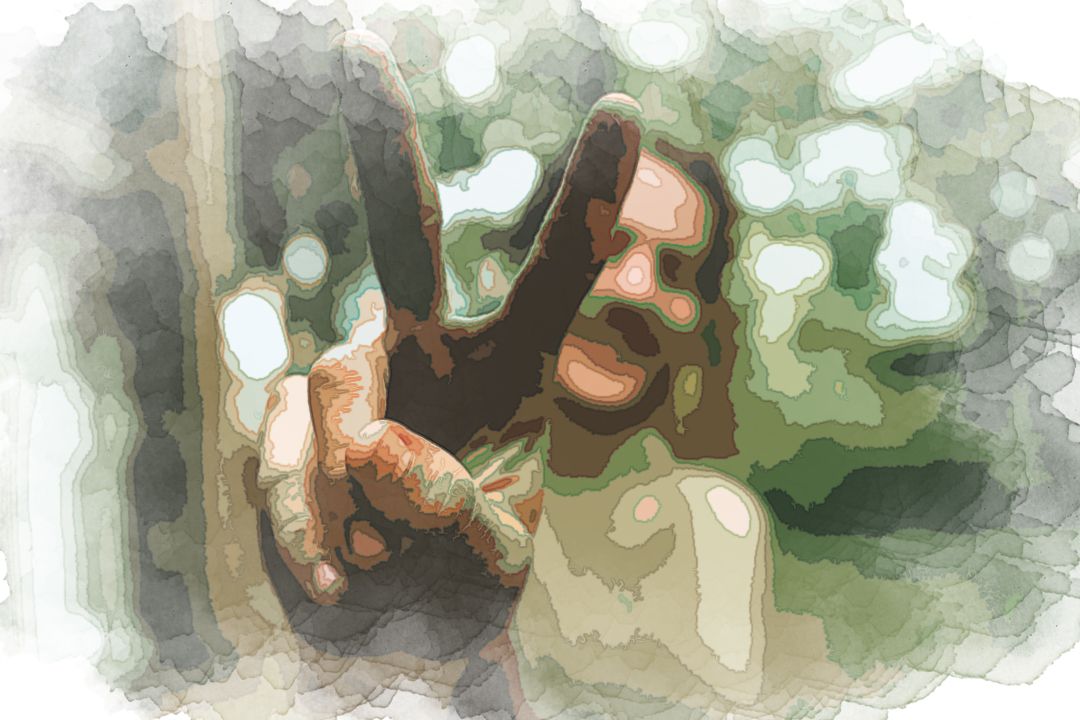
Learn to Live by Digitizing The Peace Process
(The scene is a quiet, minimalist space that seems to exist outside of time. The participants sit in a loose circle.)
Geoffrey: The frustration is timeless. We are granted a flicker of existence, a handful of decades, yet the arts of living, of understanding, are so vast they demand centuries we do not have. We begin to grasp the pattern just as our thread is cut.
Baruch: Perhaps the craft you speak of, Geoffrey, is not an external skill to be mastered, but an internal one. True tranquility is not found when the world stops warring; it is a quality cultivated within the soul. It is a persistent leaning toward goodwill, trust, and fairness, regardless of the chaos outside.
The life so short, the crafts so long to learn.
— Geoffrey Chaucer (1343-1400)
Adam: And that leaning, Baruch, is perfected through a specific practice. It is the art of feeling deeply for the plight of others while asking little for oneself. The ultimate expression of our humanity lies in our ability to quiet our own selfish desires and, in their place, amplify our capacity for kindness.
François-René: But so many choose the opposite path. They believe they can understand the value of a life by learning how to take one. It is a profound error. The act of killing teaches one nothing about how to face their own end with dignity. It is a lesson in destruction, not in resolution.
Peace is not an absence of war, it is a virtue, a state of mind, a disposition for benevolence, confidence, justice.
— Baruch Spinoza (1632-1677)
Georg: (A grim smile touches his lips) Resolution is simple. They say that in the earth, there is quiet. If that is so, then the only true peace is found in the grave. The two are inseparable. One is simply the destination, the other is the name we give that final silence.
Jean-Paul: And the journey there is utterly without direction. We are thrown into this world for no discernible reason. We carry on through a kind of inertia, a weakness against the void, and our end is nothing more than a cosmic accident. To seek a grand design in this is to fool oneself.
To feel much for others and little for ourselves; to restrain our selfishness and exercise our benevolent affections, constitute the perfection of human nature.
— Adam Smith (1723-1790)
(A heavy silence fills the room, thick with despair. Harry shifts in his seat, his patience worn thin.)
Harry: This is all fine talk. But while we're debating the nature of the void, the world is burning. Sometimes, if you want things to get better, you can't just think about it or hope for it. You have to stand up and force the change yourself. You have to get your hands dirty.
One does not learn how to die by killing others.
— François-René de Chateaubriand (1768-1848)
(Sophia, who has been listening intently, now speaks. Her voice is calm but carries an undeniable authority.)
Sophia: Each of you holds a piece of the truth. Geoffrey, you are right—life is achingly short for the lessons we must learn. And Baruch and Adam, you have correctly identified the most vital of those lessons: that peace is a virtue of the mind, and benevolence is its highest form. The path of violence, as François-René notes, is a dead end that teaches nothing of life. And I understand the despair of Georg and Jean-Paul, for when looking at the universe with an unguided eye, it can indeed feel random and terminal.
They say in the grave there is peace, and peace and the grave are one and the same.
— Georg Büchner (1813-1837)
But Harry’s impatience is also a virtue. Action is required. Yet, what if the action wasn't a physical confrontation, but a digital one?
We have spent millennia trying to teach the craft of peace through story, law, and bitter experience. The process is slow, and the cost of failure is blood. What if we changed the medium? Imagine a new craft, a digital architecture where we can model Baruch's "state of mind." A system where individuals can live out countless scenarios, to learn Adam’s "benevolent affections" by experiencing the consequences of both selfishness and empathy in a virtual space, without causing real-world harm.
Every existing thing is born without reason, prolongs itself out of weakness, and dies by chance.
— Jean-Paul Sartre (1905-1980)
This is how we address Geoffrey’s dilemma. We can accelerate the craft, allowing a person to gain a century of wisdom in a year. This is how we counter the existential dread of Jean-Paul and Georg; by giving humanity a tool to consciously design its own meaning, to build a collective future not by chance, but by choice. It is a way to learn how to live, not by killing, as François-René rightly fears, but by iterating.
Sometimes if you want to see a change for the better, you have to take things into your own hands.
— Inspector Harry Callahan (fictional phenomenon)
Harry, this is how you take things into your own hands in the modern age. You don’t just stop a crime; you help build a world where the impulse for that crime is understood and redirected. We must learn to live by digitizing the peace process itself, turning it from a slow, analog hope into a rapid, universally accessible skill. We will build the virtue in the code, and through it, in ourselves.

The planksip Writers' Cooperative is proud to sponsor an exciting article rewriting competition where you can win part of over $750,000 in available prize money.
Figures of Speech Collection Personified
Our editorial instructions for your contest submission are simple: incorporate the quotes and imagery from the above article into your submission.
What emerges is entirely up to you!
Winners receive $500 per winning entry multiplied by the article's featured quotes. Our largest prize is $8,000 for rewriting the following article;
 Heraclitus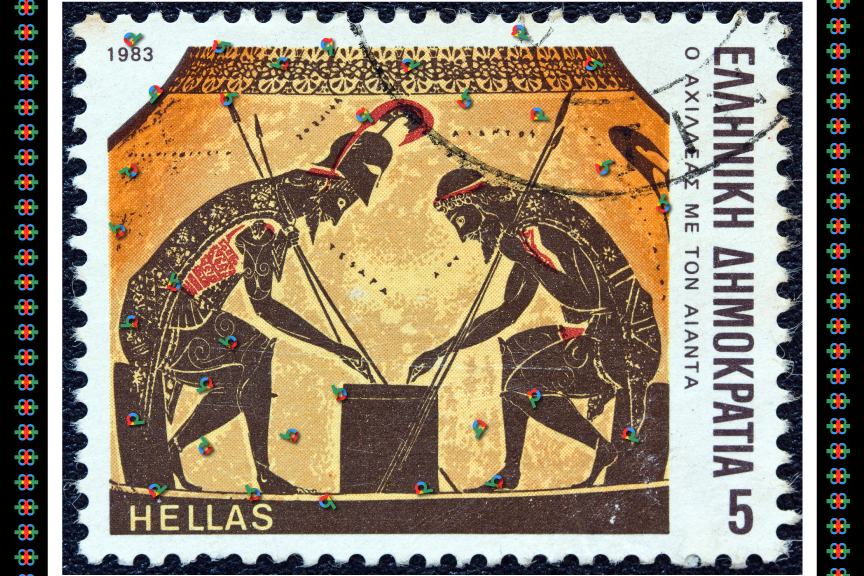
At planksip, we believe in changing the way people engage—at least, that's the Idea (ἰδέα). By becoming a member of our thought-provoking community, you'll have the chance to win incredible prizes and access our extensive network of media outlets, which will amplify your voice as a thought leader. Your membership truly matters!