

The Profound Distinction: Unraveling Quality and Relation in Philosophy
Welcome to planksip, where we delve into the foundational concepts that shape our understanding of existence. Today, we confront a distinction that, while seemingly academic, underpins much of our philosophical and everyday reasoning: the difference between Quality and Relation. At its heart, this distinction separates what a thing is inherently from how it stands to other things. Grasping this difference is crucial for clear thinking about identity, perception, and the very structure of reality. We'll explore their definition, delve into their logic, and see why philosophers from Aristotle to Hume have wrestled with these fundamental categories.
Defining Our Terms: What is Quality?
A quality refers to an intrinsic characteristic or property of a thing. It describes what something is like, independent of anything else. Think of it as an attribute that belongs to an object in and of itself. When we speak of a quality, we are often describing an object's essence, its appearance, or its inherent capabilities.
The Essence of Being: Qualities in Classical Thought
From the earliest philosophical inquiries, thinkers have sought to categorize the ways in which things exist. Aristotle, in his Categories, identifies "Quality" (ποῖον, poion) as one of the ten fundamental ways of being. For him, a quality is a predicate that answers the question "Of what kind is it?"
- Examples:
- A red apple (redness is a quality of the apple).
- A heavy stone (heaviness is a quality of the stone).
- A sharp knife (sharpness is a quality of the knife).
- A virtuous person (virtue is a quality of the person).
These are properties that we perceive or understand as belonging to the object itself. They are not dependent on another object for their existence, though they might be perceived by another object.
Primary vs. Secondary Qualities: A Lockean Perspective
Later, John Locke, a prominent figure in the Great Books of the Western World, further refined our understanding of qualities in his Essay Concerning Human Understanding. He distinguished between:
- Primary Qualities: These are inherent properties of an object that exist independently of an observer. They are inseparable from the object itself and include characteristics like solidity, extension, figure, motion, rest, and number. They produce simple ideas in us by impulse.
- Secondary Qualities: These are not inherent in the objects themselves but are powers in objects to produce sensations in us. They depend on the observer's mind and include colors, sounds, tastes, and smells. The apple is not inherently "red" in the same way it is "round"; rather, its surface reflects light in a way that our eyes and brain interpret as red.
This distinction highlights how even within the concept of quality, there are layers of philosophical complexity concerning objective reality versus subjective perception.
Defining Our Terms: What is Relation?
In contrast to quality, a relation describes how one thing stands to or is connected with another thing (or even itself, in some cases). It's not about what a thing is, but how it interacts or compares to something else. Relations are inherently relational; they require at least two terms (or relata) to exist.
Connections and Dependencies: The Nature of Relations
Relations express connections, comparisons, or dependencies between distinct entities. They are external to the intrinsic nature of the individual objects involved, even if those objects' qualities might enable the relation.
- Examples:
- Taller than: An individual is not "taller than" in isolation; they are taller than someone else.
- Father of: A person is a father of a child.
- To the left of: An object is to the left of another object.
- Cause of: An event is the cause of another event.
Hume's Empirical Perspective on Relations
David Hume, another titan from the Great Books, extensively discussed relations in his An Enquiry Concerning Human Understanding. He categorized all objects of human reason into "Relations of Ideas" and "Matters of Fact." While his "Relations of Ideas" primarily concerned mathematical and logical truths (where the relation is discoverable by thought alone, like "a triangle has three sides"), his broader empirical philosophy also grappled with how we perceive and understand relations between "Matters of Fact" (like cause and effect). Hume famously argued that our perception of causal relations is not based on direct observation of a necessary connection, but rather on the constant conjunction of events, leading to a psychological expectation.
Table 1: Key Differences Between Quality and Relation
| Feature | Quality | Relation |
|---|---|---|
| Nature | Intrinsic property of a single thing | Extrinsic connection between two or more things |
| Dependence | Independent of other things | Dependent on other things (relata) |
| Question | What is it like? | How does it stand to something else? |
| Existence | Can exist in isolation (conceptually) | Requires multiple terms to exist |
| Examples | Redness, heaviness, intelligence, roundness | Taller than, next to, parent of, cause of |
The Fundamental Divide: Why Distinguish Them?
The distinction between quality and relation is not merely an exercise in semantic hair-splitting; it has profound implications for logic, metaphysics, and epistemology.
Ontological Implications: What Exists?
Understanding this difference helps us categorize what types of things exist in the world. Does "redness" exist in the same way that "being taller than" exists?
- Qualities often point to the substance of a thing, what makes it what it is.
- Relations describe the arrangement or interaction of substances.
If we confuse them, we might mistakenly attribute intrinsic properties to relational facts or vice-versa, leading to logical fallacies and a distorted view of reality. For instance, if "being a friend" were a quality rather than a relation, it would imply that friendship is an inherent property of a person, existing independently, rather than a dynamic bond between individuals.
Epistemological Implications: How Do We Know?
Our knowledge acquisition processes also differ.
- We often perceive qualities directly through our senses (e.g., seeing a color, feeling a texture).
- We often infer or deduce relations based on observations of multiple entities or events (e.g., observing two objects to determine which is larger, or noting a sequence of events to infer causation).
This distinction impacts how we form concepts and how we justify our beliefs about the world.
Logical Implications: How Do We Reason?
In logic, differentiating between qualities and relations is fundamental to constructing sound arguments and clear propositions.
- A proposition stating a quality typically takes the form "X is P" (e.g., "Socrates is wise"). Here, "wise" is a predicate describing a quality of Socrates.
- A proposition stating a relation typically takes the form "X R Y" (e.g., "Socrates is older than Plato"). Here, "older than" is a relational predicate connecting Socrates and Plato.
Confusing these can lead to misinterpretations of statements and incorrect inferences. For instance, if "being a neighbor" (a relation) was treated as an intrinsic quality, one might incorrectly conclude that a person is a neighbor even if no other person lives nearby. The logic of predication and argument formation relies heavily on this clear conceptual separation.
Interplay and Independence: When Do They Seem to Merge?
While distinct, qualities and relations are not entirely isolated. They often influence and inform each other.
- A specific quality might enable a particular relation. For example, a heavy object (quality) might be heavier than a lighter object (relation). The quality of "heaviness" is intrinsic to each object, but the relation "heavier than" only arises from comparing their respective qualities.
- Conversely, a relation might imply or reveal certain qualities. If X is "the fastest runner," this relation implies the quality of "speed" in X, and indeed, a higher degree of speed than others.
However, it's crucial to remember that even in these cases, the underlying distinction holds. The heaviness exists whether or not there's another object to compare it to; the relation of being heavier than only arises when a comparison is made.
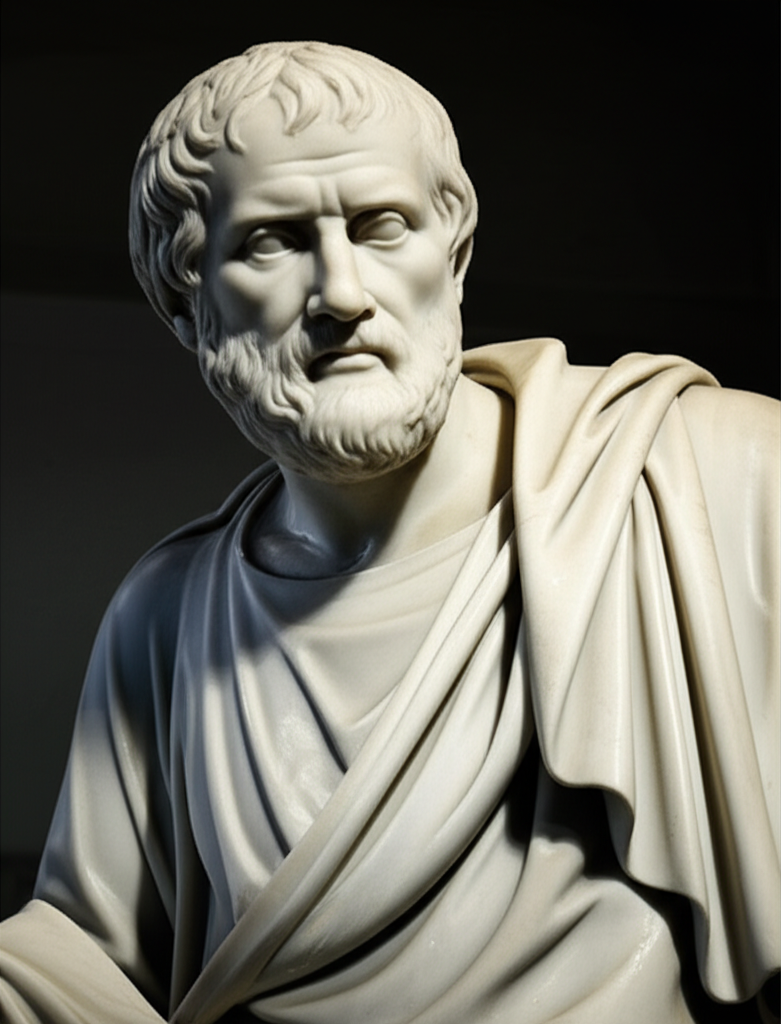 deeply engrossed in thought, perhaps holding a scroll. The background is slightly blurred, suggesting an ancient library or academy, with subtle light emphasizing the contemplative expression and the intricate details of the drapery.)
Historical Perspectives from the Great Books
The ongoing dialogue regarding quality and relation has been a cornerstone of Western philosophy, with numerous thinkers contributing to its understanding.
- Aristotle's Categories: As mentioned, Aristotle laid much of the groundwork, identifying "Quality" and "Relation" as two distinct categories of being. For him, a quality exists in a substance, while a relation exists between substances. This foundational work provided a framework for logical analysis that endured for centuries.
- Plato's Forms: While Plato didn't explicitly separate quality and relation in the same way Aristotle did, his theory of Forms could be seen as an attempt to understand the ultimate nature of qualities. For Plato, the quality of "redness" participated in the eternal Form of Redness, which existed independently of any particular red object. Relations, for Plato, might be seen as connections between these Forms or between objects and Forms.
- The Empiricists (Locke, Berkeley, Hume): These philosophers, particularly Locke and Hume, critically examined how we perceive qualities and relations. Locke's primary/secondary quality distinction questioned the objective reality of certain qualities. Hume, more radically, challenged the objective reality of necessary relations, especially causation, arguing they were products of the mind's habits.
- Kant's Categories of Understanding: Immanuel Kant, in his Critique of Pure Reason, synthesized rationalist and empiricist thought by proposing that the human mind actively structures experience using innate "categories of understanding." Among these categories are "Quality" (Reality, Negation, Limitation) and "Relation" (Inherence/Subsistence, Causality/Dependence, Community/Reciprocity). For Kant, these are not properties of things-in-themselves but rather necessary frameworks through which we comprehend phenomena.
These diverse perspectives from the Great Books illustrate the enduring philosophical challenge of understanding what things are, and how they connect.
Conclusion: The Enduring Significance
The distinction between quality and relation is more than an academic exercise; it's a fundamental tool for clear thinking across all domains of inquiry. Whether we are analyzing a scientific phenomenon, constructing a moral argument, or simply trying to understand our personal experiences, knowing whether we are describing an intrinsic property or an external connection is paramount.
By carefully dissecting these concepts, we gain a deeper appreciation for the intricate tapestry of reality and the subtle yet powerful mechanisms of philosophical thought. The journey through the Great Books reveals that this distinction has been a constant companion in humanity's quest to make sense of the world, shaping our definition of existence and refining our logic.
📹 Related Video: ARISTOTLE ON: The Nicomachean Ethics
Video by: The School of Life
💡 Want different videos? Search YouTube for: ""Aristotle's Categories explained" or "Locke Primary vs Secondary Qualities philosophy""