

The Royal Line vs. The Iron Fist: Unpacking Monarchy and Tyranny
At first glance, both monarchy and tyranny might seem to describe the rule of a single individual. However, delving into the rich tapestry of political philosophy, particularly through the lens of the Great Books of the Western World, reveals a profound and crucial definition that separates these two forms of government. The fundamental difference lies not merely in the number of rulers, but in the purpose and legitimacy of their rule. A monarchy, in its ideal form, governs for the common good, guided by established law and tradition, while a tyranny serves only the self-interest of the ruler, often through arbitrary power and fear.
Defining the Crown: What is a Monarchy?
When we speak of monarchy, we're typically referring to a system of government where supreme authority is vested in a single individual, the monarch, who serves as head of state for life or until abdication. Historically, this position is often hereditary, passing through a royal lineage. Philosophers from Aristotle to Locke have grappled with the concept, often seeing it as a legitimate form of rule when exercised for the benefit of the governed.
A true monarchy, as envisioned by many classical thinkers, operates within a framework of law and custom. The monarch, while holding significant power, is expected to uphold justice, protect the realm, and ensure the well-being of their subjects. Their authority is often seen as divinely ordained or deeply rooted in historical tradition, lending it a certain moral weight and stability.
- Key Characteristics of Monarchy:
- Rule of One: A single sovereign holds ultimate power.
- Legitimacy: Authority derived from tradition, divine right, or established law.
- Purpose: To govern for the common good and welfare of the people.
- Accountability: Though not always democratic, monarchs are often bound by oaths, religious tenets, or established customs.
- Stability: Succession is usually clear, reducing internal strife over leadership.
The Shadow of Power: Understanding Tyranny
Now, let's turn to tyranny. This is where the distinction becomes stark. A tyranny also involves the rule of a single individual, but the similarities largely end there. The tyrant seizes and maintains power through force, deception, or manipulation, and critically, governs solely for their own private gain, pleasure, or ambition, with little to no regard for the welfare of the populace.
Plato, in his Republic, vividly describes the descent into tyranny as the ultimate corruption of the soul, where the tyrannical man is enslaved by his own insatiable desires. Aristotle likewise classifies tyranny as a perversion of monarchy, where the ruler acts as a master over unwilling subjects. The rule of a tyrant is arbitrary, unpredictable, and often brutal, relying on fear to suppress dissent and maintain control.
- Key Characteristics of Tyranny:
- Rule of One: A single individual holds absolute power.
- Illegitimacy: Authority seized by force or deception, lacking genuine consent or traditional sanction.
- Purpose: To serve the ruler's self-interest, wealth, or power.
- Arbitrary Power: Rule is based on whim rather than law or justice.
- Fear and Oppression: Maintained through violence, surveillance, and suppression of freedoms.
The Crucial Distinction: Monarchy vs. Tyranny
The heart of the matter, then, is the moral compass of the ruler and the source of their authority. It's a distinction that, frankly, we often gloss over in casual conversation, but which has profound implications for the lives of citizens.
| Feature | Monarchy | Tyranny |
|---|---|---|
| Source of Authority | Tradition, hereditary succession, divine right, law | Usurpation, force, manipulation, lack of consent |
| Purpose of Rule | Common good, justice, welfare of the realm | Self-interest, personal gain, preservation of power |
| Nature of Law | Governed by established laws and customs | Arbitrary decrees, rule by whim, disregard for law |
| Public Perception | Legitimacy, respect (ideally), consent | Fear, resentment, oppression, coercion |
| Stability | Inherited, often stable (though not immune to strife) | Volatile, dependent on force, often short-lived |
| Treatment of People | Subjects with rights (to varying degrees) | Slaves or instruments for the ruler's will |
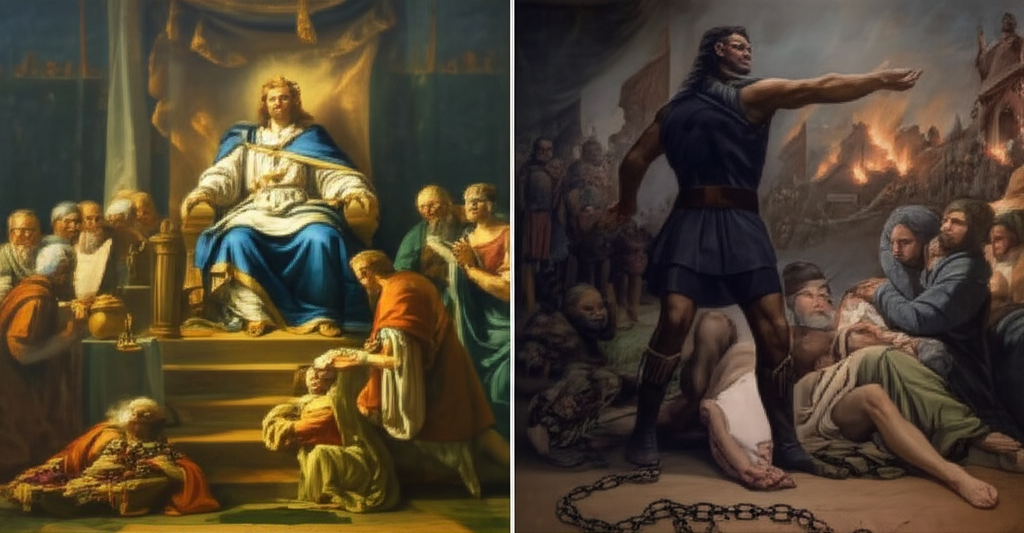
A Philosophical Lens: Insights from the Great Books
The Great Books of the Western World consistently highlight this vital definition. Aristotle, in his Politics, meticulously categorizes government forms, distinguishing between "correct" forms (like monarchy, aristocracy, and polity) that aim for the common good, and their "deviations" or "perversions" (tyranny, oligarchy, and democracy, respectively) which serve the rulers' self-interest. For Aristotle, a king is a ruler for the common good, while a tyrant is a ruler who considers only himself.
Machiavelli, in The Prince, while often interpreted as advocating for ruthless pragmatism, still implicitly acknowledges the distinction. Even his "prince" must maintain the appearance of virtue and secure the support (or at least acquiescence) of the people, lest his rule devolve into pure, unsustainable tyranny based solely on fear. John Locke, building upon earlier traditions, would further cement the idea that legitimate government rests on the consent of the governed, rendering any rule without that consent, inherently tyrannical.
In essence, while both forms concentrate power in one individual, the monarch serves the state and its people, while the tyrant subjugates them to his will. Understanding this difference is not just an academic exercise; it's a critical lens through which we can evaluate leadership and the very nature of political power, a timeless lesson echoing through the corridors of philosophy.
YouTube: "Aristotle forms of government"
YouTube: "Plato's Republic tyranny explained"
📹 Related Video: What is Philosophy?
Video by: The School of Life
💡 Want different videos? Search YouTube for: "The Difference Between Monarchy and Tyranny philosophy"