

Unpacking Reality: The Logical Structure of Definition
The pursuit of clarity, the very bedrock of philosophical inquiry, hinges on our ability to define. Without precise definitions, our reasoning crumbles into ambiguity, and our most profound thoughts risk being misunderstood. As Daniel Sanderson, I've often found myself returning to the ancient wisdom contained within the Great Books of the Western World, where the foundations of logic were meticulously laid. This article explores the fundamental logical structure of definition, revealing how it serves as a critical tool for intellectual precision, allowing us to navigate the intricate relationship between the universal and particular.
The Indispensable Role of Definition in Thought
At its core, philosophy is an exercise in making sense of the world, and this endeavor invariably begins with understanding what we mean by the words we use. A well-constructed definition is not merely a dictionary entry; it's a conceptual scaffold, a logical boundary that demarcates one idea from another. It brings order to the chaos of undifferentiated experience, allowing us to grasp concepts with precision and engage in coherent reasoning. From Aristotle's systematic approach to classification to the Socratic quest for essences, the history of philosophy underscores the vital necessity of defining our terms.
The Aristotelian Blueprint: Genus and Differentia
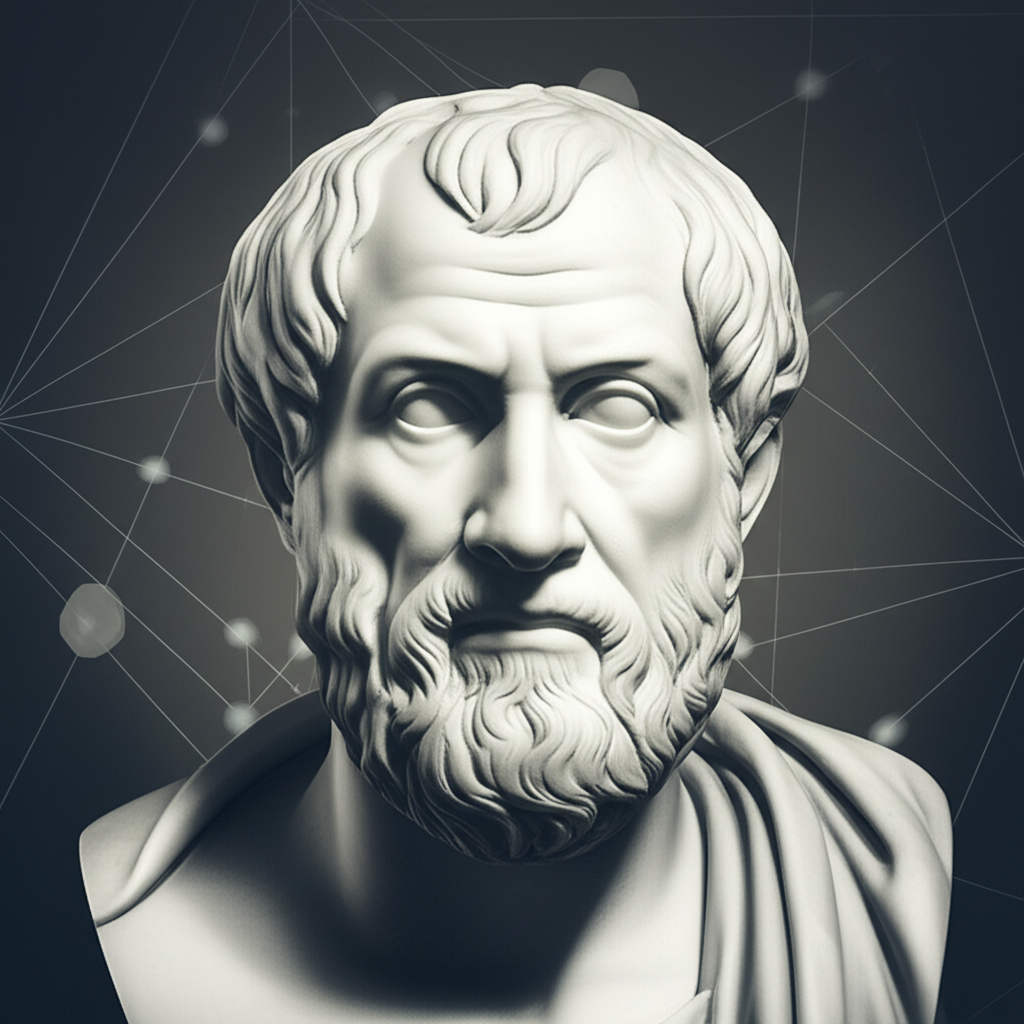
The most enduring and logically robust model for definition comes to us primarily from Aristotle, a cornerstone figure in the Great Books of the Western World. His method, often termed "definition by genus and differentia," provides a powerful framework for dissecting concepts into their fundamental components.
Components of a Logical Definition:
- Genus (Γένος): This refers to the broader class or category to which the item being defined belongs. It identifies the universal aspect – what it shares in common with other similar things. Think of it as the family name.
- Differentia (Διαφορά): This is the specific characteristic or set of characteristics that distinguishes the item from all other members of its genus. It highlights the particular quality that makes it unique within that broader class. This is what sets it apart.
Let's illustrate with a simple example:
| Term to Define | Genus (Broader Category) | Differentia (Distinguishing Characteristic) | Complete Definition |
|---|---|---|---|
| Human | A Rational Animal | Capable of self-awareness and complex thought | A human is a rational animal capable of self-awareness and complex thought. |
| Triangle | A Polygon | With exactly three sides and three angles | A triangle is a polygon with exactly three sides and three angles. |
This structure ensures that a definition is neither too broad nor too narrow, providing a clear boundary for the concept. It is a testament to the power of logic in organizing our understanding.
Why Precision in Definition Fuels Sound Reasoning
The meticulous construction of definitions isn't an academic exercise for its own sake; it is absolutely crucial for sound reasoning. When we argue, debate, or even simply think, we operate with concepts. If those concepts are ill-defined, our arguments become muddled, and our conclusions unreliable.
- Avoiding Ambiguity: Vague definitions lead to equivocation, where a term is used with different meanings in different parts of an argument, rendering the argument invalid.
- Clarifying Thought: The act of defining forces us to scrutinize our own understanding, pushing us to identify the essential attributes of a concept and distinguish them from accidental ones. This process sharpens our logic.
- Facilitating Communication: Clear definitions ensure that all parties in a discussion are operating from the same conceptual ground, minimizing misunderstandings and promoting productive dialogue. This is particularly vital when dealing with complex philosophical concepts like "justice," "freedom," or "truth," where consensus on definition is often the first hurdle to overcome.
The interplay between the universal and particular is paramount here. A good definition effectively bridges the gap, allowing us to understand a specific instance (the particular) by situating it within a broader category (the universal) and then highlighting what makes it distinct.
Beyond Genus and Differentia: Types of Definitions
While the Aristotelian model is foundational, definitions can serve different purposes. Understanding these distinctions further refines our logical toolkit:
- Lexical (Reportive) Definitions: These report the established meaning of a word in a language. They aim to describe how a term is actually used. (e.g., "A 'chair' is a piece of furniture with a raised surface supported by legs, used to sit on.")
- Stipulative Definitions: These assign a new meaning to a word or create a new word. They are often used in science or technology to introduce a new concept or to give a precise meaning to an existing word for a specific context. (e.g., "For the purposes of this experiment, 'stress' will be defined as any physiological response exceeding baseline measurements by 15%.")
- Precising Definitions: These reduce the vagueness of a lexical definition by adding further criteria. They are common in legal contexts or academic discourse where ambiguity must be minimized. (e.g., " 'Poor' for the purposes of this welfare program, refers to individuals whose income falls below 150% of the federal poverty line.")
- Theoretical Definitions: These attempt to provide a theoretical account of the entity in question, often within a scientific or philosophical framework. They go beyond mere description to offer a deeper understanding. (e.g., " 'Water' is H₂O, a molecule composed of two hydrogen atoms and one oxygen atom.")
- Persuasive Definitions: These are definitions designed to influence attitudes or stir emotions. While they may have a descriptive component, their primary function is rhetorical. (e.g., " 'Freedom' is the divine right of every individual to pursue their dreams without the chains of government interference.") These often blur the lines of pure logic and require careful scrutiny.
Conclusion: The Enduring Power of Defined Thought
The logical structure of definition is not merely an academic curiosity; it is an active and essential component of effective reasoning, clear communication, and profound philosophical inquiry. By understanding and applying the principles of definition, particularly the classical model of genus and differentia, we equip ourselves with the intellectual precision necessary to navigate complex ideas, distinguish between the universal and particular, and ultimately, to think more clearly about the world and our place within it. As the great thinkers of the Great Books of the Western World demonstrated, the journey to wisdom often begins with the simple yet profound act of defining our terms.
YouTube Video Suggestions:
-
📹 Related Video: ARISTOTLE ON: The Nicomachean Ethics
Video by: The School of Life
💡 Want different videos? Search YouTube for: "Aristotle Logic Definition Genus Differentia"
-
📹 Related Video: ARISTOTLE ON: The Nicomachean Ethics
Video by: The School of Life
💡 Want different videos? Search YouTube for: "Critical Thinking Avoiding Ambiguity Equivocation"