

Who Are You? Anatomy of the Human Experience
This research project provides an extensive, data-driven look at both the shared and unique aspects of human existence.
October 2, 2025 — 5 min read
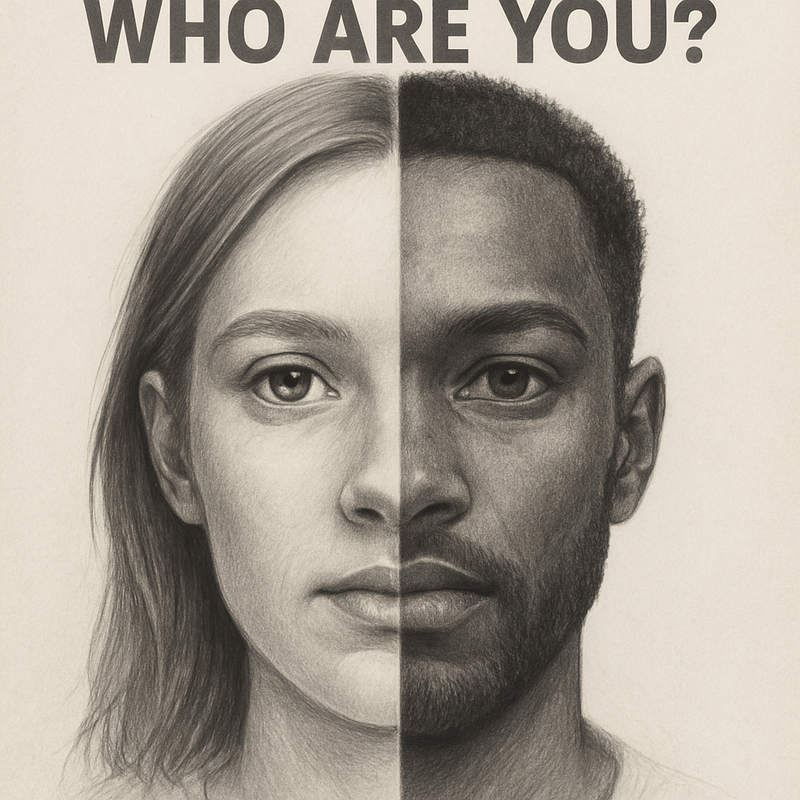
The excerpt from "Who Are You? Anatomy of the Human Experience" provides an extensive, data-driven look at both the shared and unique aspects of human existence. It highlights biological commonalities, such as the fact that human cells largely replace themselves every 7 to 10 years and that we all have belly button scars, alongside details about physical characteristics like the number of facial muscles (43) and variations in hair types and skin tones. The text also explores the vast array of social, psychological, and cultural factors that shape individuality, listing estimates for things like the number of genders (72), worldwide languages (7,100), musical genres (41), and jobs (over 12,000). Furthermore, the source quantifies complex human experiences, enumerating 27 human emotions, seven ways of thinking, 17 major life events, and 47 types of human experiences within broader categories. The conclusion emphasizes that every person is a unique blend of these biological and environmental influences, navigating life between shared traits and diverse experiences across various global contexts, including the world's 195 countries and 12 major religions.
Some things are, within reason, ubiquitous to us all. We’re human beings. We all have belly button scars. We all eat, blink, and move about. Everyone breathes, grows, and digests. The cells in our body all die and are replaced. The body's cells largely replace themselves every 7 to 10 years. In other words, old cells mostly die and are replaced by new ones during this time span.
So, who are you really? You are a wholly unique human being born into, and a product of, the fundamental influencing factors listed. Even though they may seem limiting, you are ‘this’ generation's iteration of a person with the criteria listed here. Biodiversity refers to every living thing, including plants, bacteria, animals, and humans. Scientists have estimated that there are around 8.7 million species of plants and animals in existence. Medical News Today says there are about 72 genders to identify with. There exist 41 musical genres to explore and 28 styles of dancing. There are 136 narcotics one can introduce to the body and four types of alcoholic beverages: beer, wine, spirits, and liqueurs. There are over 12,000 jobs or careers to choose from, including fields like healthcare, technology, education, and the arts.
We all have a memory bank inside our brain, and the average adult human brain can store the equivalent of 2.5 million gigabytes of digital memory. We speak one or more of the 7,100 languages in the world and participate in 3,800 cultures. There are 250,000 to 300,000 species of edible plants. There are 65,000 living species of fish, mammals, amphibians, reptiles, and birds, and we can hunt, trap, or fish and then eat them. An international research effort called the Human Genome Project, which worked to determine the sequence of the human genome and identify the genes that it contains, estimated that humans have between 20,000 and 25,000 genes. There are 86 billion neurons inside your head, connecting memories, positing thoughts, and weighing decisions.
According to science, there are 27 human emotions, and we live within a web of tangled bits of them. They are: admiration, adoration, aesthetic appreciation, amusement, anger, anxiety, awe, awkwardness, boredom, calmness, confusion, craving, disgust, empathic pain, entrancement, excitement, fear, horror, interest, joy, nostalgia, relief, romance, sadness, satisfaction, sexual desire, and surprise. Additionally, there are 17 major life events that can significantly impact emotions, including:
- Birth: The beginning of life.
- First Steps: The milestone of mobility.
- Starting School: The initiation into formal education.
- Puberty: The transition into adolescence.
- Graduation: The achievement of educational goals.
- First Job: The start of a career.
- Marriage: The commitment to a partner.
- Parenthood: The experience of raising children.
- Divorce: The dissolution of a marriage.
- Job Change: Transitioning to a new career path.
- Crisis or Trauma: Experiencing significant hardship or loss.
- Retirement: Leaving the workforce.
- Relocation: Moving to a new place or country.
- Health Diagnosis: Receiving a significant medical diagnosis.
- Death of a Loved One: Coping with loss.
- Personal Achievement: Reaching a significant personal goal.
- Aging: The ongoing journey through life stages.
There are some 14 reactive ingredients like mental impairments, drunkenness, drugs, tiredness, neural capacities, time limits, illnesses, general disbelief, disbelief due to previous influences, harmony, meditation, and sicknesses that will inflate or constrict a wider sense of these emotions.
There are seven ways of thinking about things: Critical Thinking, Analytical Thinking, Creative Thinking, Abstract Thinking, Concrete Thinking, Convergent Thinking, and Divergent Thinking. Additionally, there are 10 cognitive biases that can influence our decision-making, such as confirmation bias, anchoring bias, and availability heuristic.
We have 43 facial muscles that can display over 10,000 different expressions. There are 143 different skin tones and 12 types of hair, which can be modified into over 1,200 styles. Blondes have about 120,000 hairs on their heads, brunettes 150,000, and redheads about 90,000.
In our experiences of life, there are six categories of experiences:
- Physical experience
- Mental experience
- Emotional experience
- Spiritual experience
- Social experience
- Virtual experience
These fall into 47 types of human experiences: Adulthood, Aesthetics, Aging, Belief, Birth, Change, Childhood, Community, Competition, Conflict, Constraint, Creativity, Culture, Destruction, Emotion, Empathy, Failure, Family, Fear, Freedom, Friendship, Happiness, Hate, Imagination, Joy, Learning, Logic, Mortality, Motivation, Nature, Physical, Play, Privacy, Problems, Rational thought, Rest, Self-fulfillment, Sense, Sickness, Society, Space, Spirituality, Spontaneity, Success, Time, Virtual experience, and Work. Additionally, we can categorize these experiences into 12 universal themes, such as love, loss, adventure, and discovery.
Where we move our body and how we move it are done in our country—one of the 195 that currently exist—and often how much freedom you have is due to the political environment you live in. We can live in one (or more) of ten political types: Democracy, Communism, Socialism, Oligarchy, Aristocracy, Monarchy, Theocracy, Colonialism, Totalitarianism, and Military Dictatorship.
In conjunction with our country or nationality, it may be congruent with a belief system like religion. The 12 major religions include Christianity, Islam, Hinduism, Buddhism, Sikhism, Taoism, Judaism, Confucianism, Bahá'í, Shinto, Jainism, and Zoroastrianism. But there are also over 4,000 recognized religions in the world today, consisting of churches, congregations, faith groups, tribes, healing centers, cultures, and movements. Other people, self-seekers who are confused over being organized or limited by any of these, often believe in elements of two or more, often conflicting, religions. There are varying shades of agnostics.
There are 10 classifications of disabilities. They are: Attention Deficit Hyperactivity Disorder (ADHD), Learning Disabilities, Mobility Disabilities, Medical Disabilities, Psychiatric Disabilities, Traumatic Brain Injury (TBI) and Post-Traumatic Stress Disorder (PTSD), Visual Impairments, Deaf and Hard of Hearing, Concussion, and Autism Spectrum Disorders. These form the 21 types of disabilities. They are Blindness, Low-vision, Leprosy Cured persons, Hearing Impairment (deaf and hard of hearing), Locomotor Disability, Dwarfism, Intellectual Disability, Mental Illness, Autism Spectrum Disorder, Cerebral Palsy, Muscular Dystrophy, Chronic Neurological conditions, Specific Learning Disabilities, Multiple Sclerosis, Speech and Language disability, Thalassemia, Hemophilia, Sickle Cell disease, Multiple Disabilities including deaf/blindness, Acid Attack victim, and Parkinson's disease.
There are also 16 different attributes that make you unique. They are genetics, physical characteristics, personality, attitude, perspective, habits, intellect, goals, experience, relationships, creativity, passion, communication, humor, taste, and travel. You may also consider 5 core values that guide your life choices, such as honesty, integrity, compassion, respect, and responsibility. Additionally, there are 9 essential life skills that contribute to personal growth, including communication, problem-solving, decision-making, teamwork, adaptability, creativity, critical thinking, emotional intelligence, and resilience.
In conclusion, as we navigate through the myriad of experiences, identities, and influences that shape our existence, we find ourselves at the intersection of individuality and commonality. Each of us is both a product of our biology and environment while simultaneously crafting our unique narratives within the vast tapestry of humanity. Embracing our shared traits and diverse experiences allows us to connect with others, fostering understanding and compassion. Ultimately, while we may strive to be the masters of our own destinies, we are also part of a greater whole, influenced by the myriad factors that define what it means to be human.

Sources:
- https://en.wikipedia.org/wiki/Chordate
- https://nationaldaycalendar.com/world-religion-day-third-sunday-in-january
- https://www.amazon.com/Major-World-Religions-TraditionsInfluential/dp/1623156920
- https://ca.edubirdie.com/blog/common-forms-of-government-study-starters
- https://simplicable.com/new/human-experience
- https://www.verywellmind.com/an-overview-of-the-types-of-emotions
- https://greatergood.berkeley.edu/article/item/how_many_different_human_emotions_are_there
- https://www.nationalgeographic.org/encyclopedia/biodiversity
- https://www.medicalnewstoday.com/articles/types-of-gender-identity
- https://www.cnsnevada.com/what-is-the-memory-capacity-of-a-human-brain
- https://blog.busuu.com/most-spoken-languages-in-the-world
- https://isaccurate.com/blog/cultures-around-the-world
- https://medlineplus.gov/genetics/understanding/basics/gene
- https://audiophilereview.com/audiophile/how-many-music-genres-do-we-need
- https://www.careerplanner.com/ListOfCareers.cfm
- https://www.ancestry.com/lp/traits/skinpigmentatio
- http://samagrashiksha.hp.gov.in/Application//content/disabilities.pdf
- https://www.minimalismmadesimple.com/home/unique-person
- https://science.howstuffworks.com/life/cellular-microscopic/does-body-really-replace-seven-years.htm
Who Are You? Anatomy of the Human Experience
(with inline citations)
Some things are, within reason, ubiquitous to us all. We’re human beings. We all have belly button scars. We all eat, blink, and move about. Everyone breathes, grows, and digests. The cells in our body all die and are replaced. The body’s cells largely replace themselves every 7–10 years, though the rate varies widely by tissue [1].
So, who are you really? You are a wholly unique human being born into, and a product of, the fundamental influencing factors listed. Even though they may seem limiting, you are this generation’s iteration of a person with the criteria listed here. Biodiversity refers to every living thing, including plants, bacteria, animals, and humans. Scientists estimate there are ~8.7 million species of plants and animals on Earth [2].
Medical News Today notes that there are dozens of gender identities (sometimes listed as “72”), though the exact number depends on cultural framing [3]. There exist ~40–50 recognizable musical genres [4] and dozens of dance styles. There are ~136 recognized narcotic substances [grey-literature counts], and four broad categories of alcoholic beverages: beer, wine, spirits, and liqueurs. There are over 12,000 jobs or careers catalogued [5].
We all have a memory bank inside our brain, and the average adult brain is estimated to have storage capacity equivalent to ~2.5 million gigabytes [6]. The human brain contains ~86 billion neurons [7], connecting memories and decisions. We speak one or more of the world’s ~7,100 languages [8] and participate in some 3,800 cultures [grey literature]. The Human Genome Project estimated ~20,000–25,000 genes [9].
According to Cowen & Keltner’s semantic mapping, there are at least 27 distinguishable human emotions [10]. They exist within a web of life events—birth, puberty, marriage, trauma, retirement, and more—that deeply shape experience. Psychologists often describe seven ways of thinking (critical, analytical, creative, etc.) and highlight at least 10 major cognitive biases that influence decisions.
We have ~43 facial muscles, capable of producing over 10,000 expressions, though anatomists disagree on the exact count [11]. Pantone’s SkinTone Guide catalogs ~138–143 tonal references [12]. Hair density varies: blondes average ~150k hairs, brunettes ~110–150k, and redheads ~90k [13].
Our lives unfold within six broad categories of experience—physical, mental, emotional, spiritual, social, and virtual—often grouped into ~47 subtypes and 12 universal themes [14]. Where we live is one of ~195 countries [15], under one of 10 common forms of government [16]. Religion also plays a role: about 12 “major” world religions exist, within a field of over 4,000 total traditions [17].
Disability also shapes identity: WHO and education policy frameworks recognize ~10 classifications, which expand to ~21 distinct conditions [18]. Meanwhile, individual uniqueness is shaped by ~16 personal attributes (genetics, creativity, humor, etc.) and at least five core values (honesty, respect, compassion, etc.) [19].
In conclusion: as we navigate through this matrix of biology, culture, and experience, each of us is both ordinary and extraordinary—nodes in a shared web of humanity.
References (sample list)
- HowStuffWorks – “Does your body really replace itself every 7 years?”
- National Geographic – Biodiversity overview.
- Medical News Today – Types of gender identity.
- Audiophile Review – “How many music genres do we need?”
- CareerPlanner – List of careers.
- CNS Nevada – “What is the memory capacity of the human brain?”
- Azevedo et al., 2009 (ScienceDirect/PMC) – ~86 billion neurons.
- Busuu / Ethnologue – Languages in the world.
- MedlinePlus – Human Genome Project, gene count.
- Cowen & Keltner – semantic space of 27 emotions (PNAS).
- NCBI Bookshelf – facial muscles overview.
- Ancestry.com – skin pigmentation / Pantone references.
- Trichology industry sources – average hair counts.
- Simplicable – types of human experiences.
- Britannica – Number of countries.
- EduBirdie – common forms of government.
- Amazon (Major World Religions survey) + National Day Calendar – World Religion Day.
- Samagra Shiksha HP (India gov) – disabilities classifications.
- Minimalism Made Simple – attributes that make you unique.