

War and Peace as States of Existence: A Philosophical Inquiry
Summary: Beyond their common understanding as mere political or historical events, War and Peace can be profoundly understood as fundamental states of human existence, both individually and collectively. These are not static conditions but dynamic modes of being, characterized by constant change, deeply intertwined with the cycles of Life and Death, and reflective of the perennial struggles and aspirations of humanity. This article delves into the philosophical implications of viewing war and peace as inherent conditions shaping our reality, drawing insights from the vast tapestry of Western thought.
The Inescapable Duality: Defining the States
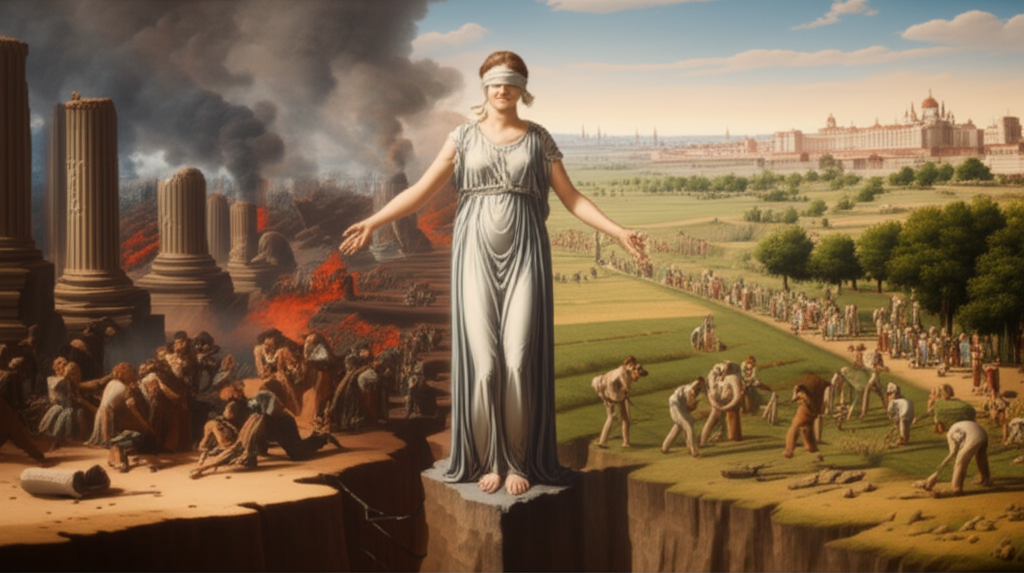
To consider War and Peace as states of existence is to elevate them beyond simple occurrences. A state implies a condition, a mode of being, a pervasive atmosphere that shapes perception, action, and the very fabric of reality for those within it. This perspective forces us to look inward, beyond the battlefield or the treaty signing, into the psychological, ethical, and metaphysical dimensions of these profound human experiences.
- The State of War: Not merely an armed conflict, but a condition of pervasive tension, division, and the constant threat of destruction. It is a mode of existence where survival often dictates morality, where the 'other' is an adversary, and where the potential for Life and Death hangs heavy over every moment.
- The State of Peace: More than just the absence of war, it is a condition of harmony, order, and flourishing. It represents a collective aspiration for stability, cooperation, and the pursuit of higher human endeavors. Yet, it is often a fragile state, constantly susceptible to disruption and requiring perpetual vigilance and effort to maintain.
The State of War: A Primal Condition and Its Transformations
In the philosophical tradition, particularly within the Great Books of the Western World, the state of war has often been pondered as a primal, almost natural, condition of humanity. Thinkers like Thomas Hobbes, in his exploration of the "state of nature," posited a "war of all against all," where Life and Death were in constant peril, and human existence was "solitary, poor, nasty, brutish, and short." This isn't just a historical observation; it's a profound statement about a potential mode of being.
Within this state, change is not merely incidental; it is intrinsic. War forces rapid, often violent, transformations:
- Physical Change: Landscapes scarred, cities reduced to rubble, bodies broken.
- Social Change: Hierarchies disrupted, new alliances formed, old orders collapsing.
- Psychological Change: Trauma, resilience, moral ambiguity, the re-evaluation of values.
The existential weight of the State of War lies in its direct confrontation with Life and Death. Every decision, every action, every moment is imbued with this ultimate stakes. It strips away the superficial, revealing the raw essence of human will and vulnerability.
The State of Peace: An Elusive Ideal and Its Necessities
If war is a primal struggle, peace is often an aspiration, a carefully constructed state that demands conscious effort and collective will. Philosophers from Plato and Aristotle, with their visions of the ideal polis, to Immanuel Kant, with his concept of "perpetual peace," have grappled with the conditions necessary for its establishment and maintenance.
Peace, as a state of existence, is characterized by:
- Order and Justice: The establishment of laws, institutions, and ethical frameworks that govern interactions and resolve disputes without violence.
- Flourishing and Creation: The space and stability for individuals and societies to pursue knowledge, art, commerce, and personal growth without the constant threat of destruction.
- Cooperation and Empathy: The recognition of shared humanity and the willingness to collaborate for mutual benefit, moving beyond the adversarial mindset of war.
However, the state of peace is never truly static. It is a dynamic equilibrium, constantly requiring adaptation and change. The seeds of future conflict often lie dormant within periods of peace, demanding constant vigilance and the willingness to address grievances and inequalities. The transition from war to peace, or vice-versa, is a profound change that redefines existence itself.
The Perpetual Dance: Change Between War and Peace
The most compelling philosophical insight is perhaps that War and Peace are not mutually exclusive, isolated states, but rather two poles of a continuous spectrum, constantly in flux. History, both collective and individual, is a testament to this dynamic change. A period of profound peace can sow the seeds of future conflict through complacency or unchecked ambition, just as the devastation of war can ignite a fervent desire for lasting peace.
Consider the following contrasts as dynamic elements of this continuous change:
| Aspect of Existence | State of War | State of Peace |
|---|---|---|
| Primary Focus | Survival, defense, destruction | Creation, growth, cooperation |
| Human Nature | Self-preservation, aggression, suspicion | Empathy, reason, collaboration |
| Societal Structure | Authoritarianism, military command, division | Democracy, rule of law, integration |
| Value of Life | Expendable in the service of conflict | Sacred, to be preserved and nurtured |
| Relationship to Change | Rapid, destructive, forced transformation | Gradual, constructive, evolutionary adaptation |
This constant interplay, this perpetual change, defines much of the human condition. The individual, too, experiences internal "wars" of conscience, conflicting desires, and struggles against adversity, alongside moments of profound inner peace and tranquility. These internal states often mirror and influence the external ones.
Navigating the Human Condition: Life and Death in Flux
Ultimately, understanding War and Peace as states of existence brings us face to face with the most fundamental philosophical questions surrounding Life and Death. War, in its essence, is an acceleration of Death, a collective confrontation with mortality. Peace, conversely, is an affirmation of Life, an opportunity for its flourishing and continuation.
Yet, even in peace, Death is an inevitable end, and Life is a continuous struggle. The philosophical challenge is to understand how we navigate these profound states, how we strive for peace in a world prone to war, and how we find meaning and purpose amidst the constant change and the ultimate certainty of Life and Death. The Great Books offer no easy answers, but they provide the essential framework for asking these enduring questions, inviting us to reflect on our own roles in shaping these fundamental states of our shared existence.
YouTube:
- "Hobbes Leviathan explained"
- "Kant Perpetual Peace summary"
📹 Related Video: What is Philosophy?
Video by: The School of Life
💡 Want different videos? Search YouTube for: "War and Peace as States of Existence philosophy"