

The Elusive Core: Unpacking Religious Truth
The quest to understand the nature of religious truth stands as one of humanity's most enduring intellectual and spiritual endeavors. It is a pursuit that has shaped civilizations, inspired masterpieces, and fueled countless philosophical debates. This article delves into the multifaceted concept of religious truth, exploring how it differs from empirical or scientific truth, the diverse pathways through which it is apprehended, and the unique challenges it presents to our understanding of knowledge itself. We shall examine the various lenses through which religion posits its claims, from divine revelation to personal experience, and consider the role of theology in systematizing these profound assertions. Ultimately, we seek not to define religious truth definitively, but to illuminate the rich tapestry of its interpretations and the persistent human drive to grasp the ultimate realities it purports to reveal.
The Labyrinthine Nature of Religious Truth
To speak of truth within the context of religion is to immediately acknowledge a divergence from the empirical truths we might glean from a laboratory experiment or a historical document. Religious truth often transcends the purely verifiable, operating instead within realms of meaning, purpose, and ultimate reality. It grapples with questions that lie beyond the scope of scientific inquiry: the existence of God, the nature of the soul, the meaning of suffering, and the afterlife.
Unlike a scientific hypothesis, which demands falsifiability and repeatable observation, religious truth frequently relies on different forms of evidence and validation. It is not merely about what is, but often about what ought to be, or what truly matters. This distinction is crucial, as it sets the stage for understanding the unique epistemological challenges inherent in claims of religious knowledge. The very framework of inquiry shifts when one moves from the observable universe to the divine or the transcendent.
Conduits of Apprehension: How Religious Truth is Claimed
Across the spectrum of global religions and philosophical traditions, various pathways are posited as means by which individuals or communities come to apprehend religious truth. These pathways often intertwine, yet each offers a distinct perspective on the acquisition of this profound knowledge.
- Revelation and Scripture: For many faiths, the primary source of religious truth is divine revelation, communicated directly from a higher power to humanity. This truth is often codified in sacred texts – scriptures, holy books, or oral traditions – which are revered as infallible or divinely inspired. The theology of such traditions centers on interpreting and understanding these revealed truths, treating them as foundational axioms for belief and practice.
- Example: The Torah, the Gospels, the Quran, the Vedas.
- Experience and Intuition: Another powerful conduit is personal experience. Mystical encounters, profound spiritual insights, feelings of awe, or transformative moments are often cited as direct apprehensions of religious truth. This form of knowledge is deeply subjective, yet profoundly real for the individual, often serving as a personal validation of broader religious tenets.
- Example: The experience of satori in Zen Buddhism, the unitive experience described by Christian mystics.
- Reason and Philosophical Theology: While often seen in tension, reason plays a significant role in systematizing and defending religious truth. Philosophical theology employs logic, metaphysics, and ethical reasoning to explore religious concepts, reconcile apparent contradictions, and construct coherent frameworks of belief. Thinkers throughout history have sought to prove the existence of God or the rationality of faith using philosophical arguments.
- Example: Thomas Aquinas's Five Ways, Anselm's ontological argument, various forms of natural theology.
- Faith and Assent: For many, religious truth is ultimately accessed through faith – a commitment or trust in propositions that may not be fully demonstrable by reason or empirical evidence alone. Faith is often understood not as blind credulity, but as an act of will, a profound assent to truth that transcends ordinary modes of knowing. It is often seen as a necessary precursor to deeper spiritual understanding.
- Example: Kierkegaard's "leap of faith," the role of emunah in Judaism.
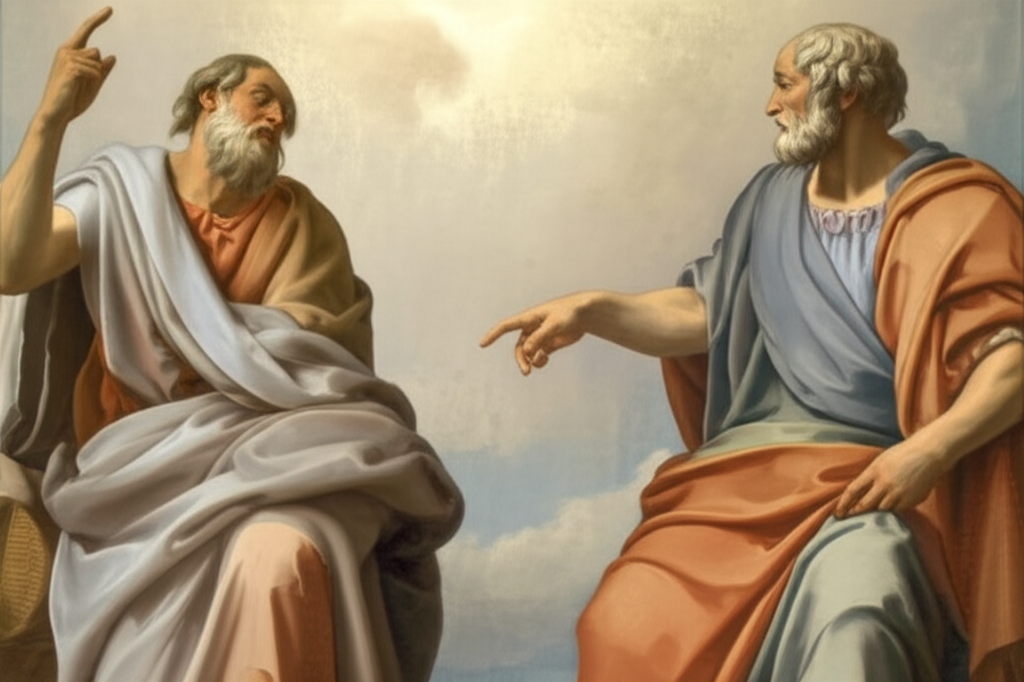
The Epistemological Chasm: Bridging Belief and Knowledge
The challenge in understanding the nature of religious truth lies significantly in its epistemology – how we know what we claim to know. If religious assertions cannot be universally verified or falsified in the same manner as scientific statements, how then can they be considered knowledge? This question has occupied philosophers for centuries, leading to various attempts to bridge the apparent chasm between belief and knowledge.
One perspective suggests that religious truth operates on a different plane of knowledge, one that is perhaps more akin to moral or aesthetic truths. These truths, while not empirically provable, are nonetheless deeply meaningful and formative for human experience. Another view emphasizes the communal aspect of religious knowledge, where truth is validated and sustained within a community of believers through shared practices, narratives, and interpretations.
The role of evidence also varies. While direct empirical evidence may be scarce, adherents often point to historical accounts, personal testimonies, the transformative power of their faith, or the internal coherence of their theology as forms of compelling evidence. The truth of a religious proposition may be judged not solely by its correspondence to an external reality, but also by its internal consistency, its explanatory power for the human condition, or its ability to inspire moral action and spiritual growth.
The Persistent Echo: Religious Truth and the Human Spirit
Ultimately, the contemplation of "The Nature of Religious Truth" is a reflection on the human spirit's enduring quest for meaning beyond the mundane. Whether one accepts or rejects specific religious claims, the philosophical inquiry into how such claims are made, validated, and understood offers profound insights into human cognition, culture, and our deepest aspirations.
The exploration of religious truth forces us to confront the limits of our own knowledge and the diverse ways in which humans attempt to make sense of a complex world. It reminds us that truth itself is a multifaceted jewel, reflecting light in many different spectra, and that the pursuit of it, in all its forms, remains a defining characteristic of our intellectual and spiritual journey.
📹 Related Video: What is Philosophy?
Video by: The School of Life
💡 Want different videos? Search YouTube for: ""philosophy of religion epistemology" or "faith and reason debate""