

The Sacred Language: Navigating Meaning Through Sign and Symbol in Religion
In the intricate tapestry of human experience, religion consistently turns to sign and symbol as its fundamental lexicon. This article explores how these potent forms of communication transcend mere words, offering a profound means to articulate the ineffable, unify communities, and connect the material world with spiritual truths. We delve into their distinct natures, their evolution through custom and convention, and their indispensable role in shaping religious understanding and practice, drawing implicitly from the rich philosophical traditions found in the Great Books of the Western World.
Unpacking the Lexicon: Sign vs. Symbol
At the heart of any religious framework lies a sophisticated system of communication that often moves beyond the literal. To understand this, it's crucial to distinguish between a sign and a symbol.
-
Signs are typically direct and unambiguous. They point to a specific object, idea, or action with a relatively fixed meaning, often established by convention. Think of a road sign indicating a sharp turn, or a specific gesture that universally means "stop." In religion, a sign might be a specific ritual action that signifies a covenant, or a particular vestment that marks a role. Their meaning is largely denotative.
-
Symbols, by contrast, are richer, multi-layered, and often evocative. They don't just point to something; they participate in the meaning of what they represent, often holding emotional, cultural, and spiritual depth that transcends their literal form. A cross is not just two intersecting lines; it symbolizes sacrifice, redemption, and a central theological narrative. The lotus flower is not merely a plant; it symbolizes purity, enlightenment, and rebirth in various Eastern traditions. Their meaning is deeply connotative and often inexhaustible.
This distinction, explored by thinkers throughout the Great Books, highlights humanity's need to express truths that defy simple articulation, pushing the boundaries of conventional language.
Religion as a Symbolic Universe
From ancient myths to contemporary practices, religion constructs its worlds through symbols. These aren't mere decorative elements; they are the very conduits through which believers apprehend divine realities, moral codes, and communal identity.
- Expressing the Ineffable: How does one speak of the divine, the infinite, or the transcendent? Ordinary language often falls short. Symbols provide a means to hint at, evoke, and make palpable that which cannot be fully grasped by intellect alone. The burning bush, the dove descending, the wheel of dharma – these images convey meaning that a purely descriptive account could never capture.
- Unifying Communities: Shared symbols forge powerful bonds. A common ritual, a sacred object, or a revered image becomes a focal point for collective belief and identity. The pilgrimage to a holy site, the shared bread and wine, or the communal chanting of a mantra all draw their power from the symbolic weight they carry for the group.
- Bridging Worlds: Religious symbols often serve as a bridge between the material and the spiritual, the human and the divine. Sacraments, for instance, are physical acts or objects that are believed to convey spiritual grace or truth, transforming the mundane into the sacred.
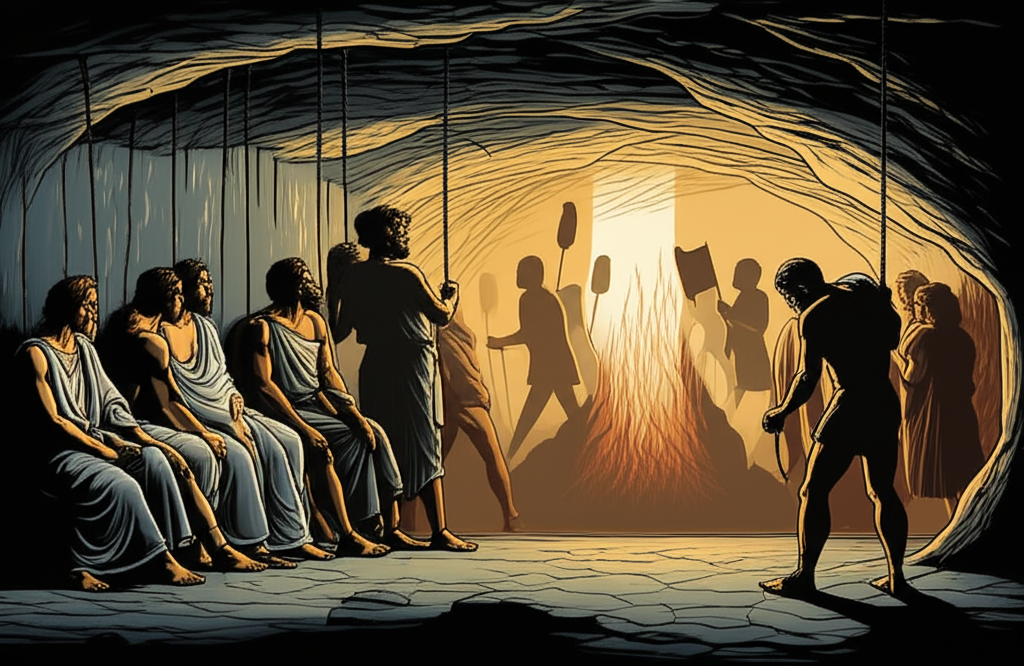
The Shaping Power of Custom and Convention
The meaning and power of religious sign and symbol are not inherent but are largely cultivated and maintained through custom and convention. Within a given religious tradition, communities collectively imbue specific forms with significance over generations.
Consider the following:
| Aspect | How Custom & Convention Shape Meaning |
|---|---|
| Rituals | Repetitive actions (e.g., bowing, prostrating, lighting candles) gain symbolic depth through consistent practice and communal understanding. They become signs of reverence, submission, or supplication. |
| Sacred Texts | Metaphors, parables, and allegories within holy books are interpreted and reinterpreted through centuries of commentary, tradition, and scholarly discourse, shaping their symbolic resonance. |
| Iconography | Specific depictions of deities, saints, or spiritual figures acquire their recognized meaning and emotional impact through established artistic styles and theological interpretations passed down through generations. |
| Gestures & Postures | Hand mudras, prayer postures, or specific dances become universally understood within a tradition as expressions of devotion, meditation, or spiritual invocation. |
Without this shared understanding, a symbol loses its potency, becoming merely an object or an action. It is the collective agreement and continuous practice that breathes life and meaning into these forms, making them effective vehicles for spiritual experience.
Language and the Limits of Literalism
The relationship between language and religious symbols is particularly nuanced. While religious texts are often written in a specific language, the profound truths they seek to convey frequently transcend literal interpretation. Many philosophers, from Augustine to Aquinas, recognized the necessity of metaphorical and symbolic language when discussing the divine. To insist on a purely literal reading of all religious texts or symbols is often to miss their deepest spiritual and philosophical insights, reducing rich allegory to simplistic fact. The ability to interpret symbols, to discern their multi-layered meanings, is a hallmark of sophisticated religious thought.
The Enduring Relevance of Symbolism
In an increasingly secularized world, the study of sign and symbol in religion remains vital. It offers a window into the human psyche's enduring need for meaning, connection, and transcendence. As long as humanity grapples with the big questions of existence, purpose, and the nature of reality, we will continue to create, interpret, and rely upon symbols to articulate that which lies beyond the reach of ordinary words. They are, in essence, the sacred language through which we attempt to speak of the unspeakable.
Further Exploration:
📹 Related Video: ARISTOTLE ON: The Nicomachean Ethics
Video by: The School of Life
💡 Want different videos? Search YouTube for: ""Jungian archetypes and religious symbolism explained""
📹 Related Video: What is Philosophy?
Video by: The School of Life
💡 Want different videos? Search YouTube for: ""Semiotics of religious rituals philosophy""