

The Use of Logic in Defining the Soul: A Planksip Exploration
By Daniel Sanderson
The human intellect, armed with the formidable tool of logic, has for millennia grappled with the profound question of the soul. Can a systematic process of reasoning, designed to dissect, categorize, and define the tangible, truly capture the essence of something as seemingly ineffable and immaterial as the soul? This article explores the historical and philosophical journey of employing logic in this ultimate definition, examining both its triumphs and inherent limitations as documented within the Great Books of the Western World. While a conclusive definition remains elusive, the application of logic continually refines our understanding and frames the enduring debate.
The Enduring Quest: Defining the Indefinable
From the earliest philosophical inquiries, humanity has sought to understand the animating principle of life, consciousness, and self-identity—what we broadly term the soul. This pursuit is not merely spiritual or theological; it is deeply philosophical, demanding rigorous intellectual engagement. Logic, as the science of correct thinking, becomes the primary instrument in this endeavor, attempting to impose structure and coherence on an concept that often defies empirical observation.
Early Philosophical Inquiries and the Soul's Elusive Nature
The foundational texts of Western thought reveal consistent attempts to apply logic to the definition of the soul.
-
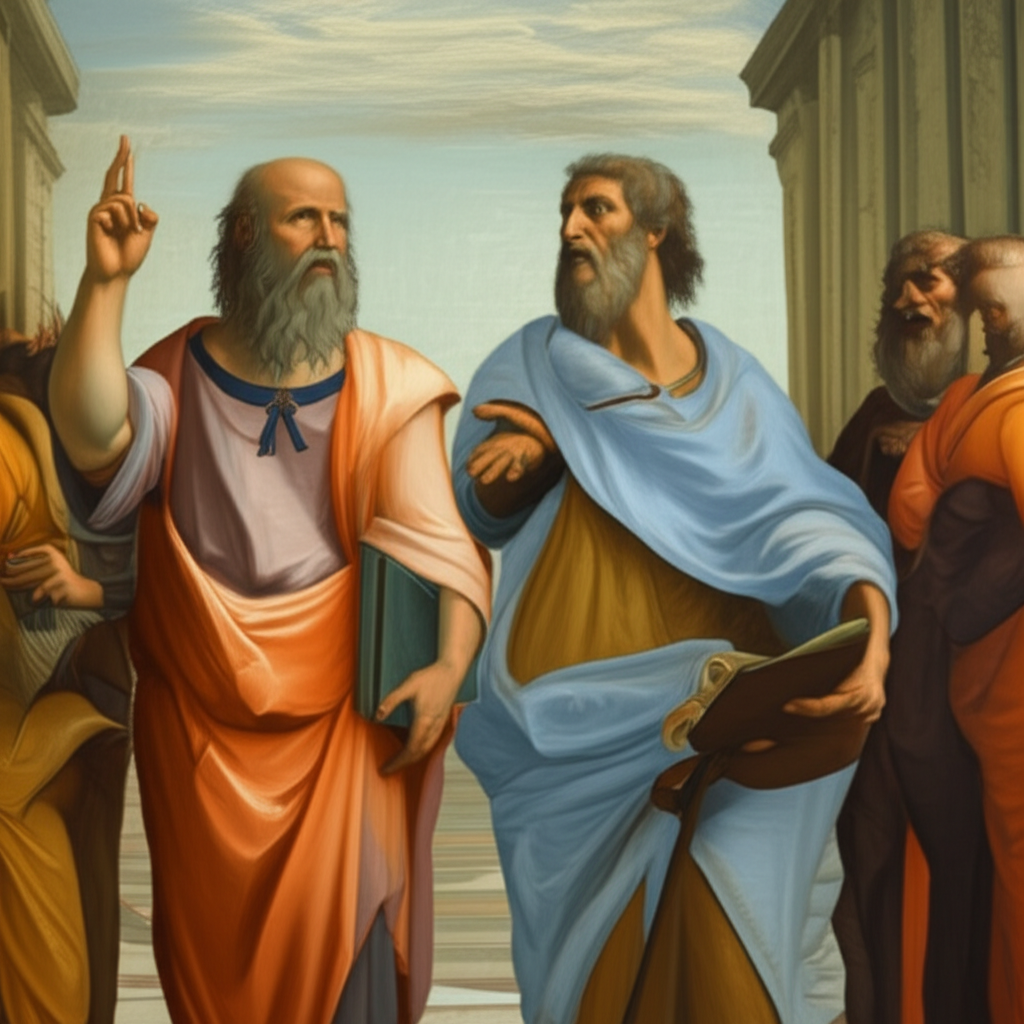
Plato's Tripartite Soul: In works like The Republic and Phaedo, Plato, a cornerstone of the Great Books, employs intricate reasoning to articulate a soul divided into three parts: the rational (λογιστικόν), the spirited (θυμοειδές), and the appetitive (ἐπιθυμητικόν). His arguments for the soul's immortality are built upon logical deductions concerning its simplicity and its relationship to the eternal Forms. For Plato, the rational part of the soul is inherently aligned with logic itself, seeking truth and understanding.
-
Aristotle's Functional Definition: Aristotle, a student of Plato and another titan of the Great Books, took a more empirical and biological approach in De Anima (On the Soul). He used logic to define the soul not as a separate entity, but as the form of a natural body having life potentially within it. His reasoning categorized different types of souls (nutritive, sentient, intellectual) based on their functions, integrating the concept of the soul directly with the organism's living processes. This provided a functional definition rooted in observable reality, albeit still abstract.
The Challenge of Abstraction: When Logic Meets Metaphysics
The application of logic to the soul presents a unique challenge: how do we logically define something that lacks clear empirical referents? Unlike a chair or a planet, the soul cannot be observed, measured, or directly experimented upon. This pushes logic into the realm of metaphysics, where arguments are often built upon axioms, deductions, and thought experiments rather than sensory data. The very non-physical nature of the soul often seems to resist the precise boundaries that logic attempts to impose.
Medieval Synthesis and Modern Scrutiny
The medieval period, exemplified by thinkers like Thomas Aquinas (drawing heavily on Aristotle in the Great Books tradition), saw a powerful synthesis of Aristotelian logic with Christian theology.
-
Aquinas and the Soul as Form: Aquinas used sophisticated scholastic reasoning to argue for the human soul as an immaterial, subsistent form that gives life to the body, capable of existing independently after death. His detailed logical arguments for the soul's immortality and its intellectual faculties represent a peak in the application of formal logic to spiritual concepts.
-
Descartes' Dualism and the Problem of Interaction: René Descartes, a pivotal figure in modern philosophy, used logic to arrive at his famous dualism, defining the soul (or mind) as a thinking, non-extended substance, distinct from the extended, non-thinking body. While his reasoning led to a clear definition of two distinct substances, it simultaneously created a significant logical problem: how do these two fundamentally different substances interact? This "mind-body problem" continues to challenge philosophical logic to this day.
The Tools of Dissection: How Logic Shapes Our Understanding
Even if a universally accepted definition of the soul remains elusive, the persistent application of logic provides invaluable tools for its exploration:
- Conceptual Clarity: Logic compels us to define our terms precisely, distinguishing between soul, mind, consciousness, spirit, self, and personality. This reduces ambiguity and allows for more productive philosophical discourse.
- Identifying Contradictions: By subjecting arguments about the soul to logical scrutiny, we can identify inconsistencies, fallacies, or internal contradictions, leading to more robust and coherent theories.
- Structuring Arguments: Logic provides frameworks for building coherent arguments for or against various aspects of the soul's nature, existence, or function, whether through deductive reasoning, inductive inference, or abductive explanation.
- Evaluating Evidence (or lack thereof): Logic helps us critically assess what constitutes "evidence" for the soul's existence or properties, distinguishing between empirical data, intuitive insights, and theological claims.
📹 Related Video: PLATO ON: The Allegory of the Cave
Video by: The School of Life
💡 Want different videos? Search YouTube for: ""Plato's Theory of the Soul Explained" and "Aristotle De Anima Summary""
Conclusion: A Continuous Dialogue
The use of logic in defining the soul is not a closed chapter but an ongoing, evolving dialogue. From the ancient Greeks to contemporary philosophers, the rigorous application of reasoning has served not just to propose definitions, but to illuminate the depths of this complex concept. While the soul may forever retain an element of mystery, it is through the relentless and disciplined application of logic that we continue to refine our questions, sharpen our insights, and journey closer to understanding this profound aspect of human existence. The Great Books stand as a testament to this enduring intellectual quest, reminding us that the pursuit of truth, even when concerning the indefinable, is a journey best undertaken with a clear and logical mind.