

The Intricate Dance: Unpacking the Relationship Between Desire and Happiness
The human condition is, perhaps, nowhere more vividly illuminated than in the intricate dance between what we yearn for and what ultimately brings us contentment. Is desire the engine of happiness, propelling us towards fulfillment, or is it a relentless current, forever sweeping us away from lasting peace? This article delves into the profound relation between these two fundamental aspects of human experience, drawing from the rich tapestry of Western philosophical thought. We will explore how various thinkers have grappled with the role of desire, distinguishing between fleeting pleasure and enduring joy, and examining how our management of desire dictates our path through life's inevitable pain and towards genuine well-being.
The Ancient Pursuit: Desire as a Path or Obstacle
From the earliest philosophical inquiries, thinkers recognized the powerful, often contradictory, nature of desire. The ancient Greeks, in particular, sought to understand its place within a well-lived life.
- Plato's Republic: Plato, through Socrates, posited a tripartite soul, where desire (epithymia) represents the appetitive part, often unruly and focused on bodily pleasures. True happiness (eudaimonia) could only be achieved when reason (logos) governed spirit (thymos) and appetite. Unchecked desire, for Plato, led to tyranny within the soul and, by extension, within society.
- Aristotle's Nicomachean Ethics: Aristotle viewed happiness as the ultimate good, the final end of all human activity. However, this happiness was not mere gratification of desire. Instead, it was an activity of the soul in accordance with virtue. While desires for things like food, shelter, and companionship are natural, Aristotle emphasized that pleasure derived from fulfilling these desires should be subordinate to rational choice and virtuous action. He distinguished between immediate sensual pleasures and the deeper, more enduring joy that comes from living a life of purpose and moral excellence.
For these foundational thinkers, the relation between desire and happiness was not one of direct causation, but rather one of careful cultivation and control. Unbridled desire was seen as a source of pain and distraction, while wisely channeled desire could contribute to a virtuous, and therefore happy, life.
Hedonism and its Discontents: The Role of Pleasure and Pain
The pursuit of pleasure as the primary aim of life has a long history, yet even within hedonistic schools, the relationship between desire and happiness was nuanced.
- Epicurus and Tranquility: Epicurus is often associated with hedonism, but his philosophy was far from a call for unrestrained indulgence. He argued that the greatest pleasure was the absence of pain in the body (aponia) and disturbance in the soul (ataraxia). For Epicurus, this meant cultivating simple desires and avoiding those that are difficult to satisfy or lead to greater suffering. The relation between desire and happiness here is one of reduction: minimize desires to minimize potential pain and maximize a calm, contented state. He recognized that some desires, if pursued unwisely, could lead to more pain than pleasure.
The challenge for any purely hedonistic approach is the transient nature of pleasure and the inevitable presence of pain. The constant chasing of new desires for fleeting pleasure can become a treadmill, leading to dissatisfaction rather than lasting happiness.
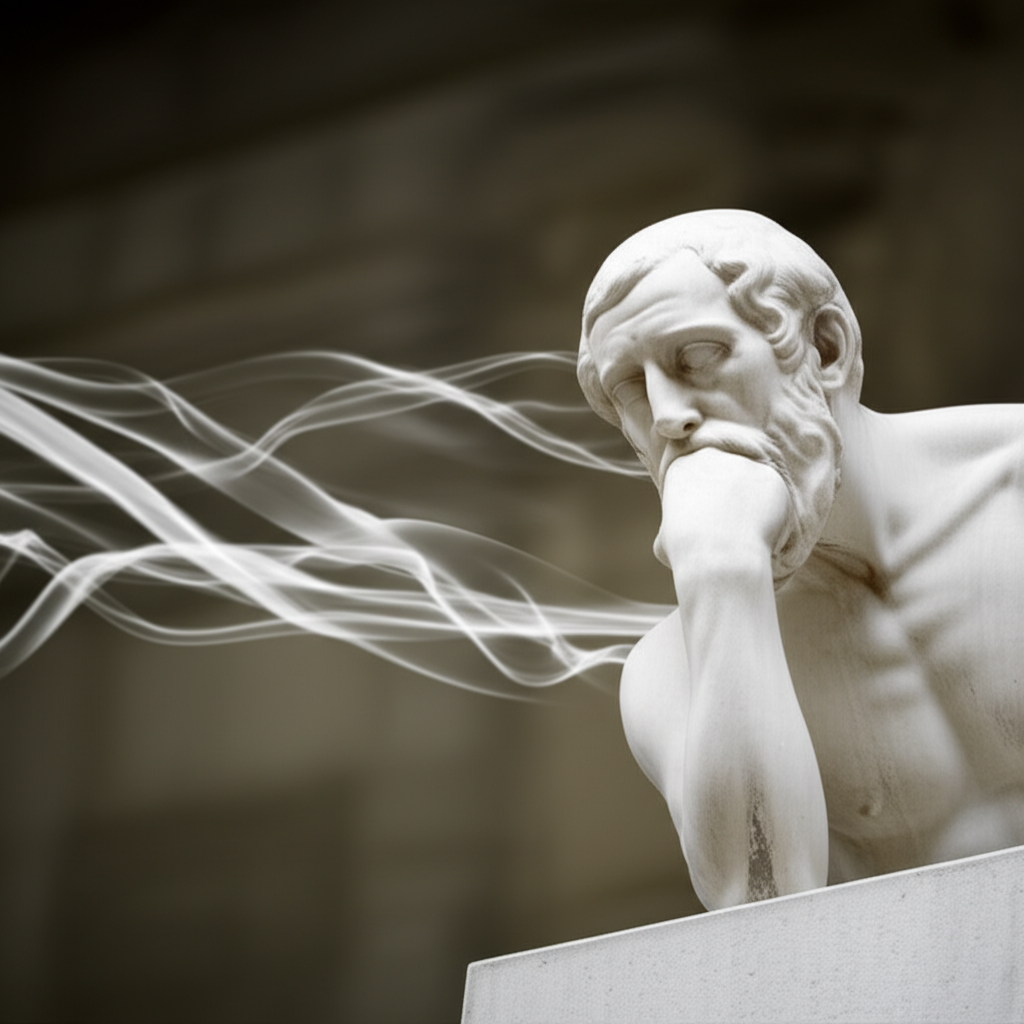
The Stoic Perspective: Mastering Desire for Tranquility
Perhaps no school of thought addressed the relationship between desire and happiness more directly than Stoicism. Philosophers like Epictetus, Seneca, and Marcus Aurelius offered a radical re-evaluation of desire's role.
- Controlling the Controllables: Stoicism teaches that true happiness (eudaimonia) comes from living in accordance with nature and reason, accepting what is beyond our control, and focusing on what we can control—our judgments, opinions, and reactions.
- Desire as a Source of Suffering: For the Stoics, desire for external things (wealth, reputation, pleasure, avoiding pain) is the primary source of human suffering. When we attach our happiness to things outside our control, we set ourselves up for disappointment and anguish.
- Apatheia and Ataraxia: The goal is not to eliminate all feeling, but to achieve apatheia (freedom from disturbing passions) and ataraxia (tranquility of mind). This involves training oneself to desire only what is within one's power, primarily virtue and right action. The Stoic perspective on the relation between desire and happiness is one of detachment: by severing the link between external desires and inner peace, one finds true freedom and contentment.
Modern Interpretations: The Complexity of Human Will
Later philosophers continued to explore the intricate connection, often adding layers of psychological and social complexity.
- Spinoza's Conatus: Baruch Spinoza, in his Ethics, argued that every being strives to persevere in its own being (conatus). This striving is essentially a form of desire, and happiness is an increase in this power or perfection. For Spinoza, true freedom and happiness come from understanding our place in the natural order and acting from reason, not from confused or external desires.
- Hume's Passions: David Hume famously stated that "Reason is, and ought only to be the slave of the passions." While not advocating for uncontrolled desire, Hume highlighted the fundamental role of our desires and emotions in motivating human action, suggesting that reason's role is to guide us in achieving what our passions incline us towards.
- Mill and Utilitarianism: John Stuart Mill, a proponent of utilitarianism, defined happiness as pleasure and the absence of pain. He argued for maximizing happiness for the greatest number, but crucially, he distinguished between higher (intellectual, moral) and lower (bodily) pleasures, suggesting that the quality of desires matters for true happiness.
These diverse perspectives highlight that the relation between desire and happiness is not static but evolves with our understanding of human nature and society.
Navigating the Labyrinth: Finding Balance
So, how do we navigate this complex landscape? The Great Books offer not a single answer, but a spectrum of wisdom:
- Self-Knowledge: Understanding our own desires—which are truly ours, which are socially imposed, which lead to lasting good, and which to fleeting pleasure or eventual pain—is paramount.
- Cultivating Virtuous Desires: As Aristotle suggested, training ourselves to desire what is good and noble, rather than merely what is immediately gratifying, can lead to a more profound and stable happiness.
- Mindful Detachment: The Stoic practice of recognizing what is beyond our control and training ourselves not to attach our happiness to it offers a powerful path to inner peace.
- Appreciating the Present: Many philosophers, implicitly or explicitly, encourage an appreciation for the present moment and its simple pleasures, rather than a constant yearning for what is absent.
The journey towards happiness is not about eradicating desire entirely (which may be impossible and undesirable), but about understanding its nature, managing its impulses, and aligning it with our highest values.
Conclusion: A Dynamic Relationship
The relation between desire and happiness is undeniably one of the most enduring and challenging philosophical inquiries. From Plato's call for rational governance to Epicurus's pursuit of tranquility through modest desires, and the Stoic's radical detachment, the wisdom of the ages points to a common truth: our capacity for happiness is profoundly shaped by how we engage with our desires.
While the pursuit of pleasure can be a motivator, true happiness often lies beyond its immediate grasp, requiring a deeper understanding of ourselves, a willingness to confront pain, and the cultivation of an inner life that is not perpetually beholden to external wants. Ultimately, the philosophical tradition suggests that happiness is not found by simply fulfilling every desire, but by wisely choosing which desires to cultivate, which to temper, and which to release, thereby shaping a life of meaning and enduring contentment.
**## 📹 Related Video: PLATO ON: The Allegory of the Cave
Video by: The School of Life
💡 Want different videos? Search YouTube for: "Plato Aristotle Happiness Desire Philosophy"**
**## 📹 Related Video: STOICISM: The Philosophy of Happiness
Video by: The School of Life
💡 Want different videos? Search YouTube for: "Stoicism Desire Control Happiness"**