

The Enduring Tension: Navigating the Universal and Particular in Law
The realm of law is a fascinating arena where abstract ideals confront the messy realities of human existence. At its heart lies a perpetual philosophical and practical challenge: the relation between the Universal and Particular. This article explores how legal systems strive to embody broad principles of justice while simultaneously addressing the unique circumstances and specific contexts of individual cases and diverse societies. From ancient philosophical inquiries to modern jurisprudence, understanding this fundamental dichotomy is crucial for comprehending the very nature of law itself.
Unpacking the Dichotomy: Universal Principles vs. Particular Applications
To truly grasp the dynamics of law, we must first delineate the core concepts of the Universal and Particular.
- The Universal in Law: Refers to the overarching, general principles, ideals, and norms that are believed to apply broadly, perhaps even to all people, in all places, and at all times. These include concepts of natural justice, inherent human rights, ethical imperatives, and fundamental moral tenets that transcend specific cultures or historical periods. Think of the idea that murder is wrong, or that all individuals deserve a fair trial.
- The Particular in Law: Encompasses the specific statutes, codes, precedents, cultural practices, and individual circumstances that shape the application of law in concrete situations. This dimension deals with the unique facts of a case, the specific wording of a local ordinance, the cultural nuances of a community, or the historical context in which a law was enacted.
The relation between these two aspects is not merely theoretical; it forms the bedrock upon which legal systems are built and continually reformed.
Historical Echoes: Great Minds on Law's Dual Nature
Philosophers throughout history, many whose works are enshrined in the Great Books of the Western World, have grappled with this very tension.
- Plato's Ideal Forms: For Plato, justice itself existed as an eternal, perfect Form – a universal ideal that particular laws in earthly cities could only imperfectly imitate. The challenge for legislators was to craft laws that best approximated this universal Form.
- Aristotle's Equity: While recognizing universal principles, Aristotle emphasized the need for equity – the judicious application of general law to specific cases where a strict adherence to the letter of the law might lead to injustice. He understood that universal rules, by their very nature, cannot account for every particularity, necessitating wise judgment.
- Stoic Natural Law: The Stoics posited a universal divine reason (Logos) that permeated the cosmos, from which a natural law could be derived, binding on all rational beings. This universal ethical framework was seen as superior to the varying positive laws of different states.
- Medieval Scholasticism: Thinkers like Thomas Aquinas synthesized classical and Christian thought, asserting that human (positive) law derives its legitimacy from natural law, which in turn reflects eternal divine law. Positive laws are particular instantiations of these universal principles, and are only just insofar as they align with them.
These historical perspectives underscore that the interplay between the Universal and Particular is not a modern innovation but an enduring philosophical concern central to the understanding of law.
The Universal Imperatives of Justice
The drive towards universal legal principles is often fueled by the aspiration for true justice.
- Natural Rights and Human Dignity: The concept of universal human rights, enshrined in international declarations, asserts that certain entitlements and protections belong to every individual simply by virtue of their humanity, transcending national borders or particular legal codes. These are seen as universal moral claims that positive laws ought to uphold.
- Fundamental Legal Principles: Concepts like due process, the presumption of innocence, equality before the law, and the prohibition of torture are widely accepted as universal cornerstones of a just legal system, regardless of where or when that system operates. They represent a global consensus on minimum standards for legal fairness.
- The Pursuit of Ethical Consistency: A legal system that aims for justice must strive for consistency across similar cases, applying universal rules fairly. This ensures that arbitrary distinctions are minimized and that the law is not merely a reflection of power or prejudice.
The Indispensable Role of the Particular
Despite the allure of universal ideals, the particular remains crucial for the practical and equitable functioning of law.
- Contextual Application: Laws must be applied to unique situations involving specific individuals, events, and circumstances. A universal prohibition against "harm" requires particular definitions and evidence in a case of assault versus negligence.
- Cultural and Societal Nuances: Different societies have varying histories, traditions, and values that shape their particular legal codes. While a universal principle like "property rights" might exist, its specific manifestations – who can own what, how it's transferred, etc. – are deeply particular to a given legal system.
- Case Law and Precedent: Common law systems, in particular, build upon the particularities of past cases (precedents) to guide future judgments. Each new case offers a particular interpretation or application of existing law, subtly shaping its evolution.
- Legislative Specificity: Legislators create detailed statutes to address particular social problems, often with very specific definitions, exceptions, and procedural requirements that reflect the unique needs of a community or nation.
The Dynamic Relation: Tension and Synthesis
The relation between the Universal and Particular in law is rarely harmonious; it is often characterized by dynamic tension, requiring constant negotiation and synthesis.
- Interpretation and Discretion: Judges and legal practitioners are tasked with interpreting universal principles and general statutes in the light of particular facts. This involves a degree of discretion, where universal rules are bent, clarified, or sometimes even challenged by the demands of a specific case.
- Balancing Competing Values: A universal right to free speech might clash with a particular need for public order or privacy. Legal systems must constantly balance these competing universal and particular values, often through complex legislative and judicial processes.
- Evolution of Law: As societies evolve, their particular circumstances change, necessitating re-evaluations of how universal principles are understood and applied. What was considered a just application of law in one era might be deemed unjust in another, leading to legal reforms.
| Aspect | Characteristics | Examples in Law |
|---|---|---|
| Universal | Abstract, general, ideal, timeless, cross-cultural | Human rights, natural law, principles of due process, prohibition of murder, equality before the law |
| Particular | Concrete, specific, contextual, temporal, culture-specific | National statutes, local ordinances, case precedents, specific contracts, cultural customs, individual facts |
Challenges and the Pursuit of Justice
The ongoing challenge for any legal system is to strike a balance where universal ideals of justice are not rendered meaningless by particularistic exceptions, nor are particular needs crushed under the weight of abstract, inflexible rules.
- Global vs. Local Justice: In an increasingly interconnected world, the tension between universal human rights and the sovereignty of particular nations (and their unique legal systems) is a constant source of debate in international law.
- Avoiding Arbitrariness: Overemphasis on the particular without reference to universal principles can lead to arbitrary rulings, where similar cases are treated differently without just cause, undermining the rule of law.
- Preventing Dogmatism: Conversely, rigid adherence to universal principles without considering particular circumstances can result in unfair or impractical outcomes, failing to achieve true justice.
Ultimately, the philosophical journey through the Universal and Particular in law reveals that justice is not a static destination but an ongoing process – a continuous effort to reconcile the grand aspirations of humanity with the intricate realities of individual lives. The most robust legal systems are those that thoughtfully navigate this complex relation, allowing universal principles to guide and particular circumstances to inform, in the perpetual pursuit of a more just society.
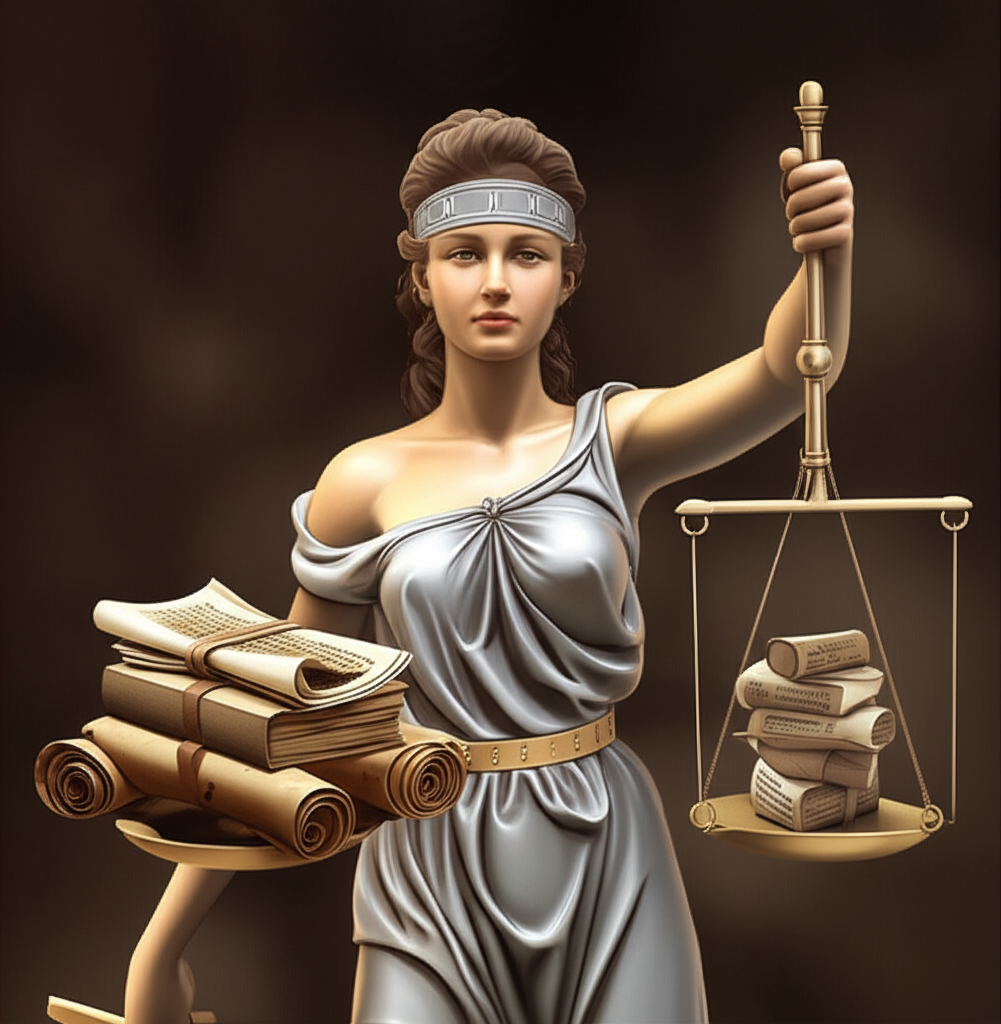 , while the other pan contains a collection of diverse, everyday objects like a simple tool, a piece of bread, and a small, unique trinket (representing particular circumstances and individual needs). Her blindfold is slightly askew, hinting at the difficult discernment required to balance these two forces, and behind her, a faint outline of a courthouse blends into a bustling, diverse cityscape.)
📹 Related Video: What is Philosophy?
Video by: The School of Life
💡 Want different videos? Search YouTube for: ""Natural Law vs. Positive Law Philosophy""
📹 Related Video: ARISTOTLE ON: The Nicomachean Ethics
Video by: The School of Life
💡 Want different videos? Search YouTube for: ""Aristotle's Ethics and Justice""