

The Enduring Hope: Unpacking the Theological Argument for Immortality
The question of what lies beyond our mortal coil has haunted humanity since time immemorial. Among the myriad responses, the theological argument for immortality stands as a cornerstone of faith and philosophical inquiry, asserting that our existence does not terminate with the body's decay. This argument, deeply rooted in religious doctrines and refined by centuries of theology, posits that the human soul—an immaterial essence—is inherently everlasting, often by divine design or through its participation in an eternal reality. It offers not merely a possibility, but a profound conviction about the enduring nature of our being, shaped by moral imperatives, cosmic justice, and the very character of the divine.
Defining the Immaterial: The Soul's Eternal Nature
At the heart of the theological argument is the concept of the soul. Unlike purely philosophical arguments that might deduce immortality from reason alone, theological perspectives typically begin with revelation or established religious doctrine.
- Divine Creation: Many traditions assert that the soul is directly created by God, distinct from the physical body. As a creation of an eternal being, it is imbued with a measure of that eternity.
- Immateriality: The soul is understood as non-physical, not subject to the laws of physical decay or dissolution. This immateriality is often seen as a prerequisite for its persistence beyond bodily death.
- Moral and Spiritual Capacity: The soul is considered the seat of consciousness, morality, free will, and our capacity for spiritual experience and relationship with the divine. These capacities are often deemed too profound and significant to simply vanish.
Historical Pillars: Voices from the Great Books
The "Great Books of the Western World" offer a rich tapestry of thought on this subject, showcasing how the theological argument evolved alongside philosophical and religious developments.
- Plato's Enduring Influence: Though primarily a philosopher, Plato's arguments for the immortality of the soul (as seen in dialogues like Phaedo) deeply influenced later Christian theology. His concept of the soul as an eternal, unchangeable essence striving to return to the realm of Forms provided a crucial intellectual framework.
- Augustine's Christian Synthesis: St. Augustine, drawing heavily on Platonic thought, integrated the concept of the immortal soul into Christian doctrine. In works like Confessions and City of God, he articulated a vision where the soul, created by God, yearns for its creator and finds its ultimate fulfillment in eternal communion with Him. The sinfulness of humanity and the promise of salvation underscore the necessity of an afterlife for divine justice and mercy to be fully realized.
- Aquinas' Scholastic Refinement: Thomas Aquinas, in his Summa Theologica, provided a rigorous scholastic defense of the soul's immortality. He argued that the human intellect, being capable of understanding universal concepts (which are immaterial), must itself be immaterial and thus incorruptible. For Aquinas, the soul is the form of the body, but it has operations independent of the body, indicating its capacity for separate existence.
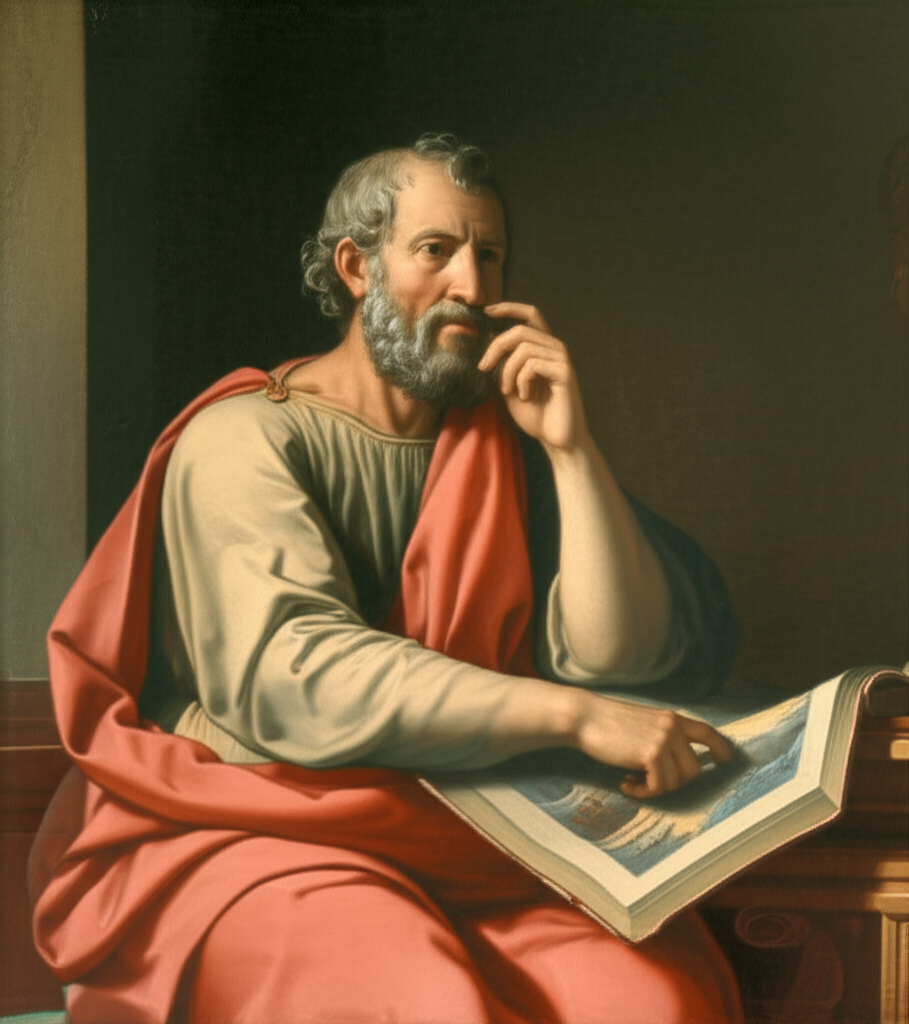 in deep contemplation, surrounded by ancient texts, with a faint, ethereal glow symbolizing the soul or divine inspiration above his head.)
Core Tenets of the Theological Argument
The argument for immortality from a theological perspective often rests on several interconnected tenets:
- Divine Justice: Many religions posit a just and omnipotent God. If there is no afterlife, then the wicked often prosper, and the righteous suffer without recompense. An eternal life allows for ultimate justice, where good is rewarded and evil is punished, or where spiritual growth continues towards perfection.
- Moral Imperative and Purpose: The belief in immortality often provides a profound sense of purpose for moral living. If life ends in nothingness, what ultimate meaning do our moral choices hold? Immortality imbues life with eternal consequence and significance.
- The Nature of God: If God is perfect love, wisdom, and power, it seems inconsistent that such a being would create intelligent, self-aware beings only for them to utterly perish. The desire for continued existence and for union with the divine is often seen as divinely implanted.
- Human Desire for Eternity: The deep-seated human longing for continuation, for overcoming death, and for reunion with loved ones is sometimes presented as an intrinsic clue to our actual nature – a desire planted by God, mirroring an ultimate reality.
Considerations and Interpretations
While powerful for believers, the theological argument faces philosophical and scientific scrutiny. Critics often question the existence of the soul as a distinct entity, or whether our innate desires necessarily reflect reality. However, within the framework of religion, these arguments serve to reinforce faith and provide comfort and meaning.
Different theologies also interpret immortality in varied ways:
- Personal Immortality: The individual consciousness, memory, and identity persist.
- Resurrection of the Body: Some traditions, particularly Christianity, emphasize not just the immortality of the soul but the eventual resurrection and glorification of the physical body.
- Cyclical Existence: Other traditions, like Hinduism or Buddhism, speak of reincarnation or rebirth, where the soul (or a similar concept) enters new physical forms until liberation.
**## 📹 Related Video: PLATO ON: The Allegory of the Cave
Video by: The School of Life
💡 Want different videos? Search YouTube for: ""Aquinas arguments for the soul's immortality" and "Plato Phaedo summary immortality""**
Conclusion: A Foundation of Faith
The theological argument for immortality remains a cornerstone for billions worldwide. It is more than a philosophical exercise; it is a declaration of faith in a cosmos governed by purpose, justice, and an eternal divine presence. From the ancient insights of Plato to the scholastic rigor of Aquinas and the profound spiritual narratives of various religions, the belief in an enduring soul offers a powerful framework for understanding human existence, moral responsibility, and our ultimate destiny. It provides not just hope, but a comprehensive worldview where life's deepest questions find their answers in the eternal.