

The Imperative of Order: Punishment as the State's Stern Hand
Summary: The role of punishment in maintaining social order is a foundational concern in political philosophy, explored extensively in the "Great Books of the Western World." This article delves into how punishment, as an instrument of the State, serves to uphold Law and enforce the collective duty of citizens, examining its historical justifications from ancient Greece to modern theories of retribution and utility. We will explore how various philosophical traditions grapple with the necessity, legitimacy, and practical application of punishment to ensure stability, justice, and the common good.
I. Introduction: The Unyielding Need for Order
From the earliest human settlements to the most complex modern societies, the quest for order has been a primary driver of collective organization. Without a discernible structure, without accepted norms and the means to enforce them, chaos looms, threatening the very fabric of human coexistence. It is within this profound need for stability that the concept of punishment finds its enduring, albeit often contentious, place.
Philosophers across millennia have grappled with the mechanisms by which societies prevent disorder and redress wrongs. At the heart of this inquiry lies punishment – the deliberate imposition of suffering or deprivation by an authority in response to a transgression. It is not merely an act of retribution, but a complex social function inextricably linked to the State, the Law, and our collective understanding of duty.
II. Defining Punishment: More Than Just Pain
To understand punishment's role in maintaining order, we must first define it. Philosophically, punishment is distinct from mere harm or revenge. It possesses several key characteristics:
- Imposed by Authority: It is meted out by a legitimate authority, typically the State, not by individuals.
- For a Transgression: It is a response to a violation of established rules or Law.
- Intentionally Painful/Depriving: It aims to inflict some form of suffering, loss, or hardship.
- For a Specific Purpose: It serves broader societal goals beyond the immediate suffering of the offender.
This final point is crucial. The purposes of punishment are what philosophers have debated most fiercely, shaping our understanding of its legitimacy and effectiveness in upholding order.
III. The State's Mandate: Duty, Law, and the Social Contract
The legitimacy of the State's power to punish is a cornerstone of political philosophy. Thinkers from the social contract tradition, drawing heavily from the "Great Books," provide a robust framework for this authority.
A. The Genesis of the State and Law
Philosophers like Thomas Hobbes, John Locke, and Jean-Jacques Rousseau, each in their own way, posited that individuals, to escape the perilous "state of nature," willingly surrender certain freedoms to a sovereign entity – the State. In return, the State assumes the duty to protect their lives, liberties, and property. This social contract forms the bedrock upon which Law is established.
The Law, then, is not merely a set of arbitrary rules but the embodiment of the collective will, designed to regulate behavior and foster peace. When a Law is broken, it is not just an offense against an individual, but an offense against the social contract itself, threatening the very order the State was instituted to preserve.
B. The Duty to Enforce
Within this framework, the State acquires a profound duty to enforce its laws, and by extension, to punish those who transgress them. This duty is multifaceted:
- To Protect Citizens: By punishing offenders, the State deters future crimes and incapacitates dangerous individuals, fulfilling its primary protective function.
- To Uphold Justice: The State has a duty to ensure that wrongs are addressed, that victims receive some form of redress, and that the moral balance of the community is restored.
- To Affirm the Law's Authority: Consistent and fair application of punishment reinforces the authority and legitimacy of the Law, signaling that its violation carries real consequences.
Without the State's willingness and capacity to punish, Law would become mere suggestion, and the fragile order it seeks to establish would quickly crumble.
IV. Philosophical Perspectives on Punishment's Role
The "Great Books" offer diverse perspectives on why we punish and what its primary aim should be. These theories guide our understanding of punishment's role in maintaining order.
A. Retribution: Justice Demands a Debt Paid
One of the oldest and most intuitively appealing theories, retributivism, asserts that punishment is justified because an offense has been committed. It looks backward, focusing on the crime itself.
- Immanuel Kant: A staunch proponent of retributivism, Kant argued that punishment is a categorical imperative – a moral duty. It is not about deterrence or rehabilitation, but about giving the offender what they deserve. To punish a person for the sake of their own good, or for the good of society, would be to treat them as a means to an end, violating their inherent dignity. For Kant, punishment affirms the Law by negating the crime; it restores the moral balance disrupted by the transgression.
- G.W.F. Hegel: Viewed crime as the "negation of right." Punishment, then, is the "negation of this negation," a way of reasserting the universal validity of the Law. It is not merely revenge but a rational act that recognizes the offender as a rational being capable of understanding the Law they violated.
For retributivists, order is maintained by ensuring that justice, understood as "just deserts," is served. The moral authority of the Law is upheld, and the social contract is reaffirmed with each act of punishment.
B. Utilitarianism: The Greater Good and Future Prevention
In contrast to retributivism, utilitarian theories of punishment are forward-looking. They justify punishment based on its beneficial consequences for society as a whole.
- Jeremy Bentham & John Stuart Mill: Key figures in utilitarian thought, they argued that actions are right if they promote the greatest good for the greatest number. Punishment is justified only if it prevents greater future harm. Its primary aims are:
- Deterrence: Discouraging both the offender (specific deterrence) and others (general deterrence) from committing similar crimes.
- Incapacitation: Removing dangerous individuals from society to prevent them from causing further harm.
- Rehabilitation: Reforming offenders so they can return to society as productive citizens.
From a utilitarian perspective, order is maintained by minimizing crime and its negative impacts. Punishment is a tool to achieve this, its severity and form dictated by its effectiveness in achieving these goals.
C. The Ancient Wisdom: Shaping Virtue and the Polis
Looking back to the ancients, particularly Plato and Aristotle, we find a more holistic view of punishment intertwined with education and the shaping of virtuous citizens within the polis.
- Plato: In works like Laws and Gorgias, Plato viewed punishment not merely as retribution, but as a form of moral medicine. Its purpose was to heal the soul of the offender, to teach them virtue, and to prevent future wrongdoing. For Plato, a just State had a duty to educate its citizens, and punishment was a stern but necessary component of that education, aiming to restore harmony within the individual and the community.
- Aristotle: Emphasized justice as a central virtue. While acknowledging retributive elements (corrective justice), Aristotle also saw the Law and its enforcement as crucial for fostering a virtuous citizenry and achieving the telos (purpose) of the polis – the good life. Punishment served to restore the balance of justice and to reinforce the ethical norms necessary for a flourishing community.
For the ancients, order was not just the absence of chaos, but the presence of a just and virtuous society, which punishment helped to cultivate.
V. Mechanisms of Order: How Punishment Functions
Regardless of the underlying philosophy, punishment generally operates through several key mechanisms to maintain order:
- A. Deterrence: The most commonly cited function. The threat of punishment discourages potential offenders, while its application serves as a warning to others.
- B. Incapacitation: For serious offenses, removing the offender from society (e.g., through imprisonment) directly prevents them from committing further crimes against the public.
- C. Rehabilitation: Efforts to reform offenders through education, therapy, or vocational training aim to reduce recidivism and help them reintegrate into society as law-abiding citizens.
- D. Affirmation of Law and Values: By punishing violations, the State reinforces the importance of its Laws and the moral values they embody. It signals that certain behaviors are unacceptable and that the social contract is taken seriously.
- E. Retribution and Expressive Justice: Even if not the sole purpose, the act of punishment often satisfies a societal demand for justice, expressing condemnation for the crime and validating the suffering of victims.
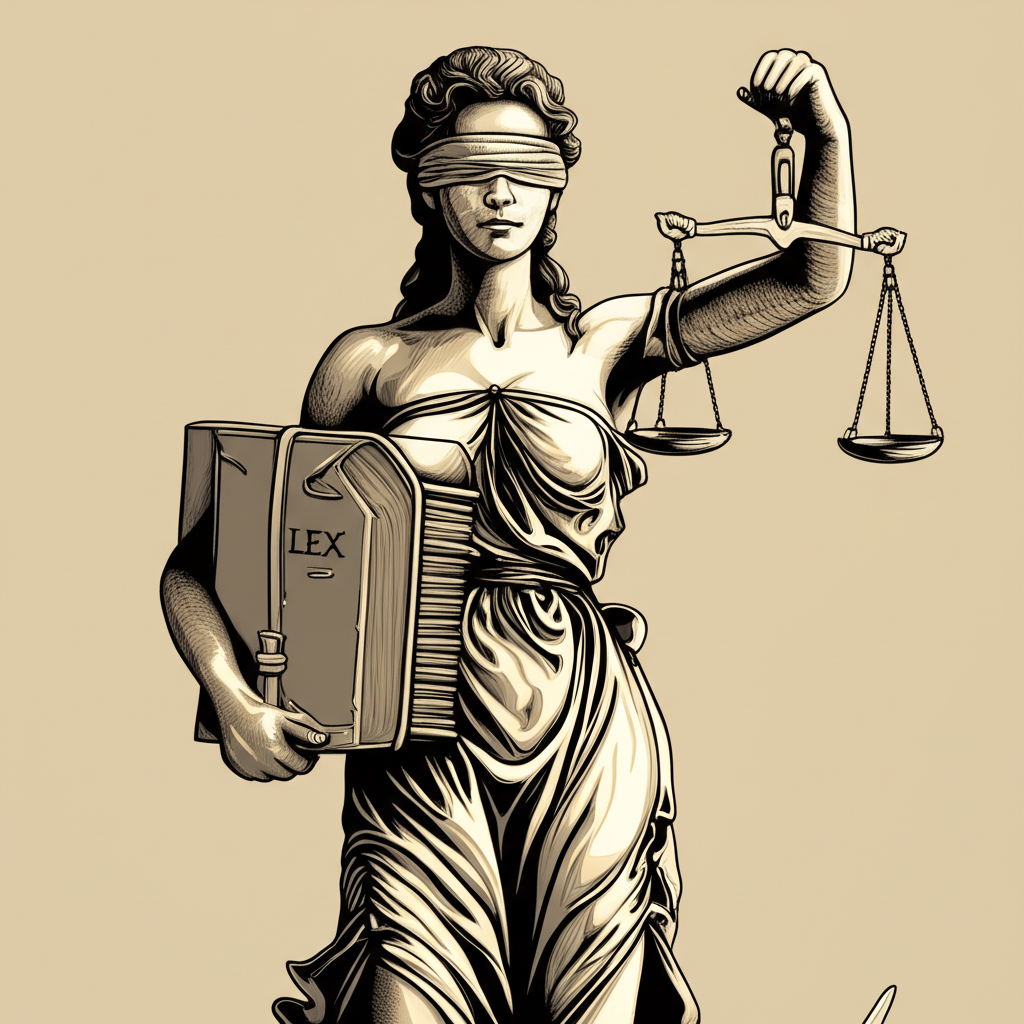 resting on a small anvil, signifying the weight and finality of legal judgment. Behind her, a stylized cityscape with orderly buildings and a distant, serene horizon suggests a well-governed society.)
VI. Challenges and Criticisms: The Double-Edged Sword
Despite its foundational role, the application of punishment is fraught with ethical dilemmas and practical challenges.
- Proportionality: How do we ensure that punishment fits the crime? Excessive punishment can be unjust, while insufficient punishment can undermine the Law's authority.
- Potential for Abuse: The power to punish, concentrated in the State, carries the risk of abuse, leading to tyranny, oppression, or the suppression of dissent.
- Effectiveness: Debates persist about the actual effectiveness of various forms of punishment in achieving deterrence, rehabilitation, or even true justice.
- Individual Rights vs. Collective Security: The tension between protecting individual liberties and ensuring the collective security of the State is a constant philosophical challenge. When does the State's duty to maintain order infringe too heavily on the rights of its citizens?
VII. Conclusion: A Necessary Burden
The role of punishment in maintaining order is undeniably complex, yet undeniably central to the functioning of any organized society. From the ancient insights of Plato and Aristotle on virtue and the polis, to the social contract theories that legitimize the State's power, and the contrasting philosophies of Kantian retribution and utilitarian consequentialism, the "Great Books of the Western World" provide a rich tapestry of thought on this vital subject.
Ultimately, punishment serves as the stern hand of the State, upholding the Law, reinforcing our collective duty, and striving to ensure that the delicate balance of order prevails. It is a necessary burden, one that requires continuous philosophical reflection and careful application to ensure it remains a tool for justice and stability, rather than an instrument of oppression. The ongoing challenge for any just society is to wield this power responsibly, always mindful of its profound implications for human dignity and the common good.
YouTube Video Suggestions:
-
📹 Related Video: KANT ON: What is Enlightenment?
Video by: The School of Life
💡 Want different videos? Search YouTube for: ""Justice: What's The Right Thing To Do? Episode 08: 'WHATS A FAIR START?'""
-
📹 Related Video: What is Philosophy?
Video by: The School of Life
💡 Want different videos? Search YouTube for: ""Punishment and Justice: Crash Course Philosophy #40""