

The Indispensable Bridge: How Education Cultivates Wisdom
In the grand tapestry of human endeavor, few pursuits are as foundational yet as elusive as the quest for wisdom. It's a journey often conflated with the mere accumulation of knowledge, but as I see it, true wisdom is far more profound. It's the synthesis, the insight, the lived understanding that transforms information into meaning. And at the heart of this transformative process lies education. Far from being a simple transmission of facts, education is the crucible in which raw intellectual material is forged into the discerning judgment we call wisdom, propelling individual and collective progress.
Building the Foundation: Knowledge as the Raw Material
Before we can even aspire to wisdom, we must first gather knowledge. This is where formal and informal education truly shines. From the structured curriculum of schools to the self-directed exploration of literature and philosophy, education provides us with the essential building blocks. We learn about history, science, mathematics, art, and the rich intellectual heritage encapsulated in works like the Great Books of the Western World.
- The Role of Knowledge Acquisition:
- Facts and Information: Education introduces us to established truths and theories.
- Conceptual Frameworks: It provides models for understanding complex phenomena.
- Historical Context: Learning about past successes and failures offers crucial perspective.
Without a solid foundation of knowledge, our attempts at wisdom would be akin to building a house without bricks – an empty aspiration. As many ancient philosophers understood, one cannot think deeply about the world without first understanding its contours.
Beyond Rote Learning: The Ascent from Knowledge to Wisdom
However, possessing a vast repository of facts does not automatically confer wisdom. A library is full of knowledge, but it is not wise. The distinction is crucial. Knowledge is knowing the facts; wisdom is understanding their significance, their interconnections, and how they apply to life's most challenging questions. This is where education moves beyond mere instruction to cultivate critical thought, ethical reasoning, and reflective judgment.
Consider the Socratic method, a cornerstone of philosophical inquiry documented in Plato's dialogues. It’s not about giving answers but about asking the right questions, challenging assumptions, and guiding the student to discover truths for themselves. This active engagement is vital for transforming inert knowledge into dynamic wisdom.
Key Differences:
| Feature | Knowledge | Wisdom |
|---|---|---|
| Nature | Accumulation of facts, data, theories | Application, insight, discernment, understanding |
| Acquisition | Learning, memorization, study | Reflection, experience, critical thinking |
| Outcome | Information, expertise | Good judgment, ethical action, meaningful life |
| Focus | What is | Why it is, how it should be |
Cultivating Critical Thought and Ethical Understanding
True education, as envisioned by thinkers from Aristotle to John Dewey, is never passive. It actively encourages students to question, analyze, synthesize, and evaluate. This intellectual rigor is the engine of wisdom.
- Critical Thinking: Education teaches us to scrutinize arguments, identify biases, and formulate coherent positions. This skill is indispensable for navigating the complexities of the modern world and making informed decisions.
- Ethical Reasoning: Through the study of philosophy, literature, and history, education exposes us to diverse moral frameworks and dilemmas. It prompts us to consider the consequences of actions, fostering empathy and a deeper understanding of human nature and societal obligations. This process is vital for developing phronesis, or practical wisdom, as Aristotle called it – the ability to make good judgments in concrete situations.
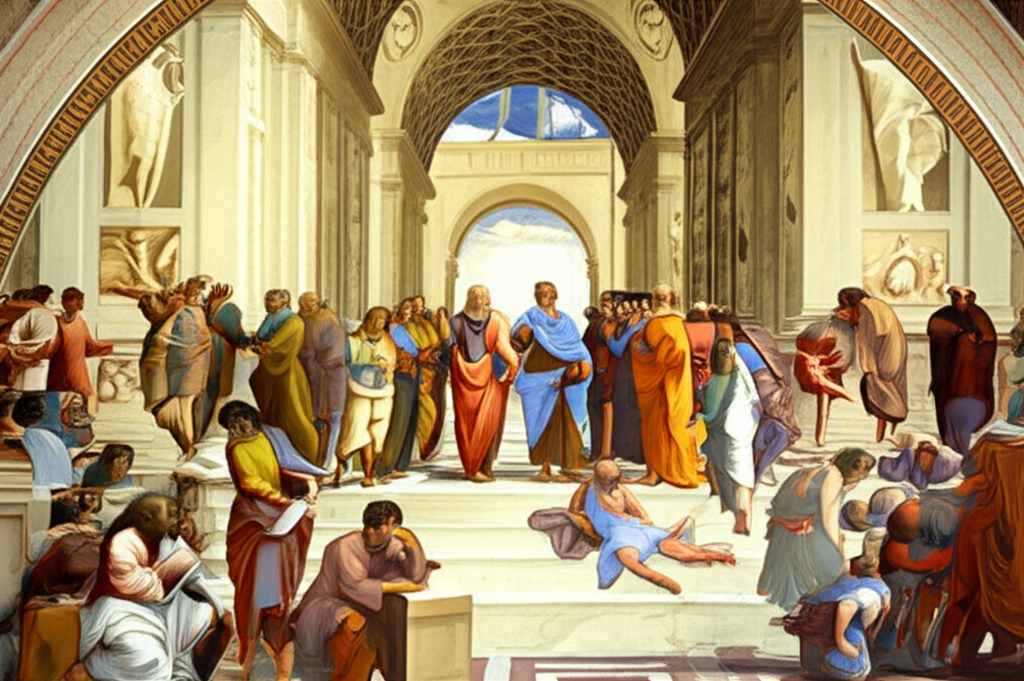
The Legacy of the Great Books: A Continuous Dialogue
The Great Books of the Western World stand as a testament to humanity's enduring quest for understanding. From Homer's epic tales exploring human nature and destiny to the logical treatises of Euclid and the profound philosophical inquiries of Kant, these texts offer not just knowledge, but a direct engagement with the minds that shaped Western thought. Engaging with these works is an act of education that directly nurtures wisdom. It teaches us to:
- Engage with diverse perspectives: Understanding arguments from different eras and cultures broadens our intellectual horizons.
- Recognize enduring questions: Many fundamental human dilemmas remain constant, offering timeless lessons.
- Participate in an ongoing conversation: We become part of a lineage of thinkers wrestling with profound truths.
This continuous dialogue across centuries is a powerful catalyst for our own intellectual and moral progress.
Wisdom as a Driver of Progress
Ultimately, the role of education in achieving wisdom extends beyond individual enlightenment. A society composed of wise individuals—those who can think critically, act ethically, and understand the deeper implications of their actions—is a society capable of genuine progress. It's a society that can tackle complex challenges, foster innovation responsibly, and build a more just and flourishing future. Education, by cultivating wisdom, equips us not just to adapt to change, but to shape it thoughtfully and purposefully.
The journey from education to knowledge, and then to wisdom, is an iterative one, never truly complete. It's a lifelong commitment to learning, reflecting, and striving for a deeper understanding of ourselves and the world. And it is this ongoing commitment that truly enriches our lives and the fabric of human existence.
📹 Related Video: ARISTOTLE ON: The Nicomachean Ethics
Video by: The School of Life
💡 Want different videos? Search YouTube for: ""Socrates philosophy wisdom" and "Aristotle ethics practical wisdom""