

The Unseen Hand: How Art Shapes Our Opinions
Art, often perceived as mere aesthetic pleasure or decorative flourish, holds a profound and often underestimated power in shaping human opinion. Far from being a passive reflection of culture, art actively participates in its creation, acting as a potent form of rhetoric that subtly, yet effectively, influences our perceptions, beliefs, and understanding of the world. Through its unique capacity to engage the emotions and stimulate the mind, art can solidify existing viewpoints, challenge entrenched ideas, or introduce entirely new perspectives, making it a critical, albeit often silent, force in societal discourse.
Introduction: The Unseen Hand of Aesthetics
From the earliest cave paintings to the latest digital installations, humanity has consistently turned to art not just for beauty, but for meaning. On planksip.org, we often explore the intricate dance between thought and expression, and few areas demonstrate this more vividly than the role of art in influencing our collective and individual opinion. Art bypasses the logical gates of the mind that verbal arguments often encounter, speaking directly to our intuitive and emotional selves. This direct line to our inner world makes it an incredibly powerful, and sometimes subversive, tool for persuasion.
Art as a Potent Form of Rhetoric
When we think of rhetoric, our mind typically conjures images of eloquent speeches or persuasive essays. However, art functions as a deeply effective, non-verbal form of it. It persuades not through syllogisms, but through experience, emotion, and evocative imagery.
Beyond Words: Emotional Persuasion
Art's persuasive power lies in its ability to evoke strong emotions – joy, sorrow, anger, empathy, wonder. A powerful painting can convey the horrors of war more viscerally than a thousand statistics. A poignant piece of music can unite a multitude in shared feeling. This emotional resonance is not merely incidental; it is central to how art shapes opinion. By tapping into our pathos, art can make an argument feel intuitively right or profoundly wrong, often before conscious thought has fully engaged.
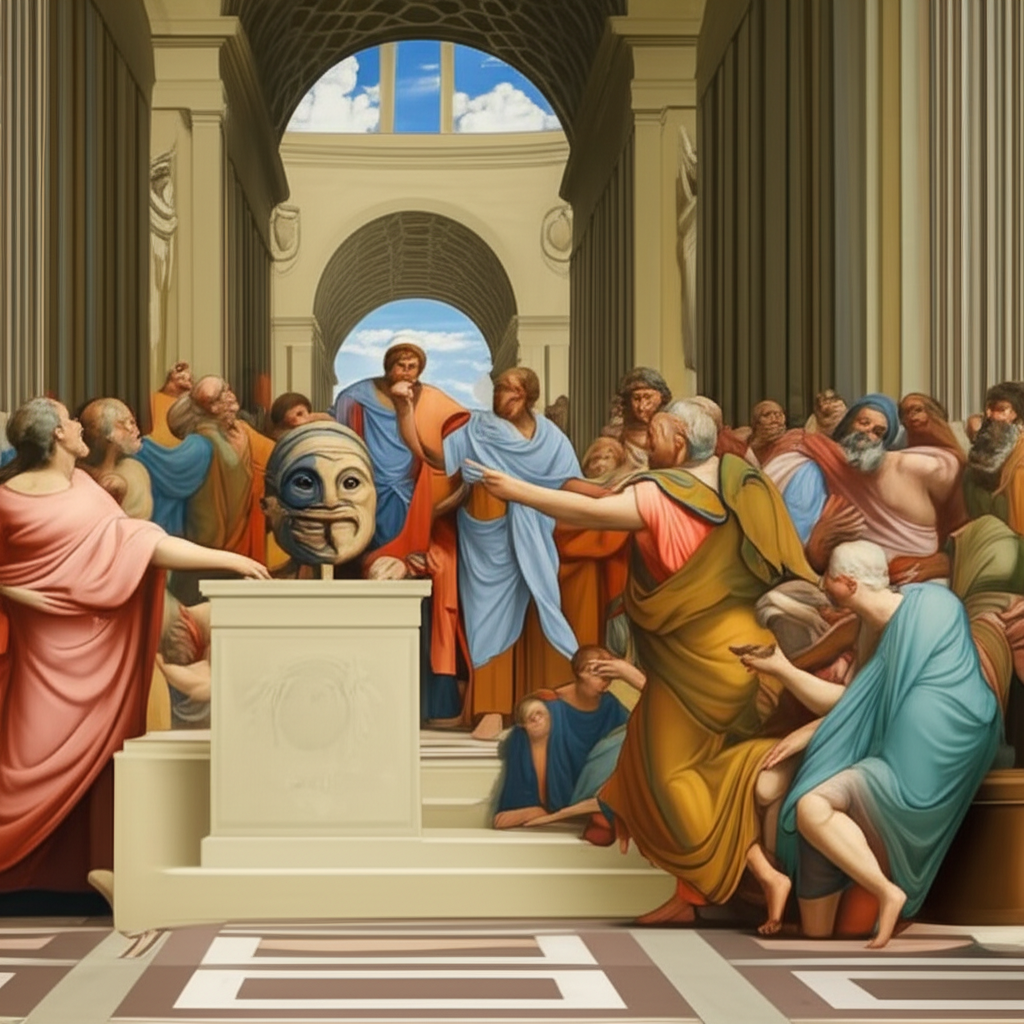
The Legacy of the Great Books: Plato, Aristotle, and the Power of Creation
The philosophers of the Great Books of the Western World grappled extensively with the influence of art.
- Plato, in his Republic, famously viewed certain forms of art with suspicion, particularly poetry and drama. He recognized their immense power to stir emotions and present imitations of reality that could potentially mislead citizens, diverting them from truth and reason. He understood that art could shape the mind of the polis, and thus believed it required careful regulation, especially for the young. For Plato, art's ability to create a compelling (but potentially false) reality was a significant concern for the formation of sound opinion.
- Aristotle, in contrast, offered a more nuanced view in his Poetics. While acknowledging art's emotional impact, he saw tragedy, for instance, as capable of producing catharsis – a purification of emotions like pity and fear. For Aristotle, art did not necessarily mislead; rather, it could provide a safe space for the exploration of human experience, helping to refine and educate the emotions, thereby contributing to a more balanced and informed mind. Both philosophers, despite their differing conclusions, unequivocally recognized art's profound capacity to influence.
Shaping the Mind: Perception and Belief
Art's influence on opinion is deeply rooted in its ability to shape our perception and, consequently, our beliefs. It doesn't just reflect reality; it frames it, offering new lenses through which to view the world.
The Subtlety of Artistic Influence
Unlike direct argumentation, art's influence is often subtle and cumulative. A series of artworks depicting a particular social issue can gradually shift public sentiment without a single explicit political statement. By presenting narratives, characters, or visual metaphors, art can normalize certain ideas, challenge stereotypes, or highlight overlooked perspectives. It implants ideas into the mind not as commands, but as seeds that grow into convictions.
From Individual Reflection to Collective Opinion
The individual experience of art, though deeply personal, contributes to a broader cultural dialogue. When many individuals are exposed to similar artistic themes or interpretations, a collective shift in opinion can occur. Art festivals, public installations, and widespread literary movements all contribute to a shared cultural consciousness, influencing how societies understand themselves, their values, and their future.
Mechanisms of Artistic Influence
Art employs several key mechanisms to shape opinion:
- Empathy and Identification: By presenting characters or situations that resonate with our own experiences or allow us to step into another's shoes, art fosters empathy. This emotional connection can dramatically alter our views on social issues, different cultures, or individual plights.
- Symbolism and Metaphor: Art communicates complex ideas through symbols and metaphors, bypassing purely logical processing. A single image can encapsulate a vast array of meanings, allowing for multiple interpretations while still guiding the mind towards a particular understanding.
- Cultural Dialogue and Critique: Art serves as a powerful medium for social commentary and critique. It can expose injustices, question authority, or celebrate cultural identities, sparking conversations that lead to shifts in public opinion. Think of satirical cartoons or protest songs; they are direct challenges to the status quo, designed to provoke thought and action.
The Ethical Imperative: Art, Truth, and Responsibility
Given art's undeniable power to shape the mind and influence opinion, an ethical dimension emerges. What responsibility do artists bear? Is art merely a tool, or does it have an inherent duty to truth or moral good? Just as rhetoric can be used for noble or manipulative ends, so too can art. The distinction lies in whether the artist seeks to genuinely broaden understanding and foster critical thought, or to merely indoctrinate and control. This ongoing philosophical debate, echoing the concerns of Plato, remains highly relevant in our media-saturated world.
Conclusion: The Enduring Power of the Aesthetic
The role of art in shaping opinion is neither trivial nor accidental. It is a fundamental aspect of human culture, deeply embedded in our cognitive and emotional landscapes. From the ancient epics that forged national identities to contemporary works that challenge global injustices, art continues to be a profound force of rhetoric, subtly yet powerfully guiding the human mind. To ignore its influence is to overlook one of the most potent shapers of our shared reality.
📹 Related Video: PLATO ON: The Allegory of the Cave
Video by: The School of Life
💡 Want different videos? Search YouTube for: ""Plato Aristotle Art Philosophy Debate Great Books""
📹 Related Video: KANT ON: What is Enlightenment?
Video by: The School of Life
💡 Want different videos? Search YouTube for: ""How Art Influences Society and Opinion Rhetoric""


