

The Unseen Architect: How Rhetoric Shapes Democracy
Summary: In a democracy, where the will of the people is paramount, rhetoric is not merely an art of persuasion but the very language through which opinion is forged, debated, and ultimately translated into action. From the ancient Athenian agora to modern digital forums, the skillful use of words, arguments, and appeals shapes public discourse, influences policy, and determines leadership. Understanding rhetoric's profound power is crucial for both practitioners and citizens alike, as it represents the fundamental mechanism by which a free society grapples with truth, navigates disagreement, and collectively charts its course.
The Enduring Resonance of the Spoken Word
For millennia, philosophers and political thinkers have grappled with the intricate dance between words and power. From the foundational texts within the Great Books of the Western World, we learn that rhetoric is not a modern invention but an ancient, vital force in human affairs. In democratic societies, where citizens are empowered to govern themselves, the ability to articulate ideas, challenge assumptions, and sway public opinion becomes the very lifeblood of the system. Without effective language and persuasive argumentation, the complex machinery of self-governance would grind to a halt.
Ancient Echoes: Rhetoric's Birth in Democracy
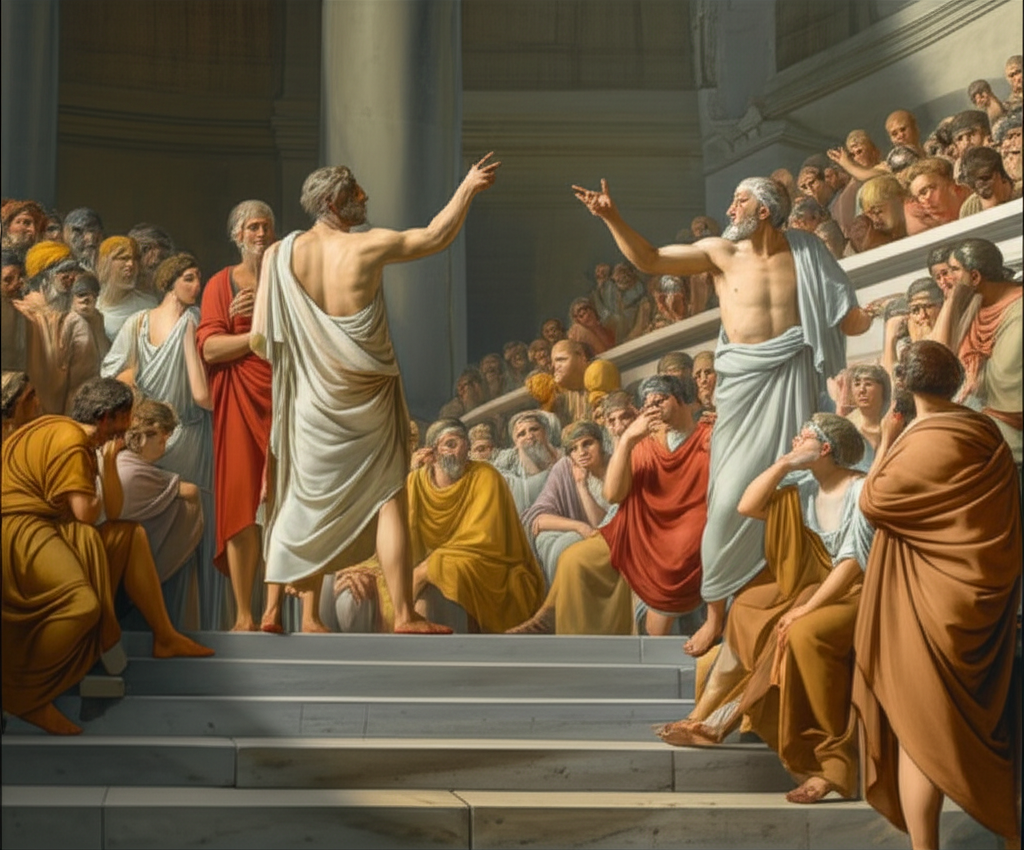
It is no coincidence that the formal study of rhetoric flourished in the cradles of early democracy – ancient Greece and Rome. Thinkers like Aristotle, whose Rhetoric remains a cornerstone text, meticulously dissected the components of persuasive speech, identifying appeals to logic (logos), emotion (pathos), and credibility (ethos). For citizens in these nascent democracies, the capacity to speak convincingly in the assembly or the courts was not just a skill; it was a civic duty and a means of survival.
This era established a profound truth: a democratic society, by its very nature, relies on the open exchange of ideas. The marketplace of ideas, however, is not a silent space; it is loud, vibrant, and often contentious. It is here that rhetoric acts as the primary tool for shaping collective understanding and guiding decisions.
The Mechanism of Opinion: Language as a Shaping Force
At its core, rhetoric is the art of using language effectively to persuade. In a democracy, this translates into the ongoing effort to shape public opinion. Every political speech, every editorial, every campaign advertisement, and indeed, every casual conversation about current events, contributes to this grand, continuous act of persuasion.
How Rhetoric Shapes Opinion:
- Framing Issues: Rhetoric defines the terms of debate, highlighting certain aspects of an issue while downplaying others.
- Evoking Emotion: Skilled orators can appeal to shared values, fears, or aspirations, creating a communal emotional response.
- Building Consensus: Through reasoned arguments and strategic appeals, rhetoric seeks to bridge divides and foster agreement.
- Mobilizing Action: Beyond mere belief, rhetoric often aims to inspire citizens to vote, protest, volunteer, or support a cause.
The Double-Edged Sword: Virtue and Manipulation
While essential, the power of rhetoric is inherently ambivalent. As Plato warned in his dialogues, particularly through Socrates' critiques of the Sophists, rhetoric can be divorced from truth, becoming a tool for manipulation rather than enlightenment. The ability to persuade can be used to champion justice or to spread deceit.
- Virtuous Rhetoric: Aims to inform, enlighten, and guide citizens towards sound judgments based on facts and ethical considerations. It fosters critical thinking and encourages active participation.
- Manipulative Rhetoric: Seeks to exploit biases, ignite prejudice, and obscure truth for personal or partisan gain. It often bypasses reasoned argument in favor of emotional appeals and fallacies.
The health of a democracy is, in large part, determined by the prevalence of virtuous rhetoric and the public's ability to discern it from its manipulative counterpart. A citizenry equipped with critical thinking skills is better prepared to navigate the rhetorical landscape and resist demagoguery.
Cultivating a Rhetorically Literate Democracy
For a democracy to thrive, its citizens must be active participants, not passive recipients, in the rhetorical exchange. This requires a commitment to rhetorical literacy – the ability to analyze, evaluate, and produce effective and ethical language.
Key Aspects of Rhetorical Literacy:
| Aspect | Description | Impact on Democracy |
|---|---|---|
| Critical Listening | Actively discerning an speaker's purpose, appeals, and underlying assumptions. | Prevents manipulation; encourages thoughtful responses. |
| Argument Analysis | Identifying claims, evidence, and reasoning; recognizing logical fallacies. | Fosters informed opinion and robust debate. |
| Ethical Communication | Understanding the responsibility to present information fairly, honestly, and respectfully. | Builds trust; enables constructive dialogue even amidst disagreement. |
| Public Articulation | The ability to clearly and persuasively express one's own ideas and opinions in public forums. | Empowers citizens; ensures diverse voices are heard and considered. |
Through education and continuous engagement, societies can strengthen their collective capacity to wield and interpret rhetoric responsibly. This is not merely an academic exercise but a practical necessity for safeguarding the principles of a free and self-governing people.
Conclusion: The Unceasing Conversation
The power of rhetoric in democracy is undeniable and inescapable. It is the very breath of public life, shaping our understanding, influencing our choices, and defining our collective future. From the grand pronouncements of leaders to the everyday exchanges among neighbors, language serves as the primary instrument for crafting and contesting opinion. As Benjamin Richmond, I contend that understanding this intricate relationship is not just an intellectual pursuit but a civic imperative. By cultivating a discerning ear and an ethical voice, we ensure that the democratic conversation remains vibrant, truthful, and ultimately, serves the common good.
**## 📹 Related Video: ARISTOTLE ON: The Nicomachean Ethics
Video by: The School of Life
💡 Want different videos? Search YouTube for: "The Role of Rhetoric in Ancient Greek Democracy"**
**## 📹 Related Video: ARISTOTLE ON: The Nicomachean Ethics
Video by: The School of Life
💡 Want different videos? Search YouTube for: "Aristotle's Rhetoric Explained"**