

The Eloquent Architect: Shaping Democracy Through Rhetoric
The very essence of democracy – a government by the people – hinges on the power of shared language and the shaping of public opinion. At the heart of this intricate dance lies rhetoric, the ancient art of persuasion. Far from mere ornamentation, rhetoric is the fundamental mechanism through which ideas are presented, debated, and ultimately adopted or rejected in a free society. This article explores rhetoric's indispensable and complex role, from its classical foundations to its contemporary manifestations, highlighting its capacity to both enlighten and mislead, and thus, to build or undermine the democratic ideal.
The Enduring Echo of Persuasion: Rhetoric's Democratic Roots
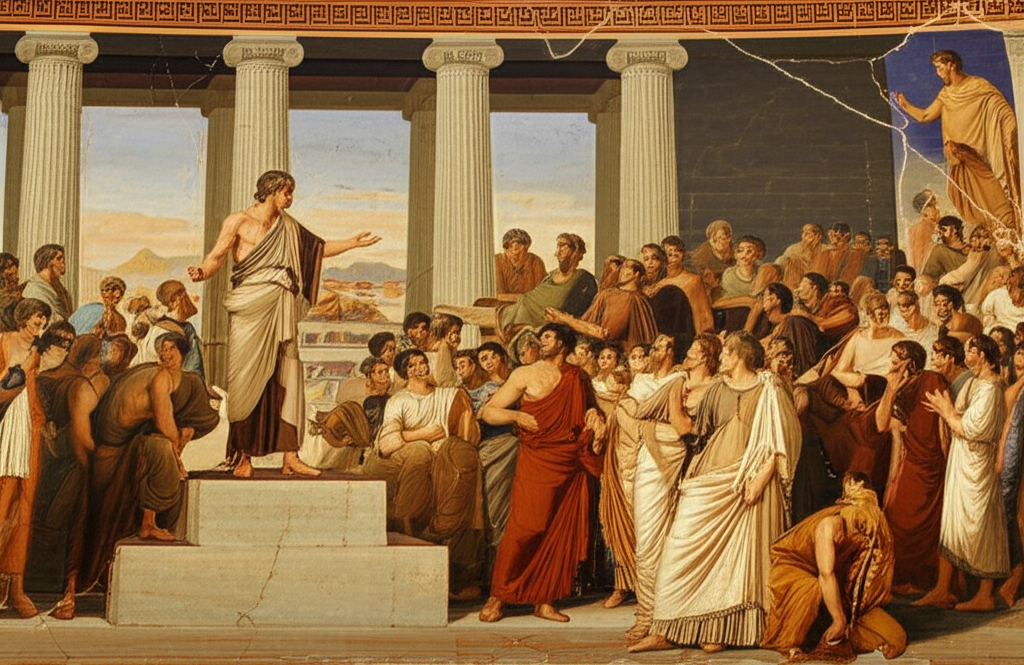
Rhetoric is more than just speaking well; it is, as Aristotle meticulously detailed in his foundational work Rhetoric (a cornerstone of the Great Books of the Western World), "the faculty of discovering in any particular case all the available means of persuasion." In a democracy, where decisions are meant to be made through deliberation and consensus, the ability to persuade becomes paramount. From the bustling agora of ancient Athens to the digital forums of today, the spoken and written word is the primary vehicle for political engagement.
The birth of democratic governance in ancient Greece was inextricably linked to the development of sophisticated rhetorical practices. Citizens were expected not only to vote but also to participate actively in assemblies, to argue cases in courts, and to advocate for policies. This environment fostered a profound understanding of how language could move an audience, sway opinion, and secure collective action.
Language as the Crucible of Opinion
The relationship between language and opinion in a democracy is symbiotic. Our understanding of the world, our political beliefs, and our collective opinions are largely constructed through the language we encounter and employ. Rhetoric, therefore, is not just about conveying information; it's about framing issues, crafting narratives, and evoking emotions that shape how that information is received and interpreted.
Consider the three primary modes of persuasion identified by Aristotle:
- Ethos: The appeal to the speaker's credibility or character.
- Pathos: The appeal to the audience's emotions.
- Logos: The appeal to logic and reason.
A skilled orator understands that pure logic often falls short without an accompanying sense of trustworthiness (ethos) or an emotional connection (pathos). However, this potent combination also highlights rhetoric's inherent dangers. Plato, in his dialogue Gorgias, famously critiqued the Sophists for using rhetoric not to seek truth, but merely to win arguments and flatter audiences, prioritizing opinion over genuine knowledge. This tension between persuasion for truth and persuasion for power remains a central challenge for democracy.
The Democratic Dialectic: Rhetoric's Dual Edge
The power of rhetoric is a double-edged sword within a democratic framework. It possesses immense potential for good, yet also carries the significant risk of manipulation.
| Aspect of Rhetoric | Positive Impact on Democracy | Negative Impact on Democracy |
|---|---|---|
| Persuasion | Fosters informed debate, encourages civic participation, builds consensus on complex issues. | Leads to demagoguery, propaganda, and the manipulation of public sentiment for narrow interests. |
| Language | Clarifies complex ideas, unites diverse groups, articulates shared values and goals. | Obfuscates truth, promotes division, relies on emotionally charged or misleading terms. |
| Opinion Shaping | Mobilizes citizens for collective action, builds support for just policies, facilitates social progress. | Creates echo chambers, polarizes society, incites irrational fear or hatred, undermines rational discourse. |
Good rhetoric, as exemplified by figures like Abraham Lincoln, uses language to elevate public discourse, appeal to shared values, and articulate a vision that transcends partisan divides. It aims for reasoned deliberation, guiding opinion towards the common good. Conversely, destructive rhetoric can exploit divisions, propagate falsehoods, and incite irrational behavior, eroding the very foundations of trust and shared reality upon which democracy depends.
Navigating the Rhetorical Landscape
In a world saturated with information and competing narratives, understanding rhetoric is more crucial than ever for the health of democracy. Citizens must become rhetorically literate, capable of discerning sound arguments from fallacious ones, identifying emotional appeals, and critically evaluating the ethos of speakers. As Cicero, another giant from the Great Books tradition, understood, the ideal orator is not merely skilled in speaking but also virtuous, committed to justice and the welfare of the republic.
The power of language to shape opinion is undeniable. For democracy to flourish, we must cultivate an environment where robust, ethical rhetoric is encouraged, and where citizens are equipped to critically engage with all forms of persuasion. The ongoing conversation, the constant exchange of ideas, and the collective pursuit of understanding through language are not just features of democracy; they are its lifeblood.
The Unceasing Conversation
The power of rhetoric in democracy is a timeless theme, continuously evolving with each new medium and political challenge. It underscores the fundamental human capacity to influence and be influenced, to shape and be shaped by the words we use. As long as democracy relies on deliberation, persuasion, and the free expression of opinion, the study and practice of rhetoric will remain an essential, if sometimes perilous, art.
📹 Related Video: ARISTOTLE ON: The Nicomachean Ethics
Video by: The School of Life
💡 Want different videos? Search YouTube for: ""Aristotle Rhetoric summary philosophy""
📹 Related Video: PLATO ON: The Allegory of the Cave
Video by: The School of Life
💡 Want different videos? Search YouTube for: ""Plato Gorgias rhetoric democracy explained""