

The Unseen Architect: How Imagination Shapes the Soul of Art
Summary: The power of imagination in art transcends mere fancy; it is the fundamental force that breathes life into creation, allowing artists to envision new realities and audiences to perceive profound truths. Far from a passive faculty, imagination actively synthesizes memory with novel concepts, shaping beauty through intentional form, and offering a unique lens through which we engage with the world and ourselves. It is the unseen architect of all aesthetic experience, a bridge between the tangible and the transcendent.
The Genesis of Vision: Imagination as the Artist's First Tool
Before the brush touches the canvas, the chisel meets stone, or the pen glides across paper, there exists a profound internal landscape where art truly begins: the realm of imagination. This is not merely the ability to conjure images, but a dynamic, synthesizing power that allows the artist to conceive of that which does not yet exist, or to re-envision that which does, imbuing it with new meaning.
Consider the great masters, whose works continue to resonate across centuries. Their genius lay not solely in their technical prowess, but in their capacity to imagine worlds, narratives, and emotions, translating these inner visions into tangible expressions. From the mythical beasts of ancient epics to the soaring cathedrals that defy gravity, each began as an imaginative spark, nurtured into a fully realized form.
The Interplay of Memory and Imagination: Weaving the Tapestry of Creation
The wellspring of artistic imagination is often deeply intertwined with memory. Our personal experiences, observations, dreams, and even inherited cultural narratives form a vast reservoir from which the imaginative faculty draws. It is not a simple retrieval, however, but a complex process of re-combination and transformation.
- Re-contextualization: Imagination takes fragments of memory – a face, a landscape, an emotion – and places them in novel configurations.
- Embellishment: It elaborates upon the sparse details of memory, adding layers of detail, symbolism, and emotional weight.
- Transcendence: Ultimately, imagination allows the artist to move beyond mere mimetic representation, transforming personal memory into universal insight.
This intricate dance between memory and imagination is what allows art to feel both intimately familiar and strikingly new, offering fresh perspectives on shared human experiences. The artist, through this process, doesn't just record the past; they recreate and re-imagine it, offering us a vision of what could be or what might be.
Shaping Beauty and Form: The Architectonic Role of Imagination
The pursuit of beauty in art is inextricably linked to the power of imagination. It is through this faculty that an artist perceives and then renders not merely a likeness, but an essence, imbuing the work with a particular form that aspires to an ideal.
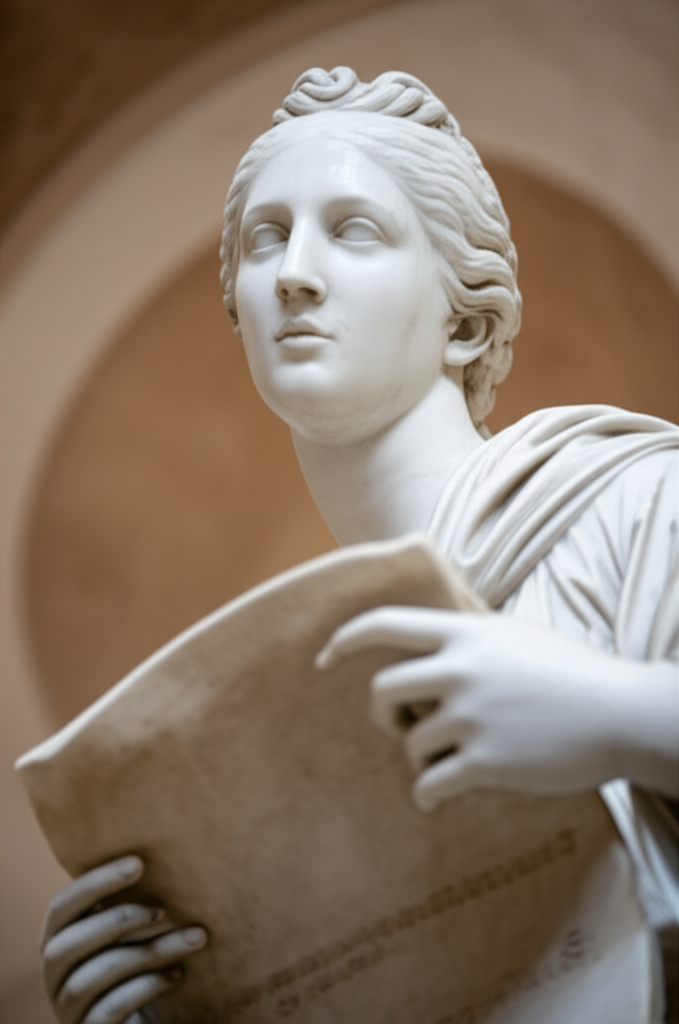
- Idealization: Imagination allows the artist to filter imperfections, to distill the essence of a subject, and to present it in its most compelling or idealized form. This is evident in classical sculpture, where the human body is often depicted with a perfection rarely found in nature, yet profoundly beautiful.
- Structure and Coherence: Beyond mere aesthetic appeal, imagination provides the underlying structure and coherence to an artwork. It arranges elements, establishes rhythm, and dictates the overall composition, ensuring that the form serves the intended meaning. Without imaginative foresight, art risks becoming chaotic or meaningless.
- Evoking Emotion: The imaginative construction of a scene, a character, or a soundscape is what allows art to evoke powerful emotional responses in the viewer or listener. The carefully chosen color palette, the dramatic tension in a narrative, or the harmonic progression in music – all are products of an imagination seeking to communicate feeling.
Art as a Realm of Unfettered Imagination
The true power of imagination in art lies in its capacity to break free from the constraints of the purely empirical. It allows us to:
- Explore Hypotheticals: Art often presents "what if" scenarios, allowing us to imaginatively inhabit different lives, societies, or moral dilemmas.
- Confront the Abstract: Through abstract art, imagination invites us to find form and meaning in non-representational expressions, tapping into our own inner landscapes.
- Experience the Sublime: When confronted with art that evokes awe or terror, our imagination expands to grasp concepts beyond our immediate comprehension, touching upon the sublime – a profound aesthetic experience.
This freedom, this ability to create and perceive beyond the immediate, is what elevates art from mere craft to a profound philosophical endeavor. It engages our minds, challenges our assumptions, and expands our understanding of reality itself.
**## 📹 Related Video: PLATO ON: The Allegory of the Cave
Video by: The School of Life
💡 Want different videos? Search YouTube for: "'Plato's Theory of Art and Mimesis,' 'Kant Aesthetics Imagination'"**
Conclusion: The Enduring Legacy of the Imaginative Act
The power of imagination in art is an enduring testament to the human spirit's capacity for creation and understanding. It is the invisible force that transforms raw materials into masterpieces, that synthesizes memory into novel expressions, and that shapes our perception of beauty through deliberate form. As we engage with art, we are not merely observing an object; we are participating in an imaginative act – both the artist's initial conception and our own interpretive journey. In this shared imaginative space, art continues to reveal profound truths about ourselves and the cosmos, reminding us that reality is not just what we perceive, but what we are capable of envisioning.