

The Measure of All Things: Unpacking the Philosophical Problem of Quantity
The world, at first glance, seems to be a collection of things we can count, measure, and delineate. We speak of three apples, a mile's distance, or a quantity of water. Yet, beneath this seemingly straightforward experience lies one of philosophy's most enduring and subtle challenges: The Philosophical Problem of Quantity. This isn't merely about arithmetic; it's a profound inquiry into the very nature of what it means to be quantifiable, how quantity relates to quality, and its fundamental role in Metaphysics—our understanding of reality itself. From the ancient Greeks who saw numbers as the essence of the cosmos to modern debates about the fabric of space-time, the definition and implications of quantity have shaped our intellectual landscape, revealing deep truths and persistent paradoxes about existence.
What is Quantity, Philosophically Speaking?
When we first encounter the term "quantity," our minds often leap to numbers, measurements, or the sheer "how much" of something. We quantify our possessions, the passage of time, or the dimensions of a room. But for a philosopher, the question delves much deeper than mere enumeration. The philosophical problem of quantity asks:
- What is quantity, fundamentally? Is it an inherent property of objects, or a construct of our minds?
- How does quantity relate to identity? Does changing the quantity of something change what it essentially is?
- Is reality ultimately continuous, like a line, or discrete, like a collection of points?
- What are the metaphysical implications of quantity for our understanding of substance, change, and existence itself?
This inquiry forces us to move beyond the practical application of numbers and confront the very ontological status of magnitude and multitude.
Historical Perspectives on the Nature of Quantity
The journey to understand quantity is as old as philosophy itself, with profound insights emerging from the "Great Books of the Western World."
Ancient Greek Insights: From Pythagoras to Aristotle
The earliest systematic explorations of quantity often began with the mystical and mathematical.
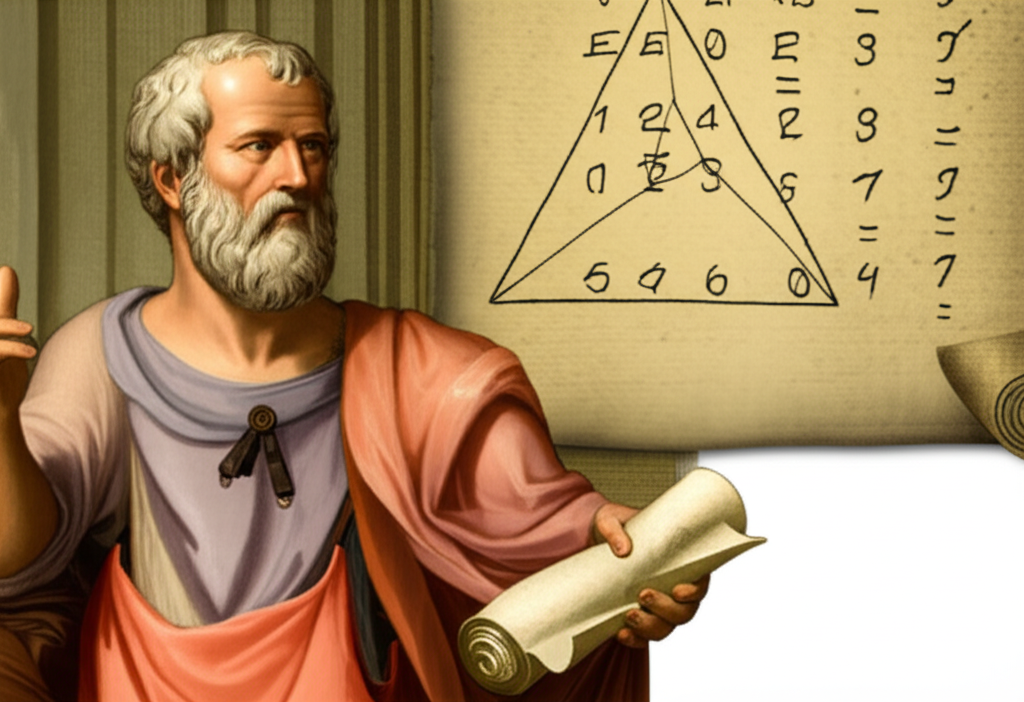
- Pythagoras and the Primacy of Number: For the Pythagoreans, number was not just a description of reality, but its very essence. They believed that all things could be reduced to numerical relationships, seeing the cosmos as a harmonious system governed by mathematical proportions. This was perhaps the first bold assertion of quantity's fundamental role in Metaphysics.
- Plato's Forms and the One and the Many: Plato, in dialogues like the Parmenides, grappled with the problem of the One and the Many—how individual quantities relate to universal forms. While his focus was on ideal forms, the very idea of a form implies a singular, perfect instance that particular, quantifiable objects participate in. He questioned how a Form could be both one and yet distributed among many particulars.
- Aristotle's Categories: Quantity as a Fundamental Trait: It was Aristotle, however, who provided one of the most systematic early definitions of quantity. In his Categories, he lists quantity as one of the ten fundamental ways in which beings can be described. For Aristotle, quantity is that by which a thing is said to be "so much." He distinguishes between two primary types:
- Discrete Quantities: These are quantities whose parts have no common boundary and are distinct from one another. Examples include number (e.g., three men, five horses) and speech (words are distinct units).
- Continuous Quantities: These are quantities whose parts have a common boundary, allowing them to merge seamlessly. Examples include line, surface, body (spatial dimensions), and time.
Aristotle's distinction laid a groundwork for centuries of thought, emphasizing that quantity is not a monolithic concept but manifests in different modes, each with its own metaphysical implications.
The Dawn of Modern Metaphysics: Descartes and Locke
With the scientific revolution, the problem of quantity took on new urgency, particularly in defining the physical world.
- Descartes and Extended Substance: René Descartes famously reduced the essence of matter to extension—a purely quantitative property. For Descartes, the physical world (res extensa) was fundamentally characterized by its spatial dimensions (length, breadth, depth). All other properties, like color or taste, were secondary and mind-dependent. This radical definition elevated quantity to the primary attribute of physical reality, profoundly influencing subsequent Metaphysics.
- Locke's Primary Qualities: John Locke, in his Essay Concerning Human Understanding, built upon this distinction with his theory of primary and secondary qualities. He argued that primary qualities—such as solidity, extension, figure, motion/rest, and number—are inseparable from bodies and exist objectively, regardless of whether they are perceived. These are the quantifiable aspects of matter. Secondary qualities (like color, sound, taste) are mere powers in objects to produce sensations in us. Locke's work further solidified the philosophical importance of quantity as an objective feature of the world.
Kant's Transcendental Idealism: Quantity as a Category of Understanding
Immanuel Kant shifted the focus from the inherent nature of quantity in objects to its role in our cognitive framework. In his Critique of Pure Reason, Kant argued that quantity is not just "out there" but is one of the twelve Categories of Understanding—innate structures of the mind through which we organize sensory experience.
- Unity: The apprehension of something as a single, coherent entity.
- Plurality: The apprehension of multiple distinct entities.
- Totality: The apprehension of a complete whole composed of many parts.
For Kant, these categories of quantity are necessary conditions for any experience to be intelligible. We cannot perceive anything without imposing these quantitative structures upon it. This perspective represents a profound turn in the philosophical problem of quantity, moving it from an ontological question about things-in-themselves to an epistemological one about how we know things.
The Metaphysical Implications of Quantity
The philosophical problem of quantity is deeply intertwined with Metaphysics, touching upon fundamental questions about the nature of reality.
The Problem of the One and the Many
How can individual, quantifiable parts constitute a unified whole? This ancient problem resurfaces constantly. Is a heap of sand a "thing" or merely a collection of grains? Where does the "oneness" of a forest come from, given its many trees? This probes the very definition of identity and composition.
Continuity vs. Discreteness: The Fabric of Reality
Aristotle's distinction between continuous and discrete quantities remains a live debate. Is space truly continuous, allowing for infinite divisibility, or is it fundamentally granular, composed of indivisible units (quanta)? Zeno's paradoxes, like Achilles and the Tortoise, vividly illustrate the conceptual difficulties inherent in reconciling continuous motion with discrete points in space and time. This question has profound implications for modern physics and our understanding of the universe's fundamental structure.
Quantity and Identity: When Does "How Much" Change "What"
Does a change in quantity alter the identity of a thing? If you remove one grain of sand from a heap, is it still the same heap? If you add a drop of water to an ocean, is it still the same ocean? These are variations of the Sorites Paradox, highlighting the fuzzy boundaries of our definitions when quantity is at play. It forces us to reconsider how much a thing can change quantitatively before it becomes, qualitatively, something else entirely.
The Infinite and the Indefinite
The concept of infinite quantity—whether an infinite number of things or an infinitely divisible continuum—has plagued philosophers for millennia. Can an actual infinite exist, or is infinity always merely potential? This question impacts our understanding of the cosmos, the nature of numbers, and even theological concepts.
Defining Quantity: A Shifting Landscape
The quest for a universal definition of quantity has led to a fascinating evolution of thought:
| Philosophical Era | Key Perspective on Quantity | Primary Focus |
|---|---|---|
| Ancient Greece | Essence of reality (Pythagoras), Fundamental Category (Aristotle) | Ontology, Classification |
| Modern Era | Primary attribute of matter (Descartes, Locke) | Objective reality, Epistemology |
| Enlightenment | Category of Understanding (Kant) | Subjective experience, Cognition |
Each era has refined or challenged previous understandings, demonstrating that quantity is not a static concept but a dynamic philosophical problem, perpetually requiring re-evaluation.
Conclusion: Why Quantity Still Matters
The philosophical problem of quantity is far more than an academic exercise. It underpins our scientific endeavors, from the discrete quanta of quantum mechanics to the continuous manifolds of general relativity. It influences our understanding of identity, change, and the very fabric of reality. By grappling with how we define and perceive quantity, we gain deeper insights into the fundamental structures of our universe and the categories of our own thought. It reminds us that even the most seemingly simple aspects of our experience—like counting or measuring—conceal profound metaphysical mysteries that continue to challenge and inspire philosophy.
YouTube Suggestions:
-
📹 Related Video: ARISTOTLE ON: The Nicomachean Ethics
Video by: The School of Life
💡 Want different videos? Search YouTube for: ""Aristotle Categories Quantity Philosophy Explained""
-
📹 Related Video: What is Philosophy?
Video by: The School of Life
💡 Want different videos? Search YouTube for: ""Zeno's Paradoxes Explained Philosophy of Motion""