

The Enduring Enigma: Unpacking the Philosophical Definition of Man
The question of "What is Man?" stands as one of the most persistent and profound inquiries in all of philosophy. From the earliest thinkers to contemporary minds, the attempt to forge a comprehensive definition of this peculiar being has shaped our understanding of ourselves, our societies, and our place in the cosmos. This article delves into the rich tapestry of philosophical thought, exploring how different eras and intellectual giants from the Great Books of the Western World have grappled with this fundamental query, revealing Man not as a fixed entity, but as a dynamic concept perpetually under examination.
A Journey Through the Human Condition: Defining Our Essence
The quest for the philosophical definition of Man is not merely an academic exercise; it's a deeply personal one, touching upon our very essence, purpose, and potential. Throughout history, philosophers have offered myriad answers, often reflecting the prevailing scientific, religious, and social paradigms of their time. Yet, common threads emerge, weaving together a complex portrait of humanity marked by reason, emotion, sociality, and an inherent capacity for self-reflection.
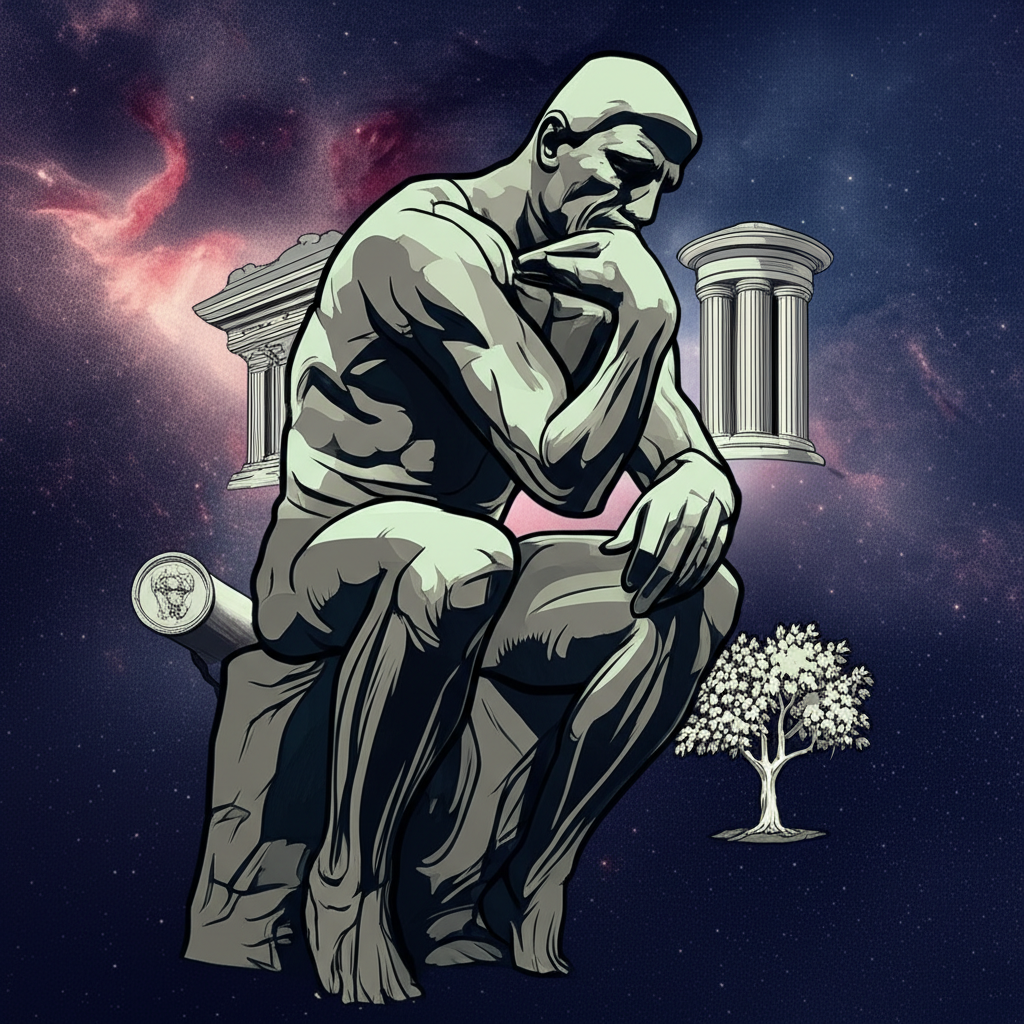
Ancient Echoes: Reason, Polis, and the Soul
The foundational texts of ancient Greece laid much of the groundwork for later discussions concerning the definition of Man.
- Plato's Ideal Forms and the Tripartite Soul: For Plato, Man was essentially a soul imprisoned within a body. The soul itself was tripartite: reason (the charioteer), spirit (noble horse), and appetite (ignoble horse). The true essence of Man lay in the rational part, striving to apprehend the eternal Forms. A life well-lived was one where reason governed the other two aspects, leading to virtue and wisdom.
- Aristotle's Rational and Political Animal: Aristotle offered a more grounded perspective. He famously defined Man as a rational animal (zoon logikon) and a political animal (zoon politikon). Our capacity for reasoned thought and our innate drive to form communities (the polis) were, for him, distinguishing features. The telos, or ultimate purpose, of human being was to achieve eudaimonia (flourishing or living well) through virtuous activity in a community.
Medieval Reflections: Divine Image and Free Will
With the advent of Christianity, the philosophical lens shifted, incorporating theological dimensions into the definition of Man.
- Augustine's Inner Self and the Will: Saint Augustine, deeply influenced by Neoplatonism, saw Man as a being created in the image of God, possessing an eternal soul and free will. The internal struggle between spiritual aspirations and worldly desires became central. The definition of Man was inextricably linked to his relationship with the divine and his capacity for salvation or damnation.
- Aquinas's Rational Soul and Natural Law: Thomas Aquinas, synthesizing Aristotelian philosophy with Christian theology, posited that Man is a composite of body and a rational soul. This rational soul, being the form of the body, confers the unique human capacities for intellect and will. Man is capable of discerning natural law through reason, guiding him towards his ultimate good, which is communion with God.
The Modern Turn: Consciousness, Autonomy, and the Self
The Enlightenment ushered in a radical re-evaluation, placing emphasis on individual consciousness and autonomy.
- Descartes's Thinking Thing: René Descartes famously declared, "Cogito, ergo sum" ("I think, therefore I am"). For him, the essence of Man was a thinking substance (res cogitans). The body was a separate, extended substance (res extensa), a machine. This dualistic definition profoundly impacted subsequent philosophy, focusing on the internal, conscious experience as the hallmark of human being.
- Locke's Consciousness and Memory: John Locke, exploring personal identity, argued that Man is defined by consciousness, specifically through memory. It is the continuity of consciousness, linking past and present experiences, that constitutes the self, rather than a fixed substance.
- Kant's Moral Agent: Immanuel Kant emphasized Man's unique capacity for moral autonomy. He defined Man as a rational being capable of acting according to self-imposed moral laws, not merely instinct or external authority. This capacity for moral freedom and universal reason elevates Man to a position of inherent dignity.
Existential Quests: Freedom, Responsibility, and Meaning
The 19th and 20th centuries brought forth new challenges to traditional definitions, highlighting freedom and the burden of existence.
- Nietzsche's Will to Power and the Übermensch: Friedrich Nietzsche critiqued traditional moral and religious frameworks, suggesting that Man is driven by a "will to power." He envisioned the Übermensch (Overman) as a higher type of Man who transcends conventional morality, creates his own values, and affirms life in all its complexity. This was less a definition and more a call to self-overcoming.
- Sartre's Existence Precedes Essence: Jean-Paul Sartre, a key figure in existentialism, famously stated that for Man, "existence precedes essence." This means we are born without a predetermined nature or purpose; we are condemned to be free, constantly defining ourselves through our choices and actions. The definition of Man is therefore fluid, self-created, and fraught with responsibility.
Key Facets of the Philosophical Definition of Man
To synthesize these diverse perspectives, we can identify several recurring philosophical facets that contribute to the ongoing definition of Man:
| Facet | Description | Key Philosophical Question |
|---|---|---|
| Rationality | The capacity for logical thought, abstract reasoning, language, and problem-solving. | Is reason the sole or primary distinguishing feature of Man? |
| Consciousness/Self-awareness | The ability to be aware of oneself as a distinct individual, to reflect on one's thoughts and experiences. | What constitutes the "self" and how does it persist over time? |
| Moral Agency | The capacity to make ethical choices, understand right and wrong, and act according to moral principles. | Is Man inherently good, evil, or morally neutral? |
| Social/Political Being | The innate tendency to live in communities, form societies, and engage in political structures. | How do social structures shape the individual Man? |
| Freedom & Will | The capacity for choice, self-determination, and the ability to act independently of external forces or internal desires. | Is Man truly free, or are his choices determined? |
| Purpose/Meaning | The search for significance, ultimate goals, and the inherent value of human existence. | Does Man have an inherent purpose, or must he create it? |
The Unending Search for "Being"
Ultimately, the philosophical definition of Man is not a singular, immutable truth, but a dynamic and evolving concept. Each era, each philosopher, and indeed each individual, contributes to our collective understanding of what it means to be human. The Great Books provide not answers etched in stone, but a rich dialogue, a constant prodding of assumptions, and an invitation to engage in the most crucial of all inquiries: the definition of our own being.
This ongoing quest highlights Man's unique position: a being who not only exists but also continually questions the nature of his own existence.
📹 Related Video: What is Philosophy?
Video by: The School of Life
💡 Want different videos? Search YouTube for: ""Philosophical Definitions of Man History" or "What is Human Nature Philosophy""