

The philosophical concept of Will is one of the most profound and enduring subjects in the history of philosophy. It delves into the very core of human agency, morality, and our relationship with the world. Far from a simple notion of wanting, the philosophical Will explores the power of choice, the source of action, and the intricate interplay between our inner mind, our desires, and our capacity to shape our own destiny. From ancient Greek inquiries into rational choice to modern debates on free will and neuroscience, understanding the Will is essential to comprehending what it means to be human.
The Enigma of Will: A Core Philosophical Inquiry
At its heart, the Will refers to the faculty of the mind by which we decide on and initiate actions. It is often seen as the seat of our choices, our intentions, and our capacity for self-determination. But what exactly is this faculty? Is it entirely free, or is it determined by external forces, our biology, or even unconscious desires? These questions have occupied thinkers for millennia, shaping entire systems of thought and challenging our most fundamental assumptions about responsibility, freedom, and the nature of reality itself.
Historical Perspectives on Will from the Great Books of the Western World
The journey through the concept of Will is a winding path, illuminated by some of the greatest thinkers in history. Their insights, often found within the pages of the Great Books, reveal a rich tapestry of evolving understanding.
Ancient Roots: From Plato to Aristotle
In ancient Greece, the concept of Will was often intertwined with reason and desire.
- Plato, in works like The Republic, explored the soul's tripartite nature, where nous (intellect or reason) was meant to guide the spirited and appetitive parts. The Will, in this context, could be understood as the rational desire to act in accordance with the good, or the capacity of the mind to assent to the dictates of reason.
- Aristotle, in his Nicomachean Ethics, delved into voluntary action (hekousion) and choice (prohairesis). For Aristotle, choice involved deliberation and was a "deliberate desire of things in our power." The Will was thus closely linked to practical reason and the development of virtuous character, aiming towards the telos (end or purpose) of human flourishing.
The Christian Turn: Augustine's Revolutionary Insight
Perhaps no figure reshaped the understanding of Will more profoundly than St. Augustine in his Confessions and City of God. Augustine introduced the idea of a deeply conflicted Will, one that struggles between good and evil, often against its own better judgment.
- He famously grappled with the problem of evil and the concept of free will in the face of divine omnipotence. For Augustine, the Will was the source of sin, but also the path to redemption. This internal battle, driven by competing desires and the struggle for moral rectitude, became a central theme in Western thought.
Medieval Elaborations: Aquinas and Scholasticism
Thomas Aquinas, drawing heavily on Aristotle and Augustine, further refined the concept in his Summa Theologica.
- Aquinas viewed the Will as a rational appetite—it is drawn to what the intellect perceives as good. While the Will has freedom of choice regarding means, its ultimate end (happiness or the good) is naturally desired. This established a hierarchy where the intellect often precedes the Will, guiding its choices.
Early Modernity: Descartes, Spinoza, and Leibniz
The early modern period brought new challenges and perspectives to the Will.
- René Descartes, in his Meditations, distinguished the Will as an infinite faculty, distinct from the finite intellect. He saw the Will as the source of assent or denial, and thus, potentially, the source of error when it assents to unclear perceptions of the intellect.
- Baruch Spinoza, in his Ethics, offered a radical alternative, arguing that the Will is not a separate faculty but rather the affirmation or negation inherent in the intellect's ideas. For Spinoza, human actions are determined by natural laws, challenging the traditional notion of free Will.
- Gottfried Wilhelm Leibniz, in works like The Monadology, sought to reconcile free will with divine foreknowledge, proposing that while God predetermines the best possible world, individual monads (souls) still act freely according to their internal principles, guided by reason and desire.
The Will in German Idealism and Beyond
The 18th and 19th centuries saw the Will take on cosmic and ethical dimensions.
Kant: Autonomy and Moral Will
Immanuel Kant, in his Critique of Practical Reason and Groundwork of the Metaphysics of Morals, placed the autonomous Will at the center of his ethical system.
- For Kant, true freedom lies in the capacity of the Will to act according to self-imposed moral law, independent of external inclinations or desires. This is the categorical imperative – acting only on maxims that could be universalized. The moral Will is thus a rational Will, acting from duty.
Schopenhauer: The Blind, Cosmic Will
Arthur Schopenhauer, influenced by Kant but taking a dramatically different path in The World as Will and Representation, posited the Will as the fundamental, irrational, and blind metaphysical reality underlying all phenomena.
- This cosmic Will is a ceaseless, striving force, manifesting in humans as an insatiable desire for life and individual existence. Schopenhauer's philosophy presents a pessimistic view, where human suffering arises from the endless, unfulfillable nature of this primordial Will.
Nietzsche: Will to Power
Friedrich Nietzsche, in works such as Thus Spoke Zarathustra and Beyond Good and Evil, reinterpreted Schopenhauer's Will as the "Will to Power."
- For Nietzsche, the Will to Power is not merely about domination over others, but a fundamental drive for growth, self-overcoming, and the assertion of one's own values. It is the creative force that pushes individuals and cultures to higher forms of existence, challenging traditional morality and advocating for the creation of new values.
Modern Interpretations and Challenges
In contemporary philosophy, the debate around the Will continues, often engaging with insights from science.
- Free Will vs. Determinism: The enduring question of whether our choices are truly free or predetermined remains a central focus. Compatibilists argue that free will can exist even in a deterministic universe, while incompatibilists maintain that the two are mutually exclusive.
- Neuroscience and the Will: Advances in neuroscience, particularly studies on brain activity preceding conscious decisions, challenge traditional notions of agency. Some findings suggest that decisions are initiated by the brain before we are consciously aware of willing them, raising questions about the very nature of free Will and the role of the mind.
The Interplay of Will, Mind, and Desire
The Will is rarely discussed in isolation. It is inextricably linked to the mind and desire.
- The Mind provides the arena for the Will to operate—it perceives options, deliberates, and forms intentions. Our beliefs, knowledge, and rational faculties all inform the Will's choices.
- Desire often serves as the fuel or the object of the Will. Whether it's a desire for pleasure, knowledge, power, or moral good, our wants and inclinations frequently prompt the Will into action. The philosophical challenge lies in understanding whether the Will is merely a slave to our strongest desires, or if it possesses the autonomous power to choose against them, or to shape them.
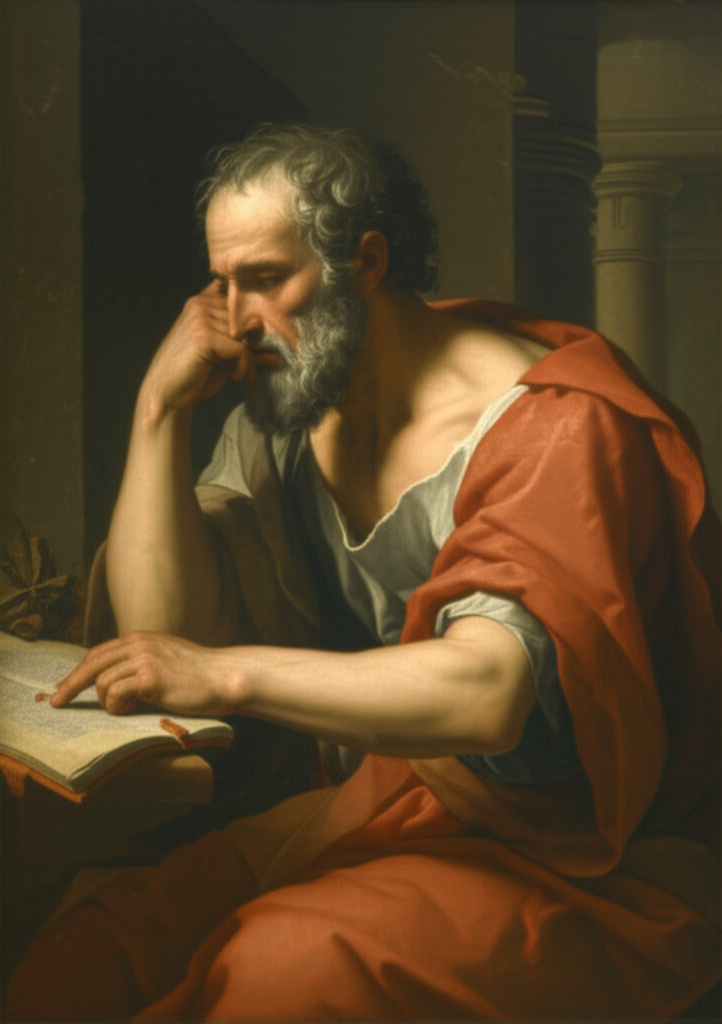
Conclusion: The Enduring Question
The philosophical concept of Will is a testament to humanity's ongoing quest for self-understanding. From the rational choices of ancient Greek heroes to the moral autonomy of Kant's enlightened individual, and the blind striving of Schopenhauer's cosmic force, the Will remains a central pillar of philosophy. It is the faculty that allows us to engage with the world, to make choices, to bear responsibility, and to strive for purpose. As we continue to probe the depths of the mind and the complexities of human desire, the enigma of the Will will undoubtedly continue to inspire new questions and profound insights into what it means to be a conscious, acting agent in the universe.
📹 Related Video: What is Philosophy?
Video by: The School of Life
💡 Want different videos? Search YouTube for: ""free will vs determinism explained philosophy""
📹 Related Video: KANT ON: What is Enlightenment?
Video by: The School of Life
💡 Want different videos? Search YouTube for: ""Nietzsche Will to Power explained""