

The Unyielding Divide: Examining the Opposition Between Liberty and Tyranny
Introduction: The Perennial Conflict
Human history, viewed through the lens of political philosophy, can often be understood as a ceaseless struggle between two fundamental forces: liberty and tyranny. This profound opposition is not merely a political construct but a deeply ingrained aspect of the human experience, shaping our societies, our laws, and our very understanding of justice. From the ancient city-states of Greece to the modern democratic republics, the question of how to secure individual freedom against the encroaching shadow of absolute power has remained central. Drawing insights from the foundational texts compiled in the Great Books of the Western World, this article delves into the nature of this enduring conflict, exploring the definitions, the mechanisms, and the critical role government plays in mediating—or exacerbating—this eternal tug-of-war.
Defining the Poles: Liberty and Tyranny
To understand the opposition, we must first delineate the terms themselves. They are not static concepts but rather complex ideals whose interpretations have evolved through centuries of philosophical inquiry.
Liberty: A Spectrum of Freedoms
Liberty, at its core, represents the state of being free within society from oppressive restrictions imposed by authority on one's way of life, behavior, or political views. Yet, as thinkers like Isaiah Berlin illuminated, liberty itself is multifaceted:
- Negative Liberty: Freedom from interference. This is the absence of external obstacles, particularly from the state. Thinkers like John Locke and John Stuart Mill championed this, arguing for spheres of individual autonomy where the government has no legitimate right to intrude.
- Positive Liberty: Freedom to act, to realize one's potential, to be one's own master. This often implies the necessity of certain conditions or resources, which might require state intervention to ensure. Rousseau's concept of being "forced to be free" touches upon this, where true freedom might involve adherence to a collective will that enables individual flourishing.
The pursuit of liberty, therefore, is not simply about removing chains, but about creating the conditions for human flourishing, often within a structured society.
Tyranny: The Absolute Usurpation
In stark contrast stands tyranny, which denotes cruel and oppressive government or rule. It is characterized by:
- Absolute Power: The concentration of unchecked authority in the hands of a single individual or a small, unaccountable group.
- Suppression of Rights: The systematic denial of individual freedoms, including speech, assembly, and due process.
- Rule by Fear: The maintenance of power through intimidation, violence, and the absence of a predictable legal framework.
- Disregard for Law: Tyrants often operate above or outside the established laws, or manipulate them to serve their own ends.
Plato, in his Republic, vividly portrays the tyrannical soul as one consumed by insatiable desires, mirroring the tyrannical state which devours its own citizens' freedoms. The opposition between liberty and tyranny is thus the fundamental choice between self-determination and subjugation.
The Government's Dual Role: Protector and Peril
The institution of government stands at the very nexus of this opposition. It is simultaneously conceived as the primary guarantor of liberty and the most potent instrument of tyranny.
Social Contracts and Limited Power
Many philosophers, particularly those of the Enlightenment whose works feature prominently in the Great Books, conceptualized government as arising from a social contract. Thinkers like John Locke argued that individuals surrender certain rights to a common authority in exchange for the protection of their remaining, more fundamental, rights—life, liberty, and property. For Locke, the legitimacy of government rests on its ability to uphold these natural rights, and if it fails to do so, the people retain the right to resist or overthrow it. This view fundamentally limits governmental power, positioning it as a servant of the people, not their master.
The Slippery Slope to Despotism
However, the very power granted to government to protect liberty can, if unchecked, become the means of its destruction. Aristotle, in his Politics, meticulously categorized different forms of government, noting that even the best—monarchy, aristocracy, and polity—could degenerate into their corrupt counterparts: tyranny, oligarchy, and democracy (mob rule), respectively. The danger lies in the inherent human tendency towards self-interest and the intoxicating allure of absolute power. When the rule of law is subverted, when checks and balances fail, or when citizens become complacent, the path from a protective government to a tyrannical regime can be disturbingly swift.
Historical Echoes from the Great Books
The Great Books of the Western World provide a rich philosophical lineage for understanding this opposition.
- Plato's Republic and the Soul of the State: Plato explores the degeneration of states from aristocracy to timocracy, oligarchy, democracy, and finally, tyranny. He illustrates how the internal character of a state reflects the character of its citizens, suggesting that a society consumed by excessive freedom and desire ultimately invites a tyrannical ruler to restore order, albeit at the cost of true liberty.
- Aristotle's Classification of Constitutions: Aristotle offers a more pragmatic analysis, distinguishing between good and bad forms of government based on whether they serve the common good or the private interests of the rulers. His detailed examination of tyranny in Politics describes its methods of maintaining power through suspicion, suppression of intellect, and the impoverishment of the populace.
- Locke and the Rights of Man: John Locke's Two Treatises of Government laid much of the groundwork for modern liberal thought, asserting that individuals possess inherent rights that pre-exist government. He argued that legitimate government is founded on the consent of the governed and that its power is limited to protecting these rights. Any government that oversteps these bounds becomes tyrannical and forfeits its legitimacy.
These foundational texts underscore that the opposition between liberty and tyranny is not a modern invention but a timeless concern, deeply embedded in the historical consciousness of Western thought.
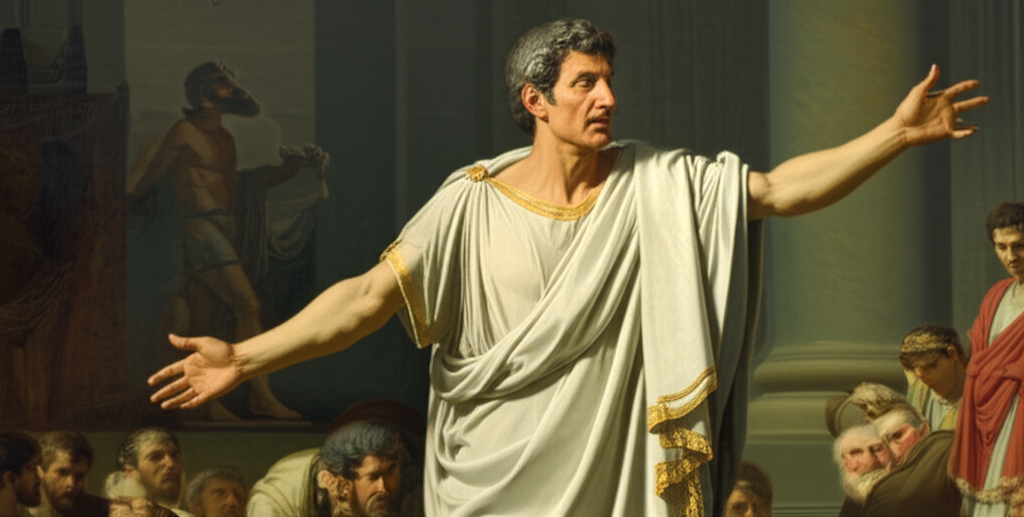
The Enduring Opposition: A Call for Vigilance
The historical record is replete with examples of societies oscillating between periods of relative liberty and descent into various forms of tyranny. This dynamic suggests that the opposition is not a problem to be solved once and for all, but a constant state of vigilance required from citizens and their leaders.
Key Aspects of Sustaining Liberty:
- Rule of Law: A system where laws are applied equally and justly to all, including those in power.
- Checks and Balances: Mechanisms within government to prevent any single branch or individual from accumulating too much power.
- Active Citizenship: An engaged populace willing to participate in governance, hold leaders accountable, and defend their freedoms.
- Education and Critical Thought: An informed citizenry capable of discerning truth from propaganda and resisting manipulation.
The struggle to maintain liberty is thus an ongoing project, demanding continuous effort and a deep understanding of the forces that threaten it.
Conclusion: The Unfinished Symphony of Freedom
The opposition between liberty and tyranny is more than a theoretical debate; it is the living pulse of political existence. From the philosophical inquiries of ancient Greece to the revolutionary manifestos of the Enlightenment, the Great Books of the Western World consistently remind us that human freedom is a precious and precarious commodity. The nature of government, therefore, becomes paramount: an instrument capable of either securing the blessings of liberty or imposing the crushing weight of tyranny. Understanding this fundamental tension is not merely an academic exercise; it is an essential prerequisite for any society aspiring to self-determination and human flourishing. The symphony of freedom remains unfinished, its harmony dependent on our unwavering commitment to defending its most delicate notes against the discord of oppression.
YouTube Video Suggestions:
-
📹 Related Video: PLATO ON: The Allegory of the Cave
Video by: The School of Life
💡 Want different videos? Search YouTube for: ""Plato Republic Tyranny explained""
2. ## 📹 Related Video: PLATO ON: The Allegory of the Cave
Video by: The School of Life
💡 Want different videos? Search YouTube for: ""John Locke Two Treatises of Government summary""