

The Labyrinth of Deception: Navigating the Ethical Dilemma of Lying (Truth and Sin)
Lying, an act as ancient as human communication itself, presents one of philosophy's most enduring and complex ethical dilemmas. It challenges our fundamental understanding of truth, probes the boundaries of duty, and frequently intersects with the theological concept of sin. From the subtle untruths of daily life to the grand deceptions that shape history, the act of knowingly misrepresenting reality forces us to confront difficult questions about morality, consequences, and the very fabric of trust that binds societies. This pillar page delves into the multifaceted nature of lying, exploring its philosophical underpinnings, theological condemnations, and the nuanced ethical frameworks that attempt to define when — if ever — deception can be justified.
The Core Concepts: Truth, Deception, and Moral Foundations
Before we can unravel the ethical dilemma of lying, we must first establish a clear understanding of the foundational concepts at play:
Truth: The Elusive Ideal
- Truth: At its most basic, truth is often understood as the correspondence between a statement or belief and reality. It is the bedrock upon which knowledge, understanding, and trust are built. Philosophers have debated its nature for millennia, from Plato's Forms to pragmatic notions of what is useful. When we lie, we intentionally deviate from this ideal, creating a disconnect between what is communicated and what is known to be real.
Lying: The Act of Intentional Deception
- Lying: More than just an inaccurate statement, a lie is an intentional act of deception. It requires the speaker to know or believe that their statement is false, and to intend for the listener to believe it is true. This element of intent is crucial, distinguishing a lie from a mistake or an honest error.
Sin: A Theological Framework for Wrongdoing
- Sin: In many religious traditions, particularly within Christianity (as explored in the Great Books of the Western World), sin is understood as a transgression against divine law or a moral principle. Lying, often explicitly forbidden (e.g., "Thou shalt not bear false witness"), is frequently categorized as a sin because it violates divine commands, harms others, and corrupts the soul. The concept of sin introduces a spiritual dimension to the ethical dilemma, suggesting consequences beyond the immediate social or personal realm.
Duty, Good, and Evil: Guiding Moral Compass
- Duty: A central concept in deontological ethics, duty refers to a moral obligation or commitment that is inherently right, regardless of its consequences. For some, the duty to tell the truth is absolute.
- Good and Evil: These universal moral categories underpin all discussions of ethics. Lying is typically viewed as an evil act because it often leads to harm, undermines trust, and distorts truth. However, the complexity arises when a lie might prevent a greater evil or achieve a greater good.
Philosophical Perspectives on Lying: A Journey Through Thought
The question of whether lying is ever permissible has engaged thinkers across millennia, leading to diverse and often conflicting viewpoints.
Ancient Greece: Virtue and the "Noble Lie"
Ancient Greek philosophers grappled with honesty as a virtue. While generally valuing truthfulness, some, like Plato in his Republic, introduced the controversial concept of the "noble lie" (gennaion pseudos). This was a falsehood told by rulers to the populace for the supposed good of the state, to maintain social order or inspire civic virtue.
- Plato's "Noble Lie": A carefully constructed myth intended to unify citizens and ensure societal stability, suggesting that truth could be sacrificed for a higher good. This raises the fundamental question: can a lie ever be truly good?
- Aristotle: Generally condemned lying as a contemptible vice, advocating for truthfulness as a virtue (magnificence, sincerity) that contributes to a flourishing life (eudaimonia). He saw honesty as essential for genuine human connection and character.
Religious Traditions: Lying as Sin and Moral Imperative
Many major religions unequivocally condemn lying. In Christianity, particularly through the Ten Commandments ("Thou shalt not bear false witness"), lying is explicitly identified as a sin.
- Judeo-Christian Ethics: Lying is seen as a violation of God's command, an act that corrupts the individual and harms the community. It undermines trust, which is essential for covenant relationships and communal well-being. The sin of lying is not just about the falsehood itself, but the intent to deceive and the potential harm it causes.
- Augustine of Hippo: A towering figure in early Christian thought, Augustine argued vigorously against all forms of lying, even those intended to save a life. He believed that lying inherently corrupts the speaker's soul and violates truth, which is an attribute of God. For Augustine, there could be no good lie, as it intrinsically involved a movement away from truth.
The Enlightenment: Duty, Consequences, and the Categorical Imperative
The Enlightenment era brought new frameworks for ethical reasoning, profoundly influencing the debate on lying.
Immanuel Kant: The Absolute Duty to Truth
Perhaps no philosopher has more rigorously argued against lying than Immanuel Kant. Central to his deontological ethics is the concept of duty and the Categorical Imperative.
- Categorical Imperative: Kant believed that moral actions must be universalizable. If everyone were to lie whenever it suited them, the very concept of truth and trust would collapse, making communication impossible. Therefore, lying cannot be universalized and is thus always morally wrong, an absolute violation of duty.
- Rejection of Consequentialism: For Kant, the consequences of an action do not determine its moral worth. Even if a lie leads to a seemingly good outcome (e.g., saving a life), the act of lying itself remains morally reprehensible because it violates the absolute duty to tell the truth. This stark position highlights the conflict between duty and potential good.
Utilitarianism: The Greatest Good for the Greatest Number
In contrast to Kant, utilitarian philosophers like John Stuart Mill focus on the consequences of actions.
- Consequentialist Ethics: Utilitarianism posits that the moral rightness of an action is determined by its ability to produce the greatest good (happiness, well-being) for the greatest number of people.
- Lying in Utilitarianism: A lie is not inherently wrong; its morality depends on its outcome. If a lie leads to more overall happiness or prevents greater suffering, a utilitarian might deem it ethically permissible, or even obligatory. However, utilitarians also recognize that lying generally erodes trust and causes harm, so a blanket justification for lying is rare. The calculation of good and evil becomes paramount.
The Nuances of Deception: When Truth Becomes Complex
While philosophers and theologians have debated the absolute morality of lying, practical life often presents scenarios where the lines blur.
Table 1: Deontological vs. Consequentialist Views on Lying
| Feature | Deontology (e.g., Kant) | Consequentialism (e.g., Utilitarianism) |
|---|---|---|
| Primary Focus | Duty, moral rules, inherent rightness | Outcomes, consequences, greatest good |
| View on Lying | Always wrong, a violation of duty to truth | Morality depends on consequences; can be permissible if it leads to more good |
| Key Question | Is the act itself inherently right or wrong? | Does the act produce the best outcome? |
| Example | Cannot lie to a murderer about a victim's location, even if it saves a life. | Could lie to a murderer about a victim's location if it saves a life and produces greater overall good. |
The "White Lie": Harmless Deception or Slippery Slope?
"White lies" are minor untruths told to avoid hurting someone's feelings, to be polite, or to simplify social interactions. Are they ethically justifiable?
- Arguments for: They can maintain social harmony, prevent unnecessary distress, and are often perceived as harmless. They prioritize empathy and social good over strict adherence to truth.
- Arguments against: Even small lies can erode trust over time, set a precedent for larger deceptions, and deny individuals the right to know the truth. Kant would argue that even a white lie is a violation of duty.
Lies of Omission and Misdirection
Lying isn't always about outright falsehoods. It can involve withholding crucial information (lie of omission) or strategically redirecting attention (misdirection). These forms of deception raise questions about the scope of our duty to disclose truth.
The Enduring Challenge: Navigating Our Ethical Landscape
The ethical dilemma of lying remains a profound challenge. While our moral compass generally points towards truth and against sin and deception, the complexities of human experience often force us to weigh competing values. Is the duty to tell the truth always paramount, or can the pursuit of a greater good sometimes justify a departure from it?
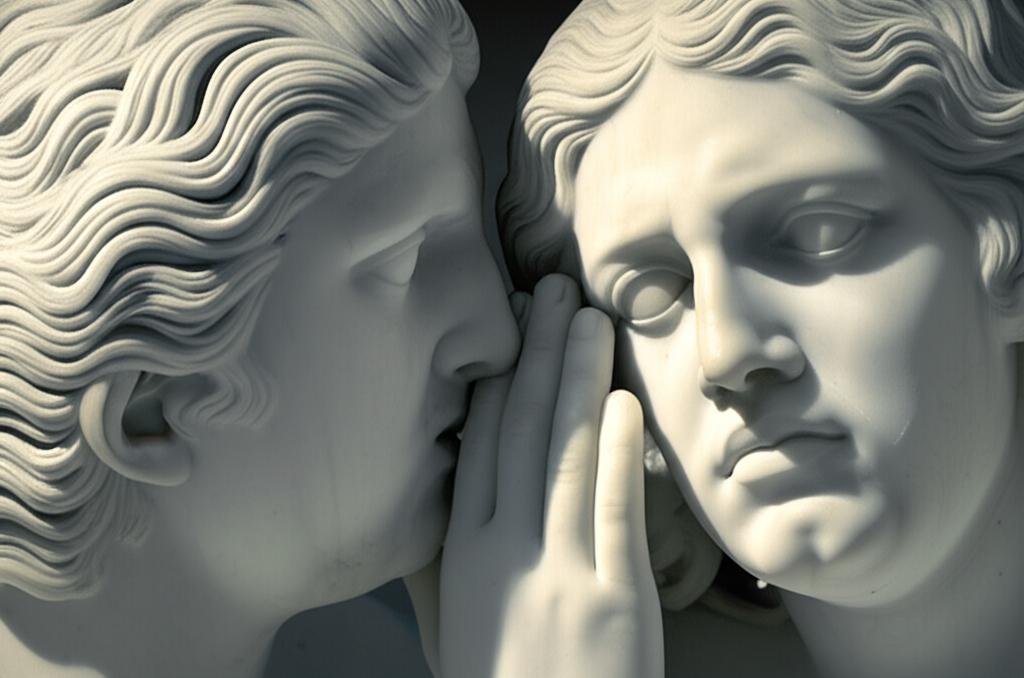
The Great Books of the Western World consistently present this tension, inviting us to reflect on the nature of human character, the foundations of society, and the eternal struggle between good and evil. Understanding these philosophical and theological perspectives equips us not with easy answers, but with the tools to thoughtfully navigate the labyrinth of deception in our own lives.
Further Exploration
For those wishing to delve deeper into the philosophical and ethical dimensions of lying, consider exploring:
- YouTube: "Kant's Ethics of Lying Explained"
- YouTube: "The Ethics of Truth-Telling: Deontology vs. Consequentialism"
📹 Related Video: What is Philosophy?
Video by: The School of Life
💡 Want different videos? Search YouTube for: "The Ethical Dilemma of Lying (Truth and Sin) philosophy"