

The Unyielding Spirit: The Necessity of Courage in War
The specter of war, a grim companion throughout human history, confronts us with some of our most profound ethical and existential questions. Among these, the role of courage stands paramount, not merely as an admirable trait, but as an absolute necessity. This article explores courage not as a spontaneous burst of bravery, but as a deeply philosophical construct, a virtue indispensable for survival, defense, and the preservation of values in the face of conflict. Drawing upon the rich tapestry of thought found within the Great Books of the Western World, we shall contend that courage in war transcends mere individual valor, becoming a fundamental duty and a critical bridge, however paradoxical, to the aspiration of peace.
The Inescapable Reality of Conflict: War and Peace as a Human Condition
From the epic poems of Homer to the sober historical accounts of Thucydides, the human experience has been indelibly marked by conflict. The pursuit of peace is a universal aspiration, yet the reality of war frequently intervenes, demanding responses that test the very limits of human fortitude. It is in these crucible moments that the concept of courage moves from an abstract ideal to a concrete, life-affirming imperative. For the soldier on the battlefield, the leader making impossible decisions, or even the citizen enduring hardship, courage is the vital force that allows for perseverance against overwhelming odds.
Defining Courage: Beyond Recklessness and Fearlessness
To truly grasp the necessity of courage in war, we must first understand its philosophical essence. It is not simply the absence of fear, nor is it a blind charge into danger. As Aristotle meticulously defines in his Nicomachean Ethics, courage (ἀνδρεία) is a mean between the extremes of rashness (excess of confidence) and cowardice (excess of fear). The truly courageous individual, according to Aristotle, knows what is truly fearful, yet chooses to face it for a noble cause.
Plato, in dialogues such as Laches and The Republic, further illuminates this, suggesting that courage is a form of knowledge—the knowledge of what is truly to be feared and what is not. It is the wisdom to discern genuine threats from imagined ones, and the fortitude to act appropriately. Thus, courage is not a primal instinct, but a cultivated virtue, an act of will tempered by reason and purpose.
Key Characteristics of Philosophical Courage:
- Rational Deliberation: Not impulsive, but a considered response to danger.
- Knowledge of Fear: Acknowledging danger without being paralyzed by it.
- Noble Purpose: Exercised for a greater good, such as justice, defense, or freedom.
- Steadfastness: The ability to endure hardship and maintain resolve.
The Necessity and Contingency of Courage in the Face of War
While the outbreak of war itself can often be seen as a contingency—a series of events that might have unfolded differently—the demand for courage within it becomes an undeniable necessity. Once hostilities commence, the individual and collective will to endure, to resist, and to protect is paramount. Without courage, armies crumble, defenses fail, and the very fabric of society risks dissolution.
Consider the following points regarding this necessity:
- Survival: For the soldier, courage is often the direct prerequisite for survival, enabling tactical maneuvers, enduring pain, and fighting on.
- Defense of the State: As outlined by philosophers like Hobbes in Leviathan, the state's primary function is to provide security. When that security is threatened, the courage of its defenders becomes the ultimate bulwark.
- Upholding Values: War often involves a clash of ideologies or a defense of fundamental rights. Courage is necessary to stand firm for these principles, even at great personal cost.
- Moral Cohesion: A lack of courage can lead to panic, desertion, and a breakdown of morale, rendering any military effort futile.
The contingency lies in the specific circumstances under which courage is called forth—the particular battle, the unexpected ambush, the prolonged siege. Yet, the necessity of courage itself, as a human response to extreme peril, remains constant.
Courage as Duty: A Moral Imperative
Beyond its practical necessity, courage in war frequently manifests as a profound sense of duty. For those who wear a uniform, the commitment to protect their nation, their comrades, and their values is a moral imperative. Immanuel Kant's philosophy, while not directly addressing war in a prescriptive military sense, emphasizes duty as the highest moral principle, an action performed out of respect for the moral law itself.
In a martial context, this translates into:
- Duty to Comrades: The soldier's commitment to not abandon their fellow fighters, knowing their lives depend on collective resolve.
- Duty to the State/Community: The obligation to defend one's homeland and its people from aggression.
- Duty to Justice: For those who adhere to a "just war" theory (as articulated by St. Augustine in City of God), courage is a duty in the service of a righteous cause, to protect the innocent or restore peace.
This sense of duty elevates courage from a mere personal attribute to a moral obligation, transforming individual acts of bravery into a collective ethical stand.
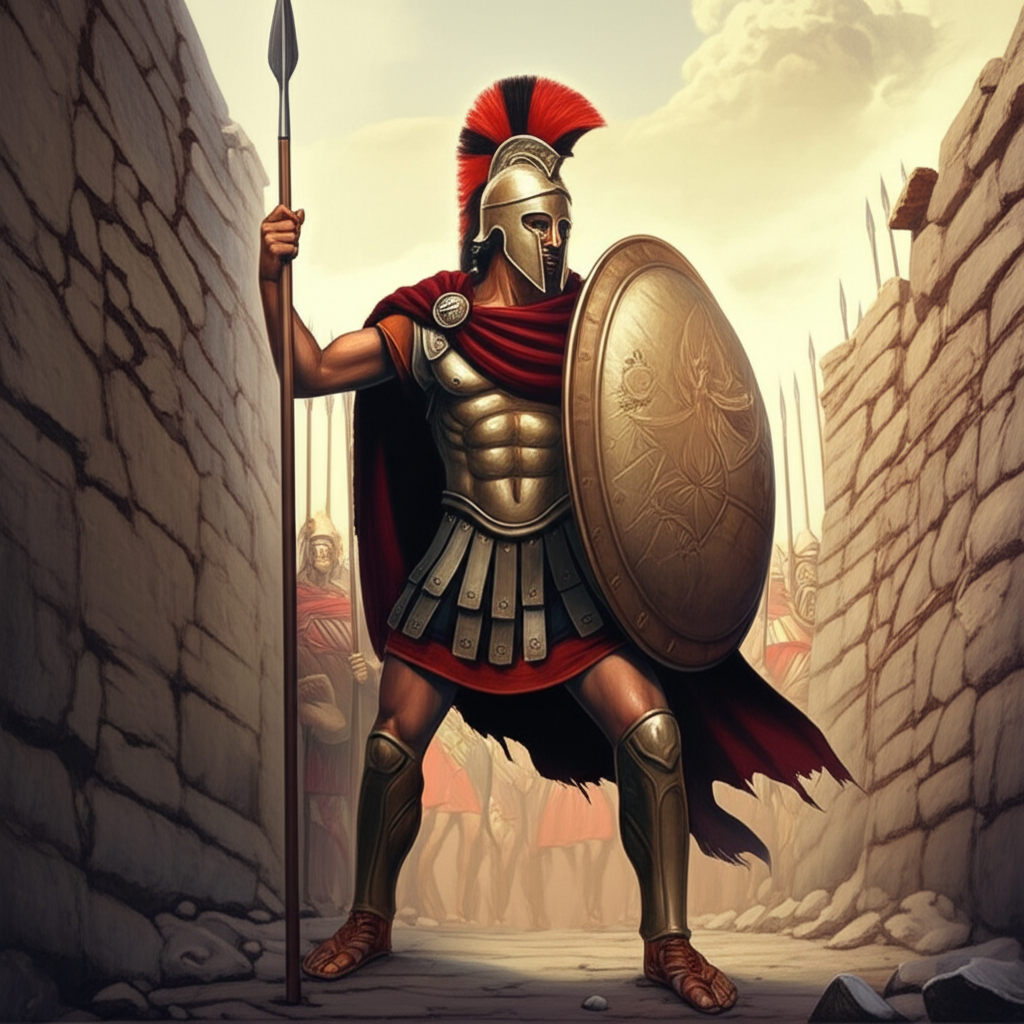
Philosophical Reflections on Courage and the Pursuit of Peace
The ultimate paradox of courage in war is that it is often exercised with the fervent hope of achieving peace. The very act of fighting bravely is, in many cases, an attempt to bring the conflict to a decisive end, thereby restoring a state of tranquility. Thucydides' History of the Peloponnesian War offers countless examples of courage and its consequences, demonstrating how human resolve, though often tragic, shapes the course of history and the eventual return to stability.
Philosophers across the ages have grappled with this complex relationship:
| Philosopher/Text | Perspective on Courage in War | Connection to Peace |
|---|---|---|
| Plato (Republic) | Courage as a cardinal virtue, essential for the guardian class to protect the state. | A well-ordered state, defended by courageous guardians, is a prerequisite for internal peace and justice. |
| Aristotle (Nicomachean Ethics) | Courage as a rational mean, facing noble fears for a noble end. | The virtuous citizen, including the courageous soldier, contributes to the flourishing (eudaimonia) of the polis, which includes its stability. |
| Augustine (City of God) | Just War Theory: Courage is permissible, even necessary, when defending against aggression or restoring justice. | Courage in a just war is a means to re-establish a righteous peace and protect the innocent. |
| Machiavelli (The Prince) | Virtù (including courage and decisiveness) is essential for a prince to maintain power and secure the state. | A strong, secure state, even if achieved through force, can provide a foundation for order and, indirectly, peace for its citizens. |
| Kant (Duty Ethics) | While not specific to war, the concept of acting from duty suggests courage as a moral imperative when faced with threats. | Acting from duty, even in war, upholds moral principles that ultimately support a rational, peaceful order. |
In conclusion, the necessity of courage in war is not merely a statement of fact but a profound philosophical insight into the human condition. It is a virtue inextricably linked to our understanding of duty, a response to the contingencies of conflict, and a paradoxical, yet often vital, pathway towards the ultimate goal of peace. As long as the shadows of war loom, the unyielding spirit of courage will remain an indispensable aspect of human endeavor.
📹 Related Video: PLATO ON: The Allegory of the Cave
Video by: The School of Life
💡 Want different videos? Search YouTube for: ""Plato Laches Courage Philosophy" and "Aristotle Nicomachean Ethics Courage""