

The Indispensable Virtue: The Necessity of Courage in War
By Benjamin Richmond
In the grim calculus of conflict, courage is often lauded as a virtue, a noble attribute of the warrior spirit. Yet, to view it merely as admirable is to fundamentally misunderstand its role. Courage, in the context of war, transcends mere heroism; it becomes an absolute necessity. It is the bedrock upon which strategy is built, the fuel that drives duty, and the essential human response to the profound Necessity and Contingency that defines armed conflict. Without it, the very fabric of military endeavor unravels, transforming organized resistance into chaotic retreat. This article explores why courage is not just desired but critically essential for the conduct and outcome of War and Peace, drawing insights from the enduring wisdom of the Great Books of the Western World.
Courage as the Foundation of Action in Extremis
The philosopher Aristotle, in his Nicomachean Ethics, defines Courage as a mean between rashness and cowardice—a rational and deliberate choice to face fear for a noble cause. In war, however, this philosophical ideal takes on an immediate, visceral urgency. The battlefield is the ultimate arena of Contingency, where the unpredictable reigns supreme, and the ultimate necessity is survival, often achieved through perilous action.
- The Confrontation with the Unknown: War presents an unending series of unforeseen dangers, from the sudden ambush to the shifting fortunes of battle. Courage is the mental and moral fortitude required to confront these contingencies, to advance when every instinct screams retreat, and to hold one's ground against overwhelming odds.
- Overcoming Primal Fear: The fear of death, injury, and the unknown is natural. Courage is the capacity to master this fear, not to eradicate it, but to act effectively in its presence. As Plato notes in The Republic, the guardians of the state must be trained from youth to possess this unwavering spirit.
The Inextricable Link to Duty
For the soldier, courage is not merely a personal attribute but an integral component of Duty. The military structure, by its very nature, demands adherence to orders, loyalty to comrades, and commitment to a cause that often transcends individual self-preservation.
- Collective Necessity: A single act of cowardice can jeopardize an entire unit, breaking the chain of command and undermining morale. Conversely, a single act of courage can inspire, rally, and turn the tide of battle. This collective aspect elevates courage from a personal virtue to a functional requirement for military cohesion and effectiveness.
- The Moral Imperative: From the Homeric heroes of the Iliad to the stoic Romans of Livy's histories, the concept of fulfilling one's duty in the face of danger is a recurring theme. Hector's unwavering defense of Troy, despite foreknowledge of his fate, exemplifies a courage rooted in profound duty to his city and family.
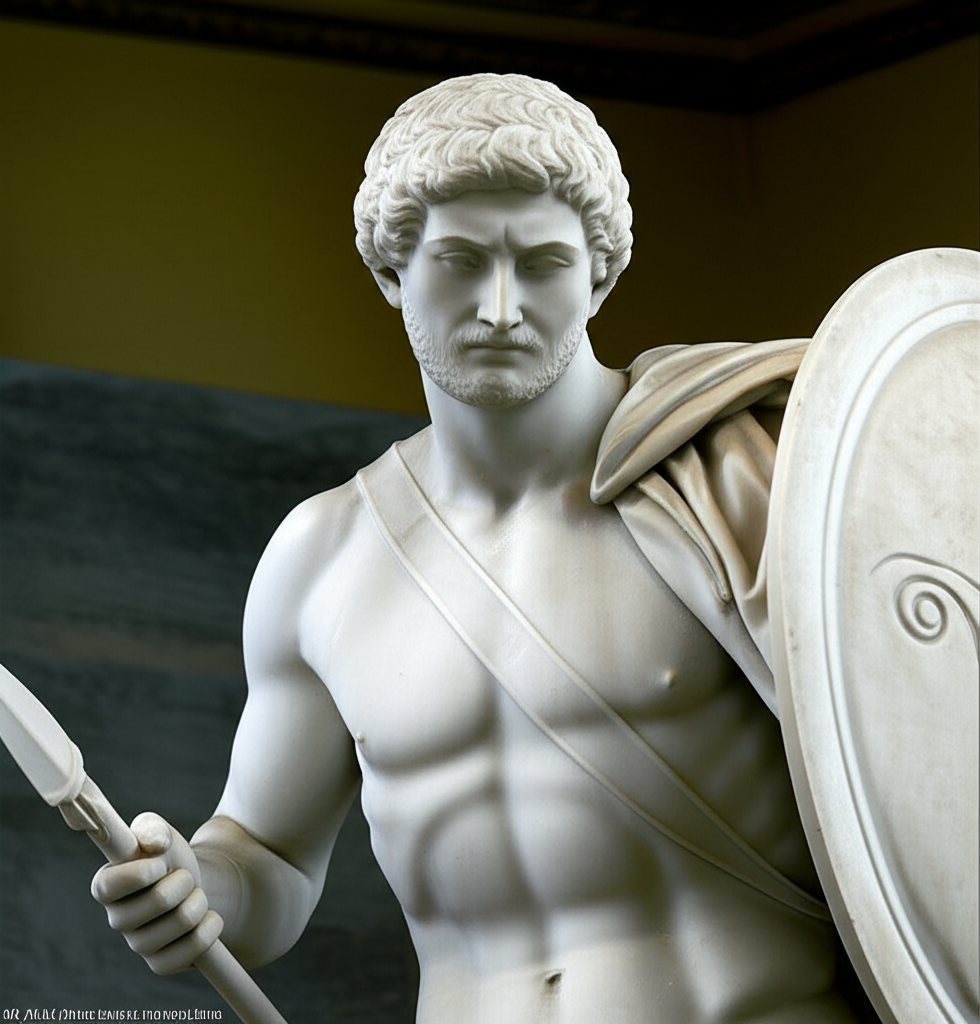
War and Peace: A Virtue Transformed
The relationship between War and Peace further illuminates the Necessity of courage. While peace allows for the flourishing of a broader spectrum of virtues—justice, temperance, wisdom—war distills human experience down to its most fundamental elements. In this crucible, courage becomes paramount.
Consider the stark contrast:
| Aspect | In Times of Peace | In Times of War |
|---|---|---|
| Primary Virtue | Justice, Wisdom, Prudence, Temperance | Courage (as foundational), Loyalty, Fortitude |
| Consequences of Failure | Inefficiency, Injustice, Social disharmony | Defeat, Loss of Life, Enslavement, Annihilation |
| Role of Fear | Managed, mitigated through law and order | Directly confronted, overcome through will and training |
| Necessity | For societal flourishing and individual well-being | For survival, defense, and the very possibility of future peace |
Thucydides, in his History of the Peloponnesian War, repeatedly demonstrates how fear and the lack of courage can lead to strategic blunders and moral decay within armies and cities alike. Conversely, acts of resolute courage, often against rational odds, are shown to be decisive in shaping history.
Conclusion: The Enduring Imperative
The philosophical exploration of courage in the context of war reveals it not as an optional adornment, but as an absolute Necessity. It is the virtue that allows humanity to confront the ultimate Contingency of death and destruction, to uphold Duty when all instincts cry out for self-preservation, and to navigate the brutal realities of War and Peace. From the ancient battlefields to modern conflicts, the call for courage remains an enduring imperative, a testament to its indispensable role in the human condition when faced with the gravest challenges. To deny its necessity is to misunderstand the very essence of conflict and the profound demands it places upon the human spirit.
📹 Related Video: ARISTOTLE ON: The Nicomachean Ethics
Video by: The School of Life
💡 Want different videos? Search YouTube for: "Aristotle Nicomachean Ethics courage"
📹 Related Video: ARISTOTLE ON: The Nicomachean Ethics
Video by: The School of Life
💡 Want different videos? Search YouTube for: "Thucydides Peloponnesian War analysis"