

The Unyielding Core: The Necessity of Courage in Revolution
Revolution, at its heart, is not merely a political event or an economic shift; it is a profound act of will, a radical reorientation of society demanding an unwavering commitment to change in the face of immense adversity. At the core of this transformative process lies courage, a philosophical and practical necessity without which even the grandest ideals remain mere aspirations. This article explores why courage is not a mere virtue but a foundational requirement for any genuine revolution, examining its multifaceted nature through the lens of philosophical thought.
The Unseen Engine of Transformation
We often analyze revolutions through their ideological frameworks, economic triggers, or the charismatic figures who lead them. Yet, the true engine of any significant societal upheaval is the collective and individual capacity to act on these ideas, to challenge entrenched power, and to endure the inevitable backlash. This capacity is courage. It is the vital spark that ignites the desire for change and the sustaining flame that prevents it from being extinguished. Without it, the inertia of the status quo would forever prevail, rendering theoretical justifications for revolution impotent.
Defining Courage in the Crucible of Revolution
In the context of revolution, courage transcends simple physical bravery. It is a complex virtue, encompassing several critical dimensions:
- Moral Courage: The fortitude to stand against prevailing norms, speak truth to power, and defy unjust laws, even when facing severe personal repercussions. This is the courage of a Socrates, who chose death over abandoning his principles, or an Antigone, who defied royal decree to uphold a higher moral law.
- Intellectual Courage: The audacity to question established dogmas, to conceive of radically different societal structures, and to articulate visions for change that challenge the very foundations of existing order. This courage is evident in the Enlightenment thinkers who dared to reimagine governance and human rights.
- Physical Courage: The readiness to face direct threats, endure hardship, and risk life and limb for the cause. While often the most visible form, it is frequently underpinned by deeper moral and intellectual convictions.
- Courage of Conviction: The steadfastness to persist despite setbacks, internal doubts, betrayal, and the immense psychological toll of prolonged struggle. This is the resilience that keeps a movement alive through its darkest hours.
As Aristotle posited in his Nicomachean Ethics, courage is a mean between rashness and cowardice. In revolution, this balance is critical: too much rashness leads to self-destruction, while too little courage ensures stagnation.
Necessity and Contingency: The Fabric of Revolutionary Action
The interplay between necessity and contingency is crucial to understanding courage's role in revolution.
- The Necessity of Courage: Courage is necessary because power structures, by their very nature, are resistant to fundamental change. Those who benefit from the existing order will not willingly relinquish their advantages. Revolutionary demands, therefore, invariably threaten established interests, leading to repression and resistance from the state. Without individuals willing to risk their comfort, freedom, and even their lives, any attempt at profound societal overhaul is doomed to fail. Courage is not an optional extra; it is a precondition for the initiation and sustenance of any meaningful revolution.
- The Contingency of Courage's Manifestation: While courage is necessary, the form it takes, the degree to which it is tested, and its effectiveness are highly contingent upon specific historical, social, and political circumstances. A revolution in a totalitarian state, where dissent is met with extreme violence, demands a different kind of courage than one in a more open, albeit unjust, society. Machiavelli, in The Prince, spoke of virtù (which includes courage, skill, and determination) as essential for a leader to navigate fortuna (contingency, chance, and unpredictable events). The success of revolutionary courage often hinges on its skillful application within these contingent realities.
The Psychological and Moral Demands of Revolutionary Change
Revolution places immense psychological and moral demands on its participants. It requires:
- Overcoming Fear: Not just fear of physical harm, but fear of failure, ostracism, the unknown, and the immense burden of responsibility.
- Navigating Moral Dilemmas: Revolutions often force difficult choices, such as the use of violence, the sacrifice of individual liberties for the collective good, or the compromise of ideals for strategic advantage. These dilemmas test the very core of one's moral fabric, demanding a different kind of courage to make and live with such decisions.
- Sustaining Hope: In the face of overwhelming odds, propaganda, and internal divisions, maintaining hope and inspiring it in others requires profound emotional and moral strength.
True courage in revolution is forged not in the absence of fear, but in the decision to act decisively and ethically despite it.
Historical Echoes: Courage Through the Great Books
The enduring necessity of courage in the pursuit of change resonates throughout the Great Books of the Western World:
- Plato's Republic: Describes courage as one of the four cardinal virtues, essential for the guardians of the ideal state. It is the quality that allows the spirited part of the soul to hold fast to the convictions of reason in the face of pleasure and pain. The very act of establishing a just society, for Plato, requires immense philosophical and political courage.
- Thucydides' History of the Peloponnesian War: Illustrates the consequences of both courageous action and its absence. The Athenians' initial bravery and ambition, and later their hubris and fear, show how courage can both drive and derail great enterprises, highlighting the contingency of human will in conflict.
- John Locke & Jean-Jacques Rousseau: Their philosophies laid the groundwork for modern revolutions by asserting natural rights and the right of the people to challenge illegitimate authority. It took immense intellectual and moral courage for these thinkers to articulate such radical ideas, and even more for subsequent generations to act upon them, transforming abstract concepts into the concrete demands of revolution.
- Karl Marx: While emphasizing historical materialism and economic forces, the very concept of the proletariat rising to overthrow the bourgeoisie implicitly demands a collective act of immense courage to break the chains of oppression and enact a fundamental change in societal structure.
Challenges Requiring Courage in Revolution:
- Facing Repression: Enduring state violence, imprisonment, or execution.
- Overcoming Apathy: Mobilizing a fearful or complacent populace.
- Maintaining Unity: Bridging ideological, social, or personal divides within the revolutionary movement.
- Enduring Hardship: Sacrificing personal comfort, safety, and economic stability.
- Questioning Dogma: Challenging not only the old regime's narratives but also potential new orthodoxies emerging within the movement.
- Bearing the Weight of Leadership: Making difficult, high-stakes decisions with profound consequences for countless lives.
The Enduring Legacy of Courage in the Pursuit of Change
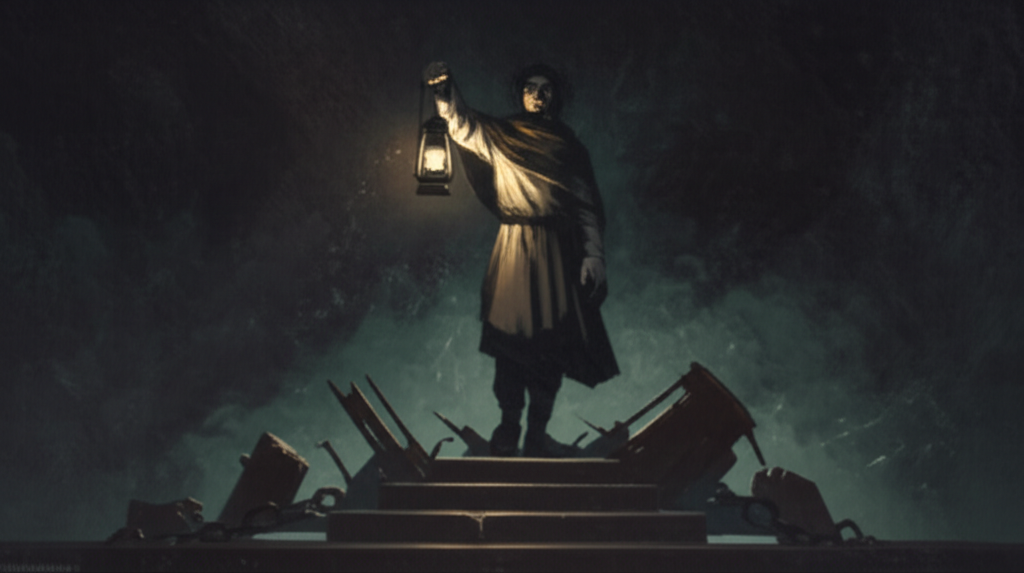
Ultimately, the necessity of courage in revolution extends beyond the initial uprising. It is required to sustain the movement, to build new institutions, and to defend the gains achieved against reaction. Without courage, the dream of a more just and equitable society remains just that—a dream. It is the unyielding core that enables humanity to break free from the past, confront the present, and bravely forge a path toward a different future, continually demonstrating that profound change is not merely possible, but achievable through the unwavering will of courageous individuals.
📹 Related Video: What is Philosophy?
Video by: The School of Life
💡 Want different videos? Search YouTube for: "Philosophy of Revolution and Resistance"
📹 Related Video: ARISTOTLE ON: The Nicomachean Ethics
Video by: The School of Life
💡 Want different videos? Search YouTube for: "Aristotle on Courage and Virtue Ethics"