

The Necessity of Courage for Liberty
Author: Chloe Fitzgerald
Summary: Liberty, a cornerstone of human flourishing, is not a self-sustaining state but a fragile construct perpetually dependent on the active cultivation and demonstration of courage. This article argues that courage is not merely an admirable trait, but a necessity for both acquiring and maintaining freedom, particularly in the face of an encroaching or oppressive State. We will explore how courage allows individuals to navigate the contingency of liberty, transforming it from a potentiality into a lived reality, drawing insights from the rich tradition of the Great Books of the Western World.
The Indispensable Virtue: Why Liberty Demands Courage
From the ancient polis to the modern nation-state, the struggle for liberty has been a recurring theme in human history. Yet, often overlooked in the discourse surrounding rights and freedoms is the fundamental role of courage. Liberty is not simply granted; it is earned, defended, and continually renewed through acts of bravery, both grand and subtle. Without courage, the principles of freedom become hollow rhetoric, easily eroded by fear, apathy, and the overreach of power.
Defining Courage Beyond the Battlefield
In philosophical terms, courage is far more nuanced than mere physical bravery. As Aristotle meticulously details in Nicomachean Ethics, courage is a mean between the extremes of rashness and cowardice. It is the virtue that enables us to confront fear and act rightly, not because we feel no fear, but because we deem something else – such as justice, truth, or liberty – to be more important than our own safety or comfort.
- Moral Courage: The strength to stand by one's convictions, even when facing social ostracism, ridicule, or professional repercussions. This is vital for free speech and independent thought.
- Intellectual Courage: The willingness to question established dogmas, explore uncomfortable truths, and engage in critical thinking, even when it challenges one's own worldview. Essential for an informed citizenry.
- Civic Courage: The readiness to participate in public life, advocate for change, and resist unjust laws or policies, knowing there may be personal costs. Directly linked to the health of a free society.
It is this broader understanding of courage that forms the bedrock upon which genuine liberty can be built and sustained.
Liberty: A Contingent and Contested Ideal
Liberty, in its fullest sense, encompasses more than just freedom from physical restraint. It includes political freedom (the right to participate in governance), civil liberty (freedom of speech, assembly, religion), and personal autonomy. However, the existence and extent of liberty are always contingent – they depend on specific conditions, choices, and actions. They are not inevitable.
The State and the Peril of Power
The relationship between the individual, liberty, and the State is complex and often fraught. While the State is often conceived as a protector of rights and a guarantor of order (as explored by thinkers like John Locke in Two Treatises of Government), it also possesses immense power that can, and often does, become a threat to individual freedoms.
Consider the warnings of John Stuart Mill in On Liberty, where he articulates the dangers of both governmental and societal tyranny. The State, even a democratically elected one, can gradually erode liberties through legislation, surveillance, or the suppression of dissent. This is where the necessity of courage becomes acutely clear. Without individuals willing to challenge the State's overreach, even well-intentioned policies can pave the way for oppression.
The Interplay: Courage as the Engine of Freedom
The historical narrative, particularly as chronicled in the Great Books of the Western World, is replete with examples illustrating the indispensable link between courage and liberty. From the defiance of Socrates in Plato's Apology to the philosophical underpinnings of revolutionary movements, courage has consistently been the catalyst for change.
Table 1: Courageous Acts and the Advancement of Liberty
| Philosophical Work / Historical Context | Key Idea / Event | Role of Courage | Impact on Liberty |
|---|---|---|---|
| Plato's Apology | Socrates' defense against charges of impiety | Moral and intellectual courage to speak truth to power, accepting death over abandoning principles. | Established the precedent for intellectual freedom and the right to philosophical inquiry, even against the State. |
| Magna Carta (1215) | Barons challenging King John's absolute power | Collective courage of nobles to demand limits on monarchical authority, risking royal wrath. | Laid foundational principles for rule of law and individual rights against arbitrary power. |
| Locke's Two Treatises | Justification for revolution against tyranny | Courage to assert natural rights and overthrow an unjust government, even at great personal risk. | Provided philosophical framework for revolutionary movements seeking self-governance and individual freedoms. |
| American Revolution | Declaration of Independence, war for independence | Collective civic and physical courage of colonists to challenge a global superpower for self-determination. | Established a nation founded on principles of individual liberty and democratic governance. |
| Mill's On Liberty | Defense of free thought and discussion | Encourages intellectual courage to challenge prevailing opinions and social norms for societal progress. | Underscores the necessity of intellectual freedom for a vibrant, evolving liberal society. |
The Contingency of Liberty: A Constant Vigil
Liberty is not a static inheritance but a dynamic achievement, constantly under threat. Its contingency means that it can be lost through neglect, fear, or the failure of individuals to act when needed. Every generation faces its own challenges to freedom, whether from external aggressors, internal demagogues, or the insidious erosion of rights through apathy.
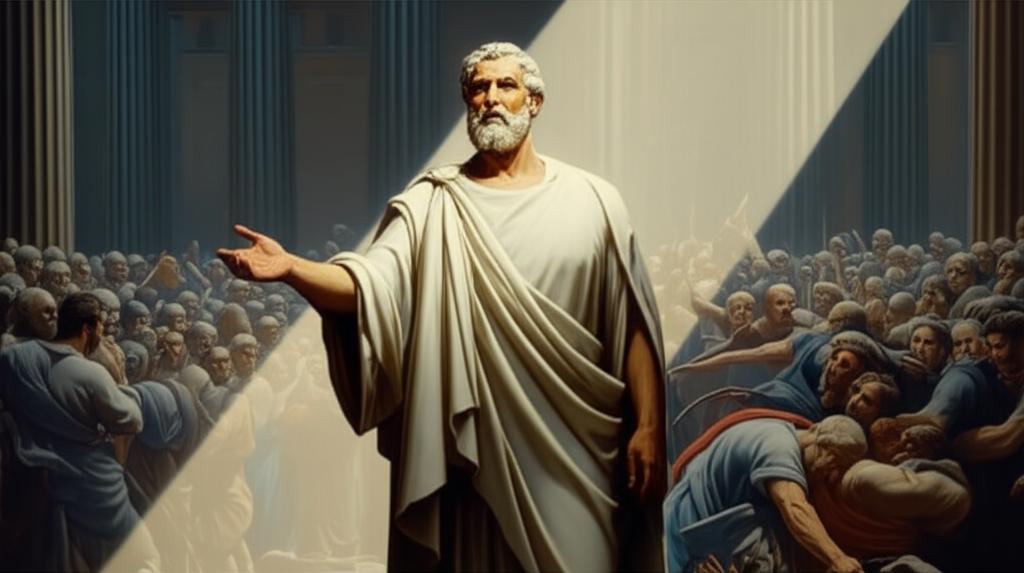
The necessity of courage, therefore, is not confined to moments of grand revolution. It manifests in everyday acts: the journalist reporting inconvenient truths, the citizen voting against popular prejudice, the activist speaking out against injustice, the neighbor defending a marginalized individual. These seemingly small acts of courage coalesce into the collective will that safeguards liberty from the insidious creep of authoritarianism.
The Modern Predicament: Courage in a Complex World
In our increasingly interconnected and complex world, the forms of oppression and the threats to liberty have evolved. Surveillance technologies, misinformation campaigns, and the polarization of public discourse present new challenges that demand new forms of courage.
- Courage to Disengage: Resisting the constant pull of digital distractions and echo chambers to engage in thoughtful reflection and genuine dialogue.
- Courage to Verify: Challenging one's own biases and seeking out diverse, credible sources of information, rather than succumbing to easy narratives.
- Courage to Speak Up (and Listen): Articulating dissenting opinions respectfully, and equally, listening with an open mind to those with whom we disagree, fostering productive discourse rather than division.
These are the contemporary manifestations of the same fundamental courage that philosophers and revolutionaries have championed for centuries.
Conclusion: The profound message emanating from the Great Books of the Western World is clear: liberty is a precious, yet inherently contingent, human endeavor. It is not a natural state that endures without effort, but a delicate balance maintained by the unwavering spirit of its defenders. The State, while capable of providing order, is also the most potent threat to individual freedom, making the necessity of courage an immutable truth. Without individuals willing to stand firm, to speak truth, and to act against the tide of conformity or oppression, liberty remains a mere ideal, forever out of reach. Courage, in all its forms, is not merely a virtue; it is the very breath of freedom.
YouTube Video Suggestions:
-
📹 Related Video: PLATO ON: The Allegory of the Cave
Video by: The School of Life
💡 Want different videos? Search YouTube for: ""Plato's Apology Socrates Courage""
-
📹 Related Video: ARISTOTLE ON: The Nicomachean Ethics
Video by: The School of Life
💡 Want different videos? Search YouTube for: ""John Stuart Mill On Liberty explained""