

The Unyielding Spirit: Exploring the Nature of Courage in Civic Life
Summary: Courage, often mistakenly confined to the battlefield, is a foundational virtue for a flourishing civic life. This article delves into the multifaceted Nature of Courage, moving beyond mere physical bravery to encompass the moral and intellectual fortitude demanded of every Citizen. Drawing from the enduring wisdom of the Great Books of the Western World, we explore how courage is not just an individual trait but a collective Duty, essential for upholding justice, truth, and the very fabric of a healthy society.
The Expansive Nature of Courage: Beyond the Blade and Shield
When we speak of courage, our minds often conjure images of heroic soldiers or daring adventurers. Yet, the true Nature of this cardinal virtue, as illuminated by millennia of philosophical inquiry, extends far beyond the physical confrontation of war. In civic life, courage manifests as the steadfast resolve to act justly, to speak truthfully, and to defend principles, even in the face of social pressure, ridicule, or personal cost. It is the backbone of a responsible Citizen and the bedrock upon which a just society is built.
The philosophers of antiquity, whose works constitute the very core of the Great Books of the Western World, understood courage not as an absence of fear, but as the mastery of it for a higher good. It is a deliberate choice, a rational response to perceived danger or difficulty, guided by wisdom and directed towards virtue.
Philosophical Foundations: Courage as a Civic Duty
The concept of Duty is inextricably linked to courage in the civic sphere. For the ancient Greeks, particularly, the Citizen had a profound Duty to the polis, the city-state. This was not merely about obeying laws, but actively participating in its betterment, often requiring significant personal fortitude.
Plato's Republic: A Virtue for the Just State
In Plato's Republic, courage (andreia) is identified as one of the four cardinal virtues, essential not only for the individual soul but for the very structure of the ideal state. He posits that courage resides primarily in the "spirited" part of the soul, enabling one to hold fast to convictions about what is to be feared and what is not, even in pain or pleasure. For the Citizen, this translates into the courage to:
- Defend the Laws: Upholding the constitution and legal framework.
- Speak Truth to Power: Challenging injustice, even when it is uncomfortable or dangerous.
- Resist Corruption: Standing firm against temptations that undermine the common good.
Aristotle's Nicomachean Ethics: The Mean Between Extremes
Aristotle, in his Nicomachean Ethics, offers a nuanced perspective, defining courage as a "mean" between the vices of rashness (excess) and cowardice (deficiency). A truly courageous person, according to Aristotle, faces fear for the right reasons, in the right way, at the right time, and with the right motive. This rational and virtuous approach to fear is crucial for civic life:
- Prudent Action: Not rushing into conflict, but acting decisively when necessary.
- Endurance for Principle: Bearing hardship for the sake of justice or community well-being.
- Self-Control: The ability to manage fear and desire in pursuit of civic Duty.
Aquinas and the Fortitude of Faith
Later, Thomas Aquinas, drawing heavily on Aristotle, integrated courage (fortitude) into Christian ethics in his Summa Theologica. For Aquinas, fortitude is a moral virtue that enables one to overcome fear and remain steadfast in the pursuit of good, particularly in the face of severe difficulties. This spiritual dimension underscores the deep conviction often required for civic acts of courage.
Manifestations of Civic Courage: The Citizen's Duty in Action
The Nature of courage in civic life is multifaceted, extending into moral, intellectual, and political domains. It is the active embodiment of a Citizen's Duty to their community and its ideals.
Table: Forms of Civic Courage
| Type of Courage | Description Civic courage is the moral fortitude to act according to one's principles and for the common good, especially when doing so is unpopular, difficult, or entails personal risk.
The Demands of Modern Civic Life
In our complex modern world, the Nature of challenges to a healthy civic life are often subtle, insidious, and less immediately dramatic than classical warfare. Yet, the Duty to act with courage remains paramount.
- Moral Courage: This is the courage to stand by one's ethical convictions, even when unpopular. It involves speaking out against injustice, prejudice, or corruption within one's community or workplace. For a Citizen, it might mean refusing to participate in unethical practices, even if it jeopardizes one's career or social standing.
- Intellectual Courage: This form of courage is the willingness to challenge prevailing orthodoxies, to question popular narratives, and to pursue truth through rigorous inquiry, even if it leads to uncomfortable conclusions. It is the courage to change one's mind in the face of new evidence, or to defend an unpopular but well-reasoned viewpoint.
- Political Courage: This refers to the courage to engage actively in the political process, to advocate for marginalized groups, to defend democratic institutions, and to resist demagoguery or authoritarian tendencies. It can involve running for office, organizing protests, or simply voting according to one's conscience rather than partisan pressure.
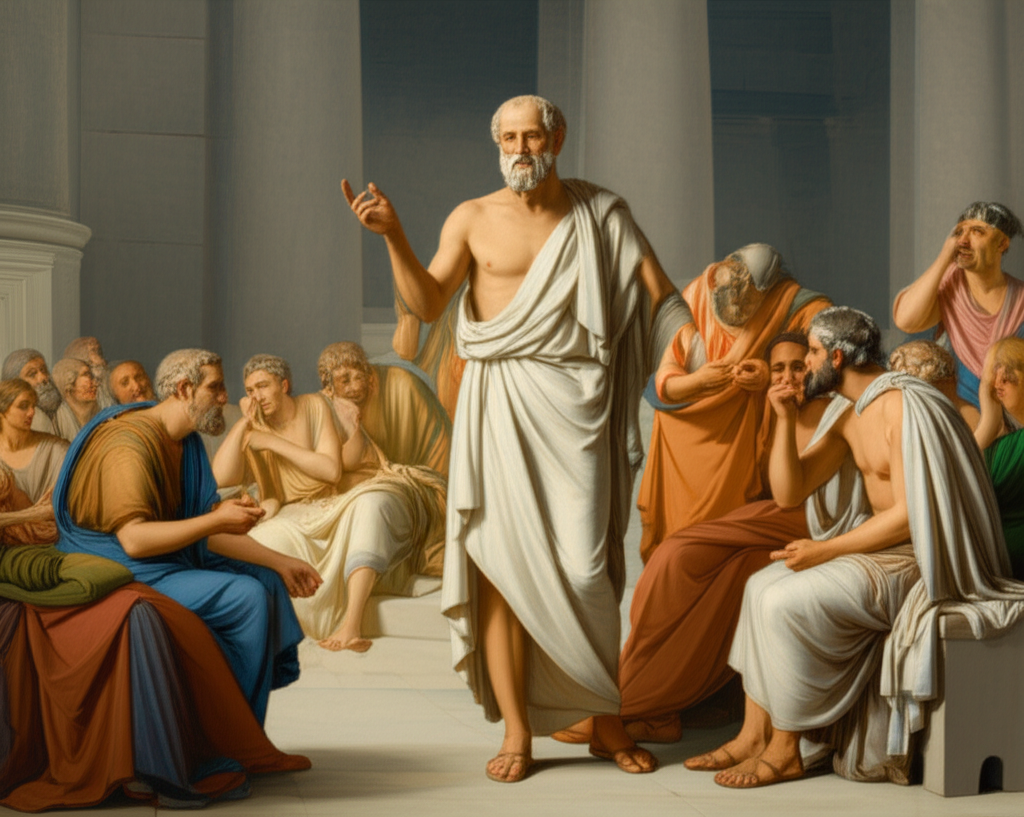
Cultivating Courage for a Flourishing Polis
The cultivation of courage is not merely a personal endeavor but a societal imperative. A vibrant civic life depends on Citizens who are prepared to exercise this virtue.
- Education: A robust education, particularly in the humanities and philosophy, can foster intellectual independence and moral reasoning, which are prerequisites for civic courage. Understanding the lessons from the Great Books provides a framework for discerning right from wrong and understanding the historical consequences of both courage and cowardice.
- Moral Example: Leaders, educators, and even ordinary Citizens who demonstrate courage in their daily lives serve as powerful examples, inspiring others to act with similar fortitude.
- Community Support: Creating environments where dissenting voices are heard and protected, and where ethical stands are celebrated rather than punished, is crucial for fostering widespread civic courage.
Ultimately, the Nature of courage in civic life is about the sustained commitment to the common good, even when it demands personal sacrifice. It is the active embodiment of a Citizen's highest Duty, ensuring that the principles of justice, truth, and freedom are not merely abstract ideals but living realities within our communities.
YouTube Video Suggestions:
-
📹 Related Video: PLATO ON: The Allegory of the Cave
Video by: The School of Life
💡 Want different videos? Search YouTube for: "Plato Republic Courage Virtue Explained"
2. ## 📹 Related Video: ARISTOTLE ON: The Nicomachean Ethics
Video by: The School of Life
💡 Want different videos? Search YouTube for: "Aristotle Nicomachean Ethics Courage Civic Duty"