

The Mind-Body Problem in Modern Science: Where Philosophy Meets the Neuron
Summary: The mind-body problem, humanity's enduring philosophical quandary concerning the relationship between our conscious experience and our physical brain, has found new life and complexity in the age of modern science. While neuroscience meticulously maps the brain's physical architecture and functions, the fundamental question of how subjective experience—thought, emotion, self-awareness—arises from mere matter remains stubbornly unanswered. This article explores how contemporary scientific inquiry, from neuroimaging to artificial intelligence, continues to grapple with this ancient metaphysical puzzle, revealing that the more we learn about the body, the more profound the mystery of the mind becomes.
The Enduring Riddle: From Ancient Philosophy to Modern Inquiry
For millennia, thinkers have wrestled with the profound chasm between our inner world of thoughts and feelings and the tangible, observable world of physical matter. This is the essence of the mind-body problem, a question that sits at the very heart of metaphysics.
Echoes from the Great Books
Our journey into this complex relationship begins not with fMRI scans, but with the foundational texts of Western thought. From Plato's world of Forms and the immortal soul to Aristotle's concept of the soul as the form of the body, the distinction, and indeed the connection, between the immaterial and the material has been a central concern. René Descartes, a giant whose contributions are enshrined in the Great Books of the Western World, famously articulated substance dualism, proposing that the mind (res cogitans) and the body (res extensa) are two distinct kinds of substance, interacting in the pineal gland. While Descartes' specific mechanism has been largely discarded by science, his clear articulation of the problem set the stage for centuries of debate, forcing us to confront the seemingly irreducible difference between subjective experience and objective physical reality.
Science's New Lens
Today, modern science approaches the mind-body problem armed with unprecedented tools. Neuroimaging techniques like fMRI and EEG allow us to observe brain activity in real-time as individuals think, feel, and perceive. Genetic studies explore predispositions to certain mental states, and artificial intelligence pushes the boundaries of what we consider "intelligence" and "consciousness" in non-biological systems. Yet, despite these incredible advancements, the core philosophical challenge persists: how does the electrochemical firing of neurons give rise to the rich tapestry of conscious experience? We can correlate brain states with mental states with increasing precision, but correlation is not identity, nor does it fully explain the subjective "what it's like" quality of consciousness—the so-called "hard problem."
Mapping the Mind: Neuroscience and the Brain
Modern neuroscience has made immense strides in understanding the body's most complex organ: the brain. We can identify regions associated with language, memory, emotion, and decision-making. We can even manipulate neural circuits to alter mood or behavior.
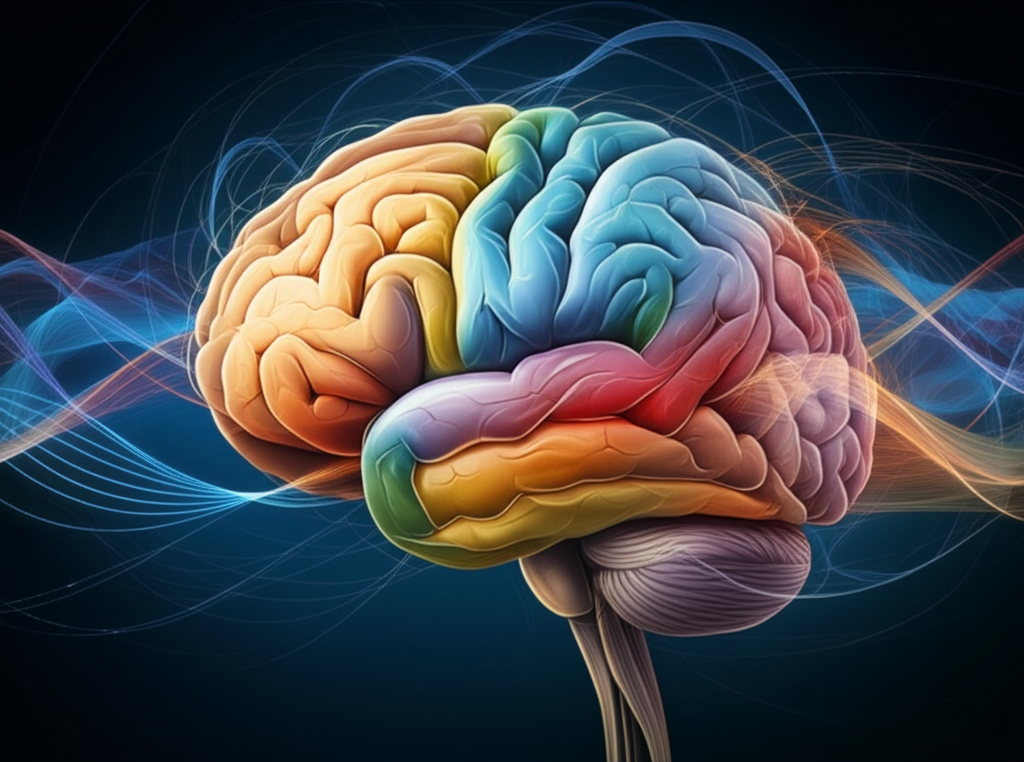
However, while neuroscientists can pinpoint the neural correlates of consciousness (NCCs)—the minimal set of neuronal events sufficient for a specific conscious percept or experience—they struggle to explain why these physical events are accompanied by subjective experience at all. A detailed map of brain activity during joy tells us where joy happens and what neural patterns accompany it, but it doesn't tell us what joy feels like or why those specific patterns give rise to that feeling. This is where the empirical findings of science meet the interpretive demands of metaphysics.
Modern Metaphysical Battlegrounds
The scientific revolution hasn't eliminated the mind-body problem; it has simply shifted the battleground. Contemporary philosophers and scientists propose various solutions, each with its own strengths and weaknesses.
Materialism's Dominance and its Discontents
The prevailing view in much of modern science is some form of materialism or physicalism, which posits that everything, including the mind, is ultimately physical.
- Identity Theory: The idea that mental states are identical to brain states. Pain, for instance, is simply the firing of C-fibers.
- Functionalism: Mental states are defined by their causal roles and functions, not by their physical composition. A mental state is whatever plays a certain functional role, whether it's a human brain, an alien brain, or even a sophisticated computer.
- Eliminative Materialism: Argues that many of our "folk psychology" concepts (beliefs, desires) are flawed and will eventually be replaced by a more accurate neuroscientific vocabulary.
While these approaches offer a scientifically parsimonious view, they face challenges in fully accounting for subjective experience (qualia) and intentionality. The "discontents" often point to the persistent explanatory gap: how does a purely physical system generate subjective experience?
Resurgent Dualisms and Emergent Properties
Despite materialism's prevalence, forms of dualism persist, often in more sophisticated guises than Descartes'.
- Property Dualism: Argues that while there is only one substance (physical), it has two fundamentally different kinds of properties: physical properties and mental properties. Consciousness is an emergent property of complex physical systems but is not reducible to those physical properties.
- Emergentism: Similar to property dualism, this view suggests that consciousness emerges from complex organizations of matter (like the brain) but possesses novel properties not present in its constituent parts. It's like wetness emerging from H2O molecules; you can't find "wetness" in an individual water molecule.
These perspectives attempt to bridge the gap by acknowledging the physical basis of the mind while preserving the unique, non-reducible nature of consciousness.
Beyond the Binary: Panpsychism and Integrated Information Theory
Newer theories challenge the traditional binary of mind vs. matter entirely:
| Theory | Core Idea | Implications for Mind-Body Problem |
|---|---|---|
| Panpsychism | Consciousness (or proto-consciousness) is a fundamental, pervasive property of all matter, not just complex brains. | The mind is not in the body but is an inherent aspect of the universe, emerging in complexity in organisms. |
| Integrated Information Theory (IIT) | Consciousness arises from a system's capacity to integrate information in a highly specific way (measured by Φ). | A quantitative approach to consciousness, suggesting it's a property of any system with high Φ, not just biological brains. |
These approaches, though still highly speculative, demonstrate the ongoing quest to find new frameworks that can reconcile scientific observation with the undeniable reality of subjective experience.
The Unresolved Dialogue: Science, Philosophy, and the Future of Understanding
The mind-body problem remains one of the most profound and persistent challenges at the intersection of science and metaphysics. While neuroscience continues to unveil the intricate mechanisms of the body and its brain, providing invaluable data, it cannot, by itself, resolve the philosophical question of subjective experience. The "how" of brain function is increasingly clear, but the "why" of consciousness remains elusive.
Ultimately, understanding the mind will likely require a continued, collaborative dialogue between empirical science and philosophical inquiry. Each provides essential tools: science offers the facts of the physical world, while philosophy offers the conceptual frameworks to interpret those facts and grapple with their profound implications for what it means to be a conscious being in the universe. The quest for understanding is far from over, and the mind-body problem continues to inspire both scientific discovery and deep philosophical reflection.
YouTube Video Suggestions:
- "The Hard Problem of Consciousness Explained"
- "Neuroscience vs. Philosophy: The Mind-Body Problem"
📹 Related Video: What is Philosophy?
Video by: The School of Life
💡 Want different videos? Search YouTube for: "The Mind-Body Problem in Modern Science philosophy"