

The Enduring Dance of Existence: Understanding Matter and Form in Physical Objects
Welcome, fellow travelers on the philosophical journey! Today, we're diving into one of the most fundamental distinctions in Western thought, a concept that underpins much of our understanding of the physical world: the matter-form distinction. This idea, originating with Aristotle and explored extensively through the ages, posits that every physical object isn't just a jumble of stuff, but rather a composite of underlying matter given specific structure and purpose by its form. It's a lens through which we can explore everything from the smallest particle to the grandest cathedral, connecting the tangible world to the profound questions of metaphysics and even influencing how we approach physics.
The Enduring Puzzle of Being: What Makes a Thing That Thing?
Have you ever looked at a statue and wondered what makes it a statue rather than just a lump of marble? Or considered a living tree and pondered what distinguishes it from a pile of wood? This isn't just idle curiosity; it's a deep philosophical inquiry into the nature of reality. From the ancient Greeks, particularly Aristotle, came a brilliant framework to answer this: the idea that every physical object is a composite of two inseparable principles: matter and form. This concept, often called hylomorphism (from the Greek hyle for matter and morphe for form), is a cornerstone of classical philosophy, profoundly influencing thinkers whose works are collected in the Great Books of the Western World.
Aristotle's Enduring Insight: Hylomorphism
At the heart of the matter-form distinction lies Aristotle's groundbreaking analysis of change and substance. He observed that things change (a block of wood becomes a chair) yet retain some underlying "stuff," and that different things are made of similar "stuff" but are fundamentally different kinds of things. To explain this, he introduced the concepts of matter and form.
- Matter (Hyle): This refers to the potentiality of a thing, the raw material or "stuff" out of which something is made. It is indeterminate in itself, capable of taking on various forms. Think of it as the unformed clay on a potter's wheel.
- Form (Morphe): This refers to the actuality of a thing, its structure, essence, organization, and defining characteristics. It is what makes a thing what it is, giving the matter its specific identity and function. This is the specific shape of the vase the potter creates.
The two are not separate entities that exist independently but are rather two aspects of a single, unified physical object. You cannot have unformed matter, nor can you have form without some matter to instantiate it (in the physical world, at least).
Deconstructing Reality: Matter and Form in Detail
Let's break down these two fundamental components with a clearer lens.
Matter Defined: The "Stuff" of Being
Matter, in this philosophical sense, is not necessarily the matter of modern physics (atoms, quarks, etc.), though it can certainly encompass those. It's more abstract: the underlying substratum that persists through change.
| Characteristic of Matter | Description | Example |
|---|---|---|
| Potentiality | It has the capacity to become something specific, but isn't yet. | A block of marble has the potential to be a statue. |
| Indeterminate | By itself, it has no specific shape, size, or function. | Raw clay is just "clay" until shaped. |
| Substratum of Change | It is what remains when a thing changes its form (e.g., a tree becoming paper). | The wood substance remains, even if its form changes. |
| Principle of Individuation | It is what makes one individual distinct from another of the same form (e.g., two identical statues). | Two identical rings are distinct because of their distinct matter. |
Form Defined: The Essence and Structure
Form is what actualizes matter, giving it its specific nature and purpose. It's the blueprint, the organizing principle, the essence.
| Characteristic of Form | Description | Example |
|---|---|---|
| Actuality | It is what makes a thing actually what it is; it realizes the potential of matter. | The specific shape and design of a statue. |
| Determinate | It provides the specific characteristics, shape, and function. | The form of a chair makes it a chair, not a table. |
| Principle of Identity | It is what allows us to classify and recognize a thing as belonging to a certain kind. | The form of "human" makes us recognize other humans. |
| Source of Activity/Function | It dictates how a thing behaves or what it does (e.g., the form of a knife allows it to cut). | The form of a bird enables it to fly. |
The Interplay: From Clay to Cathedrals
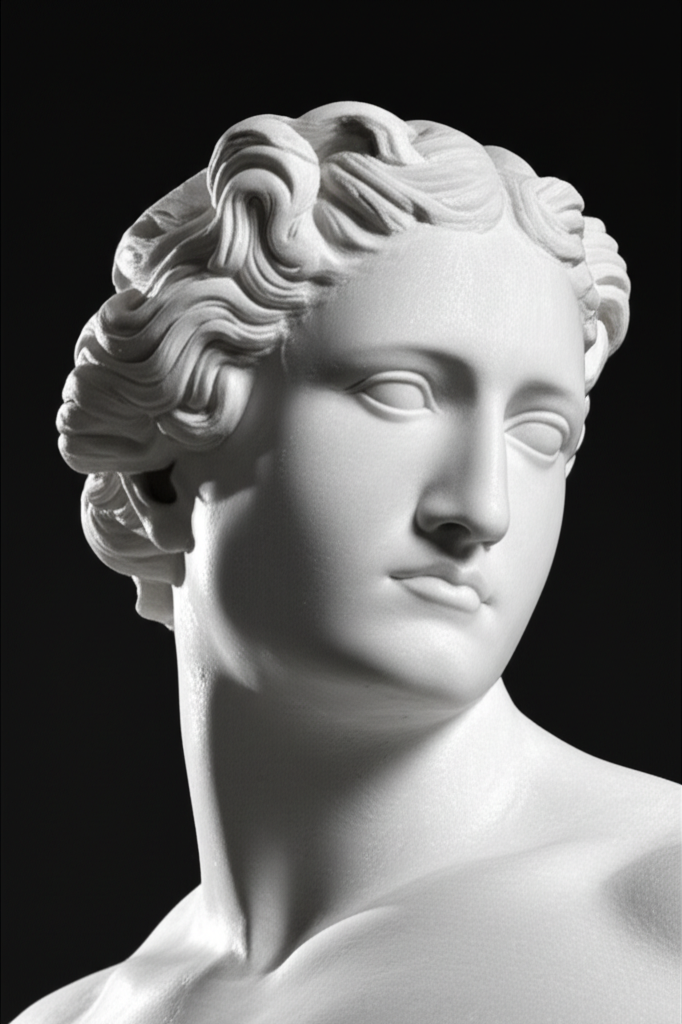
Consider a simple example: a bronze statue. The matter is the bronze metal. It's heavy, malleable, and has a certain color. But it's not yet a statue. The form is the specific shape, proportions, and artistic design that the sculptor imposes upon the bronze. It's the idea of the statue made real in the metal.
- Without the matter (bronze), the form (the sculptor's idea) remains an abstract concept.
- Without the form (the specific design), the matter (bronze) is just an undifferentiated lump.
This applies to everything:
- A house: bricks, wood, glass (matter) organized into a specific structure for dwelling (form).
- A living organism: biological tissues, cells, organs (matter) organized into a functional, self-sustaining system with specific characteristics (form).
- A book: paper, ink (matter) arranged into specific words, sentences, and chapters to convey meaning (form).
Connecting the Dots: Physics and Metaphysics
The matter-form distinction isn't just an abstract philosophical exercise; it has profound implications for how we understand both the natural world and the very nature of existence.
Matter-Form in Physics
While modern physics delves into the minute components of matter (quarks, leptons, fields), the philosophical concept of matter and form still offers a framework for understanding how these components organize into stable, identifiable objects. A physicist might describe the subatomic particles of a water molecule, but it's the form (the specific arrangement of two hydrogen atoms and one oxygen atom) that gives water its unique properties and identity. Even at fundamental levels, particles exhibit specific forms of interaction and organization. The very laws of physics can be seen as descriptions of the forms that matter can take or the forms of energy and interaction.
Matter-Form in Metaphysics
This is where the distinction truly shines. Metaphysics is the branch of philosophy that explores the fundamental nature of reality, including the relationship between mind and matter, between substance and accident, and between potentiality and actuality.
- The matter-form distinction provides a robust theory of substance: what makes a thing a unified, existing entity. A physical substance isn't just its parts; it's its parts organized by a specific form.
- It helps explain change: change isn't something appearing from nothing or disappearing into nothing. It's the loss of one form and the acquisition of another, while the underlying matter persists.
- It informs discussions about essence: what makes a human being essentially human, or a tree essentially a tree. This essence is tied directly to its form.
Enduring Relevance in Modern Thought
While contemporary philosophy and science have developed new terminologies and models, the core intuition behind the matter-form distinction remains powerful. It encourages us to look beyond mere aggregation of parts and to consider the organizing principles, structures, and essences that give things their identity and function. It's a reminder that understanding the world requires us to appreciate both the "what it's made of" and the "what it is."
Conclusion: A Foundation for Understanding
The matter-form distinction, rooted deeply in the ancient wisdom of Aristotle and preserved through the Great Books of the Western World, offers a timeless framework for comprehending the physical objects around us. It's a foundational concept that bridges the tangible stuff of the world with the abstract principles that give it meaning and order. By understanding how matter provides potentiality and how form provides actuality, we gain a richer appreciation for the intricate dance of existence, influencing our perspectives on everything from physics to the deepest questions of metaphysics.
📹 Related Video: ARISTOTLE ON: The Nicomachean Ethics
Video by: The School of Life
💡 Want different videos? Search YouTube for: "Aristotle hylomorphism explained"
📹 Related Video: PLATO ON: The Allegory of the Cave
Video by: The School of Life
💡 Want different videos? Search YouTube for: "Metaphysics matter and form Aquinas"