

Deconstructing Clarity: The Logical Structure of Definition
To navigate the complex currents of thought, whether in philosophical discourse or everyday conversation, we must first agree on the meaning of our terms. This isn't merely a matter of semantics; it's the very bedrock of sound reasoning. This article explores the fundamental principles governing the logical structure of definition, revealing how a precise understanding of what we mean, and how we articulate it, underpins all coherent logic. From the grand pronouncements of ancient philosophers to the meticulous arguments of modern thinkers, the quest for clear and accurate definitions remains paramount, acting as the compass that guides us through the labyrinth of ideas.
The Philosophical Imperative: Why Definitions Matter
From the earliest inquiries, philosophers have understood that ambiguity is the enemy of truth. Socrates, in his relentless pursuit of virtue, would often begin by asking, "What is justice?" or "What is piety?" His method, as chronicled in the dialogues of Plato, wasn't just about finding an answer, but about defining the terms themselves, stripping away misconceptions to reveal a core understanding. This philosophical tradition, deeply rooted in the Great Books of the Western World, teaches us that without a shared and precise understanding of our concepts, any subsequent discussion is built on shifting sands.
Aristotle, in his Organon, particularly in Categories and Topics, laid out the classical framework for understanding definitions. For him, a definition wasn't just a linguistic convenience; it was a statement of the essence of a thing. This systematic approach forms the historical backbone of our understanding of logic and how we construct meaningful arguments. The entire edifice of reasoning rests on the clarity of its initial premises, and those premises, more often than not, hinge on well-defined terms.
Anatomy of a Sound Definition: Genus and Differentia
The most enduring and logically robust model for constructing a definition comes from Aristotle: defining something by its genus and differentia. This method elegantly captures both the universal and particular aspects of a concept.
- Genus: This refers to the broader class or category to which the thing being defined belongs. It answers the question, "What kind of thing is it?" The genus represents the universal aspect – what it shares with other things.
- Differentia: This refers to the specific characteristic or set of characteristics that distinguish the thing from all other members of its genus. It answers the question, "How is it different from other things of that kind?" The differentia highlights the particular and unique qualities.
Consider the classic example:
| Term to Define | Genus (Universal) | Differentia (Particular) | Full Definition |
|---|---|---|---|
| Human | Animal | Rational | A rational animal. |
Here, "animal" is the broad category (genus) that humans share with countless other creatures. "Rational" is the specific quality (differentia) that, according to this definition, sets humans apart within the animal kingdom. This structure ensures that a definition is neither too broad (like just saying "animal") nor too narrow (like saying "a being that writes poetry," which is true but doesn't capture the full essence or distinguish it universally).
Rules for Constructing Robust Definitions
Beyond the genus-differentia model, several practical rules guide the creation of logically sound definitions, minimizing ambiguity and enhancing the clarity of our reasoning:
- A Definition Must State the Essential Attributes: Focus on what makes the thing what it is, not incidental properties.
- A Definition Must Not Be Circular: It should not use the term being defined, or synonyms of it, within the definition itself. For instance, defining "sleep" as "the state of being asleep" is unhelpful.
- A Definition Must Not Be Too Broad or Too Narrow: As discussed with genus and differentia, it must precisely delineate the boundaries of the concept.
- A Definition Must Be Clearer Than the Term Itself: The language used in the definition should be readily understandable and avoid obscure or technical jargon where simpler terms suffice.
- A Definition Should Be Affirmative, Not Negative, Where Possible: While defining by negation can be necessary (e.g., "darkness is the absence of light"), it's generally more informative to state what a thing is.
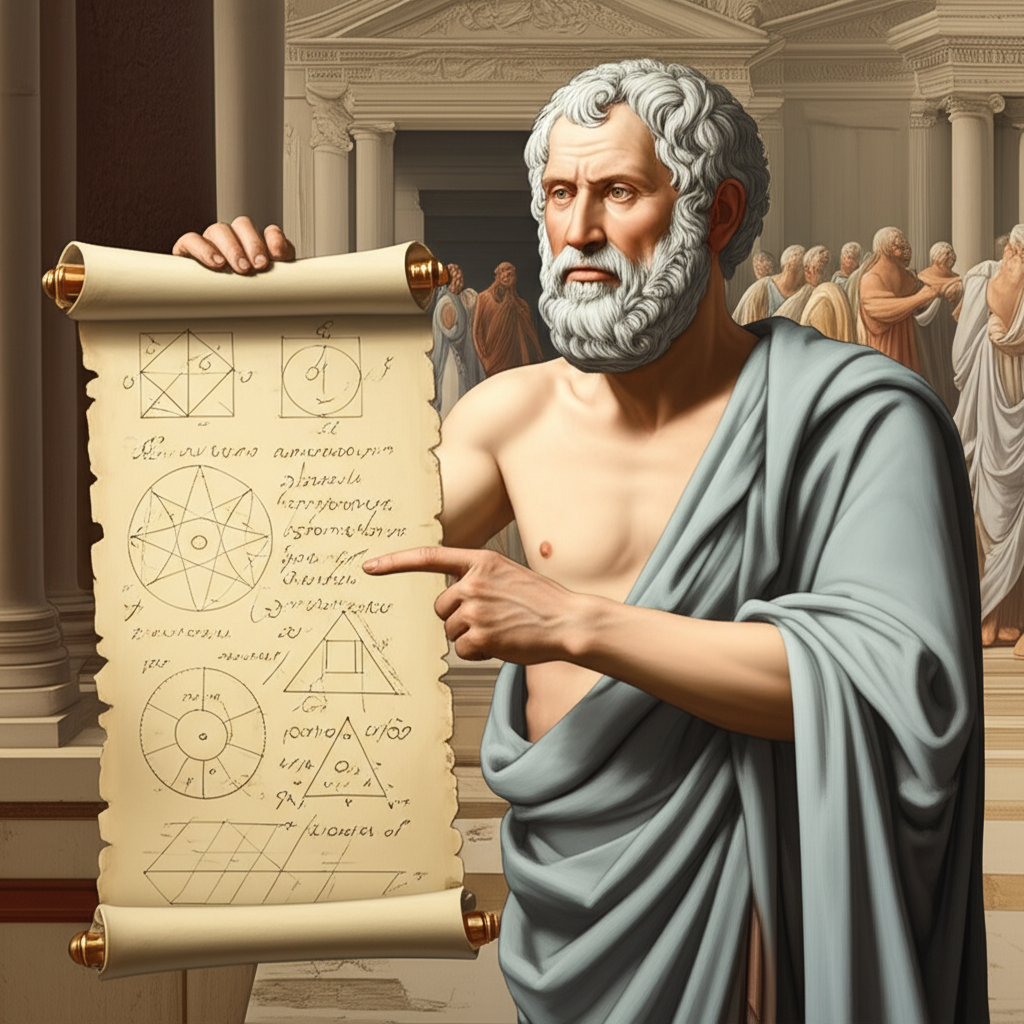
Definition as the Cornerstone of Logic and Reasoning
The pursuit of clear definitions is not an academic exercise; it's a practical necessity for effective logic and reasoning. Faulty definitions are often the root cause of fallacies and misunderstandings:
- Ambiguity: If a term is used with different meanings by different parties (or even by the same person at different times), any argument built upon it will collapse. This is the fallacy of equivocation.
- Vagueness: A definition that is too general or imprecise can lead to endless debate without resolution, as the boundaries of the concept are unclear.
- Circular Reasoning: As noted, a circular definition provides no new information and thus cannot serve as a foundation for genuine insight or argument.
A well-constructed definition, conversely, establishes a firm premise for any subsequent argument. It sets the scope, identifies the core properties, and clarifies the relationship between the universal and particular aspects of a concept. This clarity allows us to build sound syllogisms, draw valid inferences, and engage in productive dialogue, moving beyond mere opinion to reasoned understanding.
Conclusion: The Power of Precision
The logical structure of definition is far more than a dry academic topic; it is a vital tool for critical thinking, effective communication, and the very pursuit of truth. By understanding the principles of genus and differentia, and by adhering to the rules of clear articulation, we equip ourselves to dissect complex ideas, build robust arguments, and avoid the pitfalls of ambiguity. As Daniel Sanderson, I urge you to embrace the discipline of definition. It is the first step in bringing order to the intellectual chaos, illuminating the path towards genuine insight and profound reasoning.
YouTube Video Suggestions:
-
📹 Related Video: ARISTOTLE ON: The Nicomachean Ethics
Video by: The School of Life
💡 Want different videos? Search YouTube for: "Aristotle Logic Definition Genus Differentia"
2. ## 📹 Related Video: ARISTOTLE ON: The Nicomachean Ethics
Video by: The School of Life
💡 Want different videos? Search YouTube for: "Critical Thinking Fallacies Ambiguity Definition"