

The Logic of Judgment in Law: Navigating Reason in the Scales of Justice
The realm of law is often perceived as a system of rigid rules and precedents, yet at its heart lies a profound philosophical challenge: the act of judgment. How do we move from abstract legal principles to concrete decisions affecting human lives? This pillar page explores the intricate relationship between logic, reasoning, and the exercise of judgment within the legal framework, drawing deeply from the philosophical traditions of the Great Books of the Western World. We will delve into the historical roots of legal reasoning, examine the different forms of logic employed in courts, and consider the inherent complexities that elevate judgment beyond mere syllogism, revealing it as a nuanced blend of intellect, prudence, and ethical consideration.
The Philosophical Foundations of Legal Reasoning
At its core, law is an endeavor to bring order and fairness to human society, an ambition that inherently relies on reason. From ancient Greece to the Enlightenment, philosophers have grappled with the nature of justice and the means by which it can be achieved, consistently highlighting the indispensable role of logic and reasoning.
Aristotle and the Birth of Practical Wisdom
Aristotle, in his Nicomachean Ethics, introduced the concept of phronesis, or practical wisdom. This isn't merely theoretical knowledge but the ability to deliberate well about what is good and advantageous for oneself and for humanity. For a judge, phronesis is paramount. It's the capacity to apply universal legal principles (logos) to particular, often unique, situations, understanding that strict application of a rule might sometimes lead to injustice. He also laid foundational work for formal logic in his Organon, providing tools for deductive and inductive reasoning that are still central to legal argumentation.
Aquinas and the Structure of Law
Thomas Aquinas, deeply influenced by Aristotle, further elaborated on the logic underpinning law in his Summa Theologica. He posited a hierarchical structure of law – eternal, natural, divine, and human – all rooted in reason. For Aquinas, human law derives its authority and validity from its alignment with natural law, which is discoverable through human reason. This philosophical framework provided a robust justification for the rational basis of legal judgment, emphasizing that law should reflect a reasonable ordering of society.
The Mechanics of Legal Logic: Deductive and Inductive Reasoning
In practice, legal judgment employs a blend of different logical approaches. A judge, lawyer, or juror must navigate a complex landscape of facts, statutes, precedents, and arguments, all requiring careful reasoning.
Deductive Reasoning: From General to Specific
Deductive logic is perhaps the most formally recognized form of reasoning in law. It involves applying a general rule or principle to a specific set of facts to reach a conclusion. The classic legal syllogism illustrates this:
- Major Premise: All persons who commit murder shall be punished. (General Rule - Law)
- Minor Premise: John Doe committed murder. (Specific Fact - Evidence)
- Conclusion: John Doe shall be punished. (Specific Judgment)
This form of logic provides a sense of certainty and predictability, vital for the rule of law. Statutes and established precedents are often treated as major premises, and the facts of a case as minor premises.
Inductive Reasoning: From Specific to General
While deductive logic applies established rules, inductive reasoning is crucial for developing those rules or for interpreting them in novel situations. This involves drawing general conclusions from specific observations or cases. In law, this is most evident in the use of precedent (stare decisis).
Table: Deductive vs. Inductive Reasoning in Law
| Feature | Deductive Reasoning (e.g., Statutory Application) | Inductive Reasoning (e.g., Precedent) |
|---|---|---|
| Starting Point | General legal principle/statute | Specific past legal cases/facts |
| Process | Applies principle to facts | Infers general rule from specific instances |
| Certainty | If premises are true, conclusion is certain | Conclusion is probable, not absolutely certain |
| Role in Law | Applying established law, making definitive rulings | Developing common law, interpreting statutes, policy |
| Example | Applying a speed limit law to a driver's speed | Deriving "reasonable care" from multiple negligence cases |
Inductive reasoning allows the law to evolve and adapt, reflecting new social realities and ethical considerations. It requires careful analysis of similarities and differences between cases, a skill central to legal judgment.
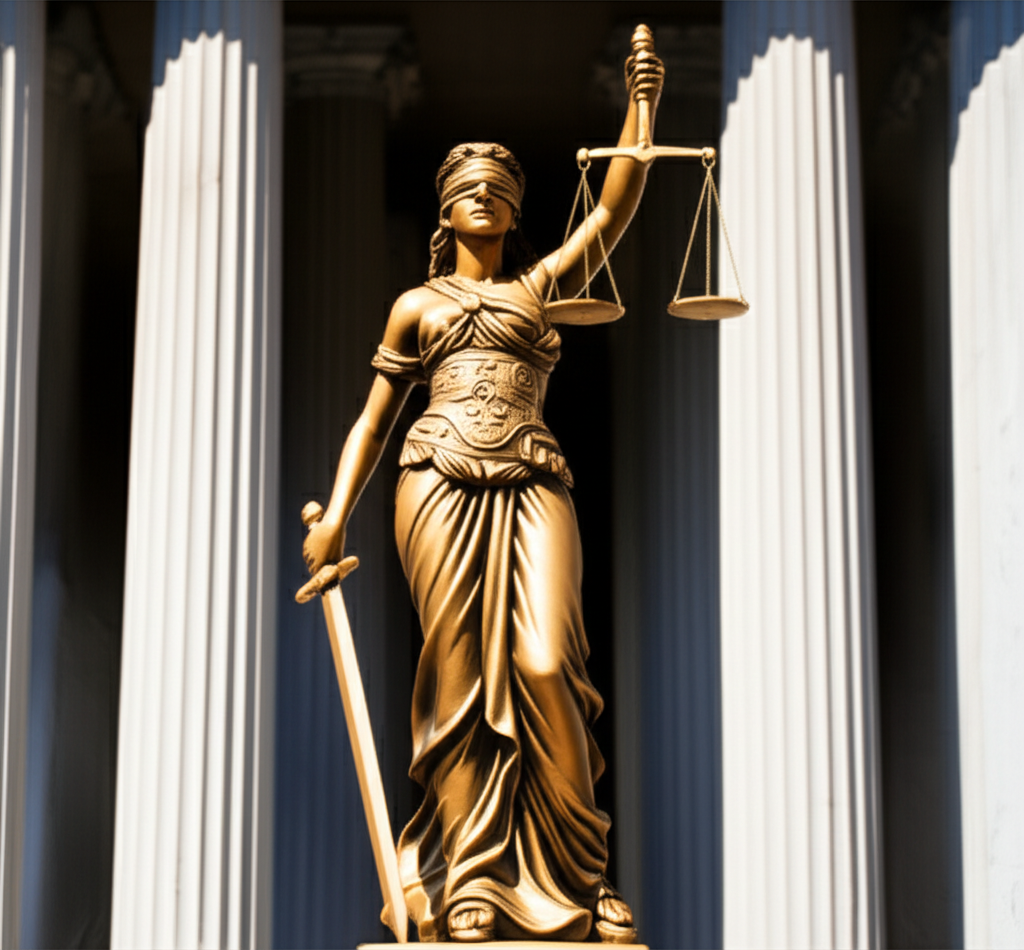
The Nature of Judgment: Beyond Pure Logic
While logic provides the framework, legal judgment is rarely a purely mechanical exercise. It often involves discretion, interpretation, and an understanding of human context that goes beyond formal syllogisms.
Interpretation and Ambiguity
Legal texts, whether statutes or constitutional provisions, are often open to interpretation. Words can have multiple meanings, and the intent of lawmakers can be obscure. Here, judgment requires more than just logic; it demands hermeneutics – the theory of interpretation. Judges must consider legislative history, public policy, and the spirit of the law, not just its letter. This is where reasoning becomes less about strict deduction and more about finding the most reasonable meaning within a given context.
Equity and Fairness
Aristotle recognized that even good laws can be too general for every specific case. He introduced the concept of equity – the correction of legal justice where law is deficient because of its universality. A judge's judgment may sometimes necessitate a departure from strict logic to achieve a more just or equitable outcome, especially in cases where the letter of the law would produce an absurd or cruel result. This doesn't mean abandoning reason, but rather employing a higher form of reasoning that considers the broader principles of justice and fairness.
The Role of Prudence and Experience
As Grace Ellis, I've always been fascinated by how the human element informs what we might initially see as a purely logical process. Legal judgment is not merely about applying rules; it's also about the prudence of the judge. Experience, an understanding of human nature, and a developed sense of justice contribute significantly to sound judgment. This echoes Aristotle's phronesis – the ability to discern the right course of action in complex, morally charged situations. A judge's reasoning is thus enriched by their accumulated wisdom, allowing them to perceive nuances that might escape a purely formalistic approach.
Challenges to Logical Judgment in Law
Despite the emphasis on logic and reasoning, the legal system is not immune to challenges that can obscure clear judgment.
Bias and Emotion
Human beings, including judges and juries, are susceptible to biases – conscious or unconscious – and emotions. These can distort reasoning and lead to unfair judgments. The pursuit of impartiality is a constant struggle, requiring rigorous procedures and ethical commitments to ensure that logic prevails over prejudice.
The Limits of Formal Logic
While formal logic is essential, it cannot capture the full complexity of human experience. Legal cases often involve moral dilemmas, conflicting values, and unforeseen consequences that cannot be neatly resolved by a syllogism. The judgment required here is a form of practical reasoning that weighs competing interests and values, seeking the most reasonable and just outcome, even when perfect logic is elusive.
Conclusion: The Enduring Pursuit of Reasoned Judgment
The logic of judgment in law is a dynamic interplay of formal reasoning, philosophical principles, and practical wisdom. From the foundational insights of Aristotle and Aquinas to the daily deliberations in courtrooms worldwide, the pursuit of justice is inextricably linked to the rigorous application of logic and the nuanced exercise of judgment. It's a continuous philosophical journey, striving to ensure that the scales of justice are not only balanced by rules but also guided by profound reason. Understanding this intricate relationship is crucial for anyone seeking to comprehend the true nature of law and its enduring quest for fairness in a complex world.
📹 Related Video: ARISTOTLE ON: The Nicomachean Ethics
Video by: The School of Life
💡 Want different videos? Search YouTube for: ""Aristotle's Ethics and the Law," "Legal Reasoning and Critical Thinking""