

The Interplay of Desire and Will in Choice: A Philosophical Inquiry
The human experience of choice is a complex tapestry woven from the threads of our deepest inclinations and our capacity for deliberate action. At its heart lies the fascinating, often tumultuous, interplay between desire and will. This article delves into how these two fundamental forces within the Mind of Man shape our decisions, examining the philosophical traditions that have grappled with their definitions, conflicts, and ultimate reconciliation, drawing insights from the enduring wisdom contained within the Great Books of the Western World. Understanding this dynamic is not merely an academic exercise; it is crucial for self-mastery, ethical living, and comprehending the very essence of what it means to be a choosing agent.
The Foundations: Defining Desire and Will
Before we explore their interaction, let's briefly distinguish these pivotal concepts:
- Desire: Often understood as an appetite, an inclination, a longing, or a craving towards something perceived as good or pleasurable. It is frequently felt as an immediate, often visceral, pull. Philosophers like Plato, in his Republic, identified desire (or epithymia) as one of the soul's three parts, often associated with bodily needs and pleasures.
- Will: More than just wishing, the will signifies the faculty of the Mind that enables conscious, deliberate choice and action. It is the power to decide, to assent or dissent, to initiate or inhibit. Aristotle, in his Nicomachean Ethics, explored voluntary action as stemming from a deliberate choice, distinguishing it from mere impulse. The will, therefore, implies a degree of rationality and self-direction.
The tension arises because desires often present themselves as compelling ends, while the will is the means by which we either pursue or resist them, often guided by reason or moral principle.
Ancient Insights: The Soul's Internal Struggle
From antiquity, philosophers recognized the internal battle between what we want and what we choose.
Plato's Charioteer: Reason, Spirit, and Appetite
Plato's famous analogy of the soul as a charioteer (Reason) guiding two winged horses (Spirit/Thymos and Appetite/Desire) vividly illustrates this interplay. The dark horse of Appetite pulls towards immediate gratification and base pleasures, while the noble horse of Spirit strives for honor and courage. It is the charioteer, Reason, embodying the Mind's capacity for judgment, that must exert will to guide these forces towards a harmonious, virtuous path. Without the will's firm hand, the soul is pulled astray by unbridled desire.
Aristotle on Voluntary Action and Practical Wisdom
Aristotle offered a more nuanced view, focusing on the nature of voluntary and involuntary actions. For Aristotle, a truly voluntary action stems from a deliberate choice (prohairesis), which involves both reason and desire, but in a specific way. Our desires present us with potential goods, but it is practical wisdom (phronesis) that, through the will, determines the best course of action to achieve those goods, or indeed, to achieve the good life itself. The will here isn't merely suppressing desire, but aligning it with reasoned judgment for a higher purpose.
Medieval Meditations: The Will in the Face of Sin and Salvation
Christian philosophy, particularly through Augustine and Aquinas, placed immense emphasis on the will, especially in the context of moral responsibility and divine grace.
Augustine's Burdened Will
St. Augustine, in his Confessions, provides a deeply personal account of the struggle between desire and will. He vividly describes the agony of knowing what is right but being unable to execute it due to the pull of carnal desires and habits. His famous prayer, "Grant me chastity and continence, but not yet," perfectly encapsulates the divided will. For Augustine, the will, though free, is weakened by sin, making it difficult for Man to choose good without divine grace. This highlights the will's power to assent or resist, even when faced with overwhelming desire.
Aquinas on Intellect, Will, and Natural Law
St. Thomas Aquinas, synthesizing Aristotelian thought with Christian theology, posited that the will is a rational appetite. It is not blind but follows the intellect's apprehension of the good. While desire might point to a particular good, the intellect evaluates it, and the will then moves towards it. However, the will remains free to choose among various goods or even to choose against a perceived good, especially when influenced by passion or ignorance. The interplay here is hierarchical: the intellect presents, the will chooses, but both are susceptible to the complexities of human nature and the allure of diverse desires.
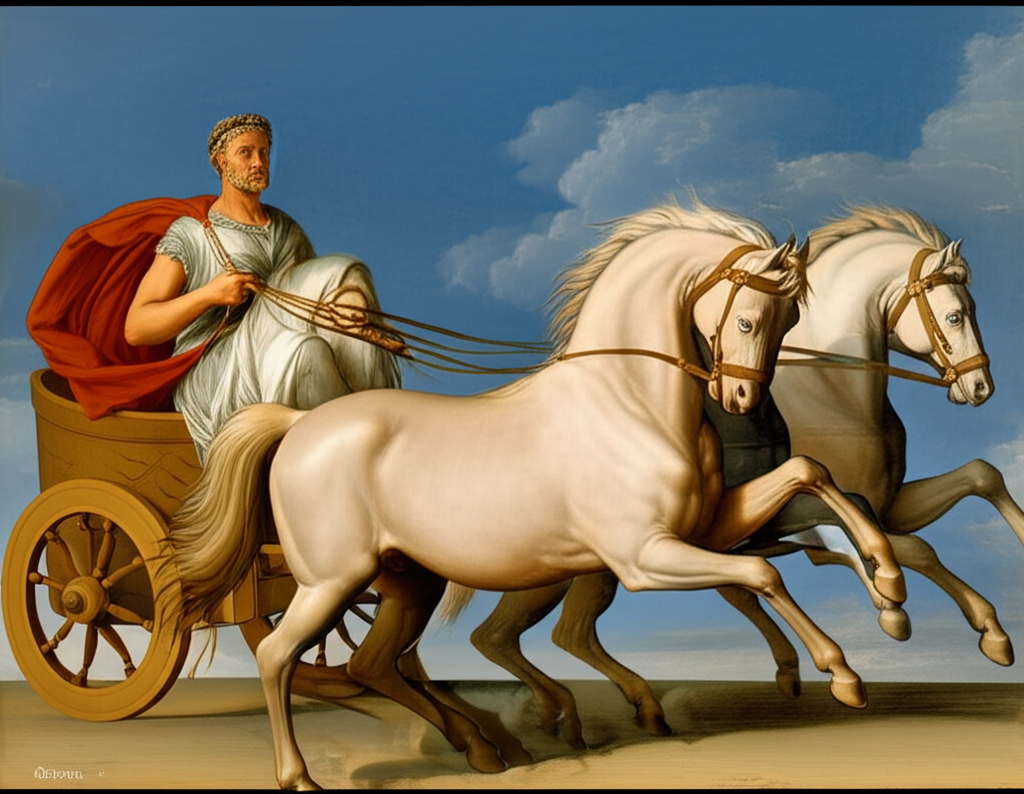 struggling to control a dark, unruly horse (Appetite/Desire) and a noble, spirited horse (Thymos), all set against a backdrop of ancient Greek architecture, symbolizing the internal conflict within the human soul.)
The Modern Mind: Autonomy, Duty, and Power
With the Enlightenment and beyond, the focus shifted, but the core tension remained.
Descartes and the Rational Will
René Descartes, initiating modern philosophy with his emphasis on the thinking self, saw the Mind as distinct from the body. While bodily desires and passions could influence us, true freedom and control lay in the rational will's ability to assent or dissent to these influences. For Descartes, the will is supremely free and, when guided by clear and distinct ideas, can master the passions, asserting the supremacy of rational choice over mere inclination.
Kant's Autonomous Will and Moral Duty
Immanuel Kant offered perhaps the most robust defense of the will's autonomy. For Kant, true moral action does not stem from desire or inclination, but from duty, dictated by a rational will acting according to universal moral laws (the Categorical Imperative). The will is free precisely because it can act independently of empirical desires, choosing to do what is right simply because it is right. Here, the will is not merely managing desire; it is often overriding it in favor of a higher, rational imperative.
Nietzsche's Will to Power: Beyond Good and Evil
Friedrich Nietzsche radically re-evaluated the concepts of desire and will. For him, the fundamental driving force in all life is the "Will to Power" – not merely crude domination, but an impulse towards growth, overcoming, and self-creation. Traditional morality, which often sought to suppress desire in favor of a weak will (as seen in ascetic ideals), was, for Nietzsche, a denial of life. He challenged Man to re-evaluate values, to embrace and channel one's fundamental drives in a creative, life-affirming way, rather than letting a reactive will be dictated by external moral codes or internal weakness.
Navigating Choice: A Framework for Understanding
The historical journey reveals that the interplay between desire and will is not a simple dichotomy but a dynamic relationship, often a struggle for supremacy within the Mind of Man. Our choices are rarely purely rational or purely impulsive. Instead, they often arise from a complex negotiation.
Consider the following distinctions in the act of choosing:
| Aspect of Choice | Primarily Driven by Desire | Primarily Driven by Will |
|---|---|---|
| Motivation | Immediate gratification, pleasure, comfort, aversion to pain | Duty, long-term goals, moral principles, self-improvement |
| Origin | Instincts, emotions, bodily urges, learned associations | Reason, deliberation, conscience, values, commitments |
| Perspective | Short-term, self-focused, reactive | Long-term, often broader implications, proactive |
| Consequence | Potential impulsivity, regret, addiction | Self-control, discipline, character development, autonomy |
| Philosophical Link | Plato's Appetite, Hume's Passions, Epicurean pursuit | Kant's Duty, Stoic Virtue, Aristotle's Practical Wisdom |
This table illustrates that while desire presents the "what I want," the will often determines "what I should do" or "what I will do" in light of broader considerations.
Conclusion: The Enduring Dialogue Within Man
The ongoing philosophical dialogue concerning desire and will underscores their centrality to human nature and the act of choice. From Plato's charioteer to Kant's autonomous agent and Nietzsche's will to power, thinkers across millennia have recognized that the quality of our lives, our ethical standing, and our very self-definition hinge on how we manage this internal dynamic.
For Man, truly understanding the interplay of desire and will is to embark on a journey of self-discovery. It involves recognizing the powerful currents of our desires, cultivating a strong and reasoned will, and continually striving to align our choices with our deepest values and highest aspirations. It is in this delicate, often challenging, balance that we find the path to genuine freedom and meaning.
📹 Related Video: PLATO ON: The Allegory of the Cave
Video by: The School of Life
💡 Want different videos? Search YouTube for: ""Plato's Chariot Allegory Explained" and "Kant on Duty and the Good Will""