

The Boundless Horizon: Exploring the Concept of Infinity in Theology
The concept of Infinity stands as one of the most profound and challenging ideas in human thought, and nowhere is its significance more acutely felt than within the realm of Theology. From the earliest philosophical ponderings to the intricate doctrines of established faiths, the notion of an unending, immeasurable, and ultimate reality has served as a cornerstone for understanding the divine. This article delves into how theological traditions grapple with Infinity, specifically in relation to the nature of God and the profound implications of divine Eternity. We will explore how this concept shapes our understanding of the divine attributes, the cosmos, and our own place within creation, drawing insights from the enduring wisdom found in the Great Books of the Western World.
The Infinite God: A Theological Imperative
At the heart of most monotheistic traditions lies the conviction that God is inherently infinite. This isn't merely a poetic flourish but a theological necessity, distinguishing the Creator from creation, the ultimate ground of being from contingent existence. To assert God's finitude would be to posit a limit to His power, knowledge, or presence, thereby undermining His sovereignty and ultimate reality.
The philosophical journey towards comprehending the infinite has been long and winding. Ancient Greek thinkers, whose works are foundational to the Great Books, often viewed the apeiron (the unlimited or indefinite) with suspicion, associating it with imperfection or chaos. Plato, for instance, sought perfect Forms, while Aristotle preferred the definite and actual over the potentially infinite. However, with the advent of Abrahamic Theology, the infinite became re-evaluated, not as a defect, but as the supreme attribute of the perfect being.
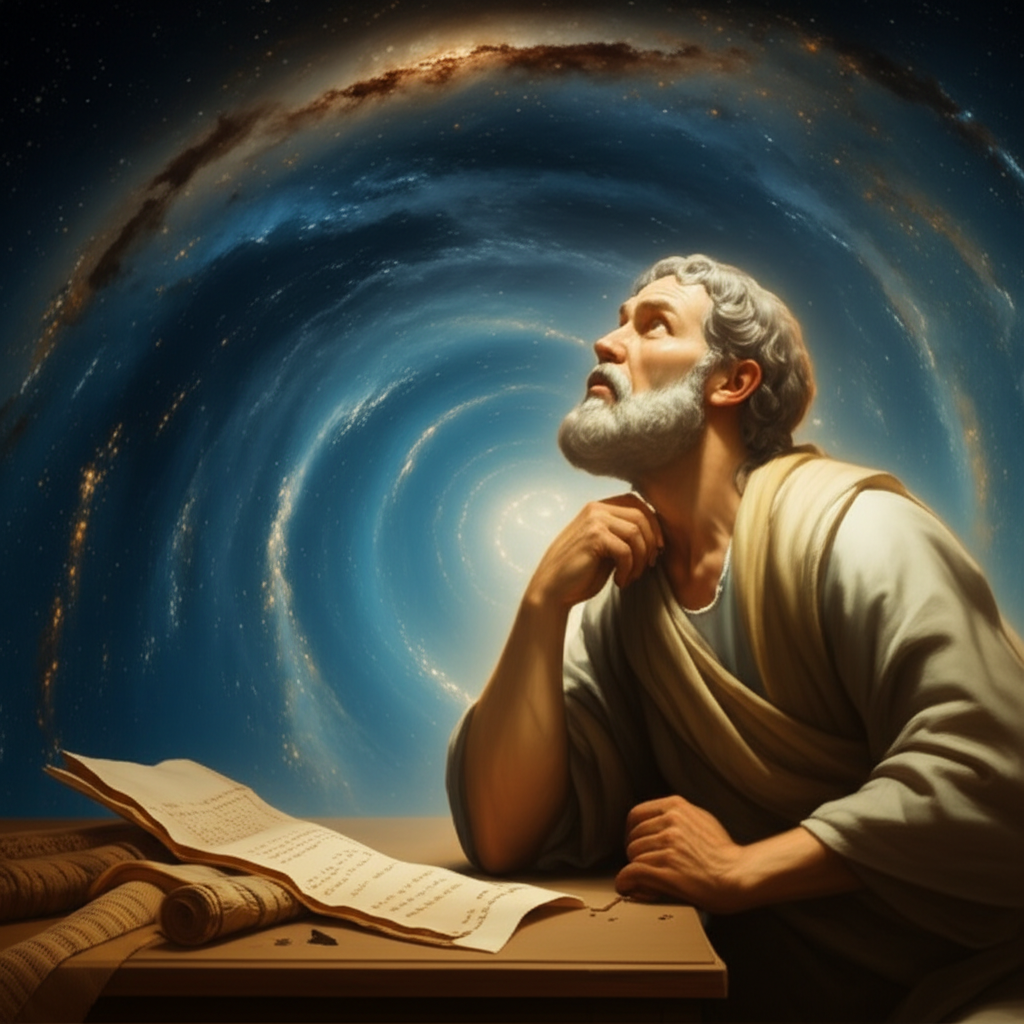
Attributes of Divine Infinity
When theologians speak of God's Infinity, they are not merely speaking of endless quantity but of a qualitative boundlessness that permeates every aspect of the divine nature. This concept manifests in several key attributes:
- Omnipotence (Infinite Power): God's power is without limit. He can do all things logically possible, His will being the ultimate creative force. This means no external constraint can impede His purposes, and His capacity to act is boundless.
- Omniscience (Infinite Knowledge): God's knowledge encompasses all things, past, present, and future, actual and possible. There is no truth hidden from Him, no thought unperceived. This suggests a mind that is not merely vast, but truly infinite in its comprehension.
- Omnipresence (Infinite Presence): God is present everywhere, at all times, not spatially extended but metaphysically encompassing all existence. He is not confined by space or location; rather, space itself exists within Him.
- Infinite Goodness and Love: The divine nature is supremely good, and His love is boundless. This implies a perfect moral character without flaw or limitation, a source of ultimate benevolence and compassion.
These attributes, discussed extensively by thinkers like Thomas Aquinas in the Summa Theologica (a cornerstone of the Great Books), demonstrate how Infinity is not just an add-on to God's nature but integral to His very essence.
Eternity: Infinity in Time (and Beyond)
One of the most crucial aspects of divine Infinity in Theology is Eternity. Often misunderstood as simply "endless time," theological Eternity is far more profound. It signifies God's existence outside of and transcendent to time itself.
Consider the following distinctions:
| Concept | Description | Theological Implication |
|---|---|---|
| Semper Aeternum | Endless duration; existing forever into the future and from the past. | Implies a God who is everlasting, but still within a temporal framework. |
| Nunc Stans | The "standing now"; timelessness, existing outside of temporal succession. | God experiences all moments simultaneously, not sequentially. |
For theologians, God's Eternity is primarily understood as nunc stans. As Boethius articulated in The Consolation of Philosophy, God possesses "the whole, simultaneous and perfect possession of interminable life." This means that past, present, and future are all eternally present to God's consciousness. He does not "remember" the past or "foresee" the future; He simply is all of it. This profound understanding of Eternity underscores God's absolute transcendence and His unchangeable nature, a concept vital for understanding divine providence and the coherence of revelation.
The Infinite and Human Reason
The human mind, being finite, inevitably struggles to fully comprehend the infinite. This struggle is a recurring theme in philosophy and Theology. How can a created being grasp the uncreated, a temporal mind the eternal, a limited intellect the boundless?
This paradox leads to several important considerations:
- Awe and Humility: The contemplation of divine Infinity naturally evokes a sense of awe and humility, reminding us of our creaturely status and the vastness of the divine mystery.
- Via Negativa: Many theologians employ the via negativa (negative theology), asserting what God is not (not finite, not limited, not temporal) rather than attempting to fully define what He is. This approach acknowledges the ineffability of the infinite.
- Faith and Revelation: Ultimately, the full apprehension of God's Infinity often transcends pure reason, requiring an element of faith and reliance on divine revelation, as presented in sacred texts.
The concept of Infinity in Theology is not an abstract mathematical exercise but a deeply spiritual and existential truth. It defines the very nature of God, underpins His attributes, and establishes His relationship to a created universe that, though vast, remains finite in comparison to its infinite source. To ponder divine Infinity is to encounter the ultimate mystery, the boundless horizon of existence itself.
YouTube: "Aquinas God's Attributes Infinity"
YouTube: "Boethius Eternity Philosophy"
📹 Related Video: What is Philosophy?
Video by: The School of Life
💡 Want different videos? Search YouTube for: "The Concept of Infinity in Theology philosophy"