

The Unfading Presence: Exploring the Immortality of Angels
The concept of Immortality has long captivated the human intellect, serving as a cornerstone for both philosophical inquiry and theological doctrine. Among the myriad forms this concept takes, the Immortality of Angels stands as a particularly profound and often misunderstood subject. Far from mere mythical figures, angels, within the framework of classical and medieval Theology, represent a unique category of created being whose nature intrinsically dictates their eternal existence. This article delves into the philosophical and theological underpinnings of angelic Immortality, drawing upon the profound insights preserved in the Great Books of the Western World to illuminate their enduring presence in the cosmic order.
The Substance of Spirit: Defining Angelic Nature
To comprehend the Immortality of Angels, one must first grasp their very nature. Unlike humanity, angels are understood to be purely spiritual, non-corporeal intelligences. They possess no body, no matter, and thus are not subject to the processes of generation and corruption that define the material world. This fundamental distinction is crucial.
- Pure Intellect: Angels are often described as pure intellects or minds, unhindered by bodily limitations. Their knowledge is immediate and intuitive, not acquired through sensory experience.
- Individual Species: In a concept articulated by thinkers like Thomas Aquinas, each Angel is considered a species unto itself. There are no two angels of the same kind, reflecting their perfect and distinct individual essences.
- Divine Creation: Their existence is solely dependent on God, the ultimate source of all being. They were created in a state of grace, tasked with specific roles in the divine economy.
This understanding of their substance forms the bedrock upon which their Immortality is built.
Immortality and Eternity: A Theological Distinction
When we speak of angelic Immortality, we are not merely referring to an extended lifespan, but to an existence that is fundamentally outside the realm of temporal decay. This brings us to the subtle yet significant distinction between Immortality and Eternity.
- Immortality (Angelic): Angels possess a natural Immortality. Because they are simple, non-composite substances without matter, they have no intrinsic principle of corruption or dissolution. They cannot "fall apart" in the way a material body can. Their existence, once created, is perpetual.
- Eternity (Divine): God alone possesses true Eternity, which is an existence without beginning or end, outside of time altogether. God is His existence.
- Aevum (Angelic Time): Medieval philosophers, notably Boethius and Aquinas, introduced the concept of aevum to describe the mode of existence for angels. Aevum is distinct from both pure Eternity and temporal succession. Angels exist in a state that has a beginning (their creation) but no end, and while they experience succession in their operations (thought, will), it is not a succession of "before and after" in the same way as human time. It is a stable, unchanging duration, yet not timeless in the divine sense.
This nuanced understanding, deeply rooted in the Theology of the Patristic and Scholastic eras, highlights the sophisticated philosophical framework used to describe these celestial beings.
Voices from the Great Books: Aquinas and Augustine
The foundational texts of Western thought provide invaluable insights into the nature of angelic Immortality.
Thomas Aquinas: The Angelic Doctor
In his monumental work, Summa Theologica, St. Thomas Aquinas dedicates significant portions to the study of angels. He systematically lays out their nature, knowledge, will, and place in the divine order.
- On Incorruptibility: Aquinas argues that since angels are subsistent forms (pure spirits) and not composed of matter and form, they cannot be corrupted. "Whatever is corrupted, is corrupted by the separation of its form from its matter. But angels are subsistent forms; they have no matter. Therefore, they are incorruptible." (ST I, Q. 50, Art. 5). This direct philosophical deduction underpins their Immortality.
- No Natural Death: For Aquinas, death is a separation of soul and body. As angels have no body, they cannot experience death. Their existence is a continuous, unbroken state of being.
Augustine of Hippo: The City of God
While less systematic than Aquinas on the mechanics of angelic Immortality, St. Augustine, in The City of God, discusses the creation of angels and their fall. The very premise of a "fall" implies their continued existence, albeit in a different state for the fallen ones. Augustine emphasizes their initial perfection and their role in the divine plan, a role that necessitates their enduring presence. The blessed angels, having chosen God, are confirmed in grace and remain eternally in His presence, a state of perpetual beatitude.
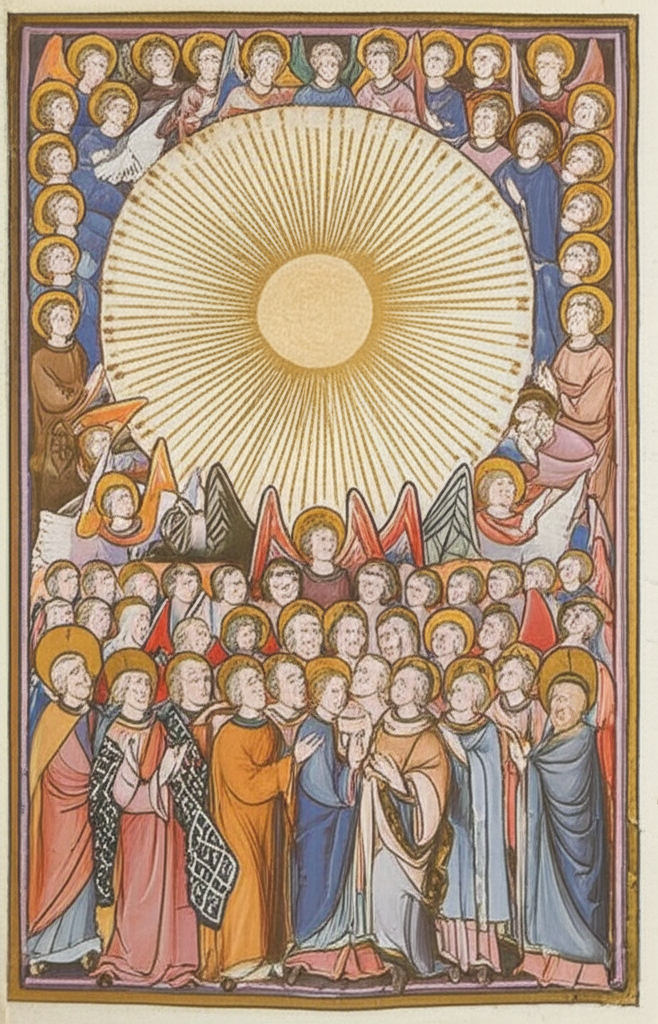
Distinguishing Angelic from Human Immortality
It is crucial to differentiate the Immortality of Angels from that of the human soul.
| Feature | Angelic Immortality | Human Soul Immortality |
|---|---|---|
| Nature of Being | Purely spiritual, non-composite substance (form without matter). | Spiritual soul united to a material body; composite being. |
| Source of Being | Created directly by God as individual species. | Created directly by God, animating a body. |
| Mode of Existence | Natural, inherent incorruptibility due to lack of matter. | Natural incorruptibility of the soul; body is corruptible. |
| Experience of Time | Aevum – a stable, perpetual duration with a beginning but no end. | Temporal existence in the body; post-mortem, the soul exists outside time but can be reunited with a glorified body. |
| Corruption | Incapable of natural corruption or dissolution. | Soul is incorruptible; body is subject to decay and death. |
This table clarifies that while both angels and human souls possess Immortality, the basis and implications of that Immortality differ significantly, rooted in their distinct ontological structures.
The Enduring Mystery of Eternity
The philosophical and theological contemplation of angelic Immortality pushes the boundaries of human understanding regarding existence, time, and the divine order. It invites us to consider forms of being beyond our immediate sensory experience, beings whose very essence reflects a facet of Eternity. The Angel, in its perpetual, incorruptible state, serves as a profound reminder of the vastness of creation and the intricate tapestry woven by divine intellect. As we continue to grapple with questions of our own finitude, the concept of the Immortality of Angels remains a compelling testament to the enduring power of Theology and metaphysics to explore the most profound mysteries of existence.
YouTube Video Suggestions:
-
📹 Related Video: ARISTOTLE ON: The Nicomachean Ethics
Video by: The School of Life
💡 Want different videos? Search YouTube for: ""Aquinas Summa Theologica Angels Immortality""
-
📹 Related Video: What is Philosophy?
Video by: The School of Life
💡 Want different videos? Search YouTube for: ""Philosophy of Eternity and Aevum in Medieval Thought""