

The history of science and knowledge is not merely a chronicle of discoveries, but a profound philosophical journey tracing humanity's relentless pursuit of understanding. From ancient observations to modern theoretical physics, this article explores the evolution of systematic inquiry, the interplay between empirical evidence and rational thought, and the continuous progress in our comprehension of the cosmos and ourselves. We delve into how science and knowledge have shaped, and been shaped by, our historical epochs, fundamentally altering our perception of reality and the human condition.
The Unfolding Drama of Human Inquiry
The story of humanity is inextricably linked to the story of knowledge. Since our earliest ancestors gazed at the stars, we have sought to understand the world around us, to categorize, to explain, and to predict. This grand tapestry of inquiry, meticulously woven through millennia, forms the very fabric of our civilization. For those who delve into the Great Books of the Western World, this journey is laid bare – a testament to the enduring human spirit of curiosity and the relentless drive towards progress. At planksip, we believe that understanding this history is not just an academic exercise, but a vital philosophical undertaking that informs our present and guides our future.
What is "Science" and "Knowledge" in Historical Context?
Before tracing the chronological history, it's crucial to understand what we mean by science and knowledge in this expansive context.
- Knowledge: Far from a static collection of facts, knowledge is the dynamic sum of human understanding, encompassing beliefs, skills, and insights acquired through experience, study, or introspection. Historically, it has included everything from practical craft techniques to profound philosophical systems and religious doctrines.
- Science: While often associated with modern laboratories, science in its broader historical sense refers to any systematic enterprise that builds and organizes knowledge in the form of testable explanations and predictions about the universe. This includes early astronomy, mathematics, medicine, and natural philosophy, long before the term "scientist" was coined.
The progress of knowledge and science is not linear; it is a complex interplay of observation, reason, intuition, and often, serendipitous discovery, punctuated by moments of revolutionary insight and periods of consolidation.
The Ancient Foundations: Seeds of Systematic Inquiry
Our journey begins in the cradles of civilization, where practical needs spurred the first systematic attempts at knowledge acquisition.
- Mesopotamia & Egypt: Early civilizations developed sophisticated astronomical observations for calendrical purposes, intricate engineering knowledge for irrigation and monumental architecture, and basic medical practices. Their contributions, though often steeped in myth and religion, laid the empirical groundwork for later theoretical endeavors.
- Ancient Greece: This era marks a profound shift from mythos to logos – from mythical explanations to rational inquiry.
- Pre-Socratics (e.g., Thales, Anaximander, Heraclitus): Sought natural explanations for cosmic phenomena, hypothesizing fundamental substances (water, apeiron, fire) and initiating cosmology.
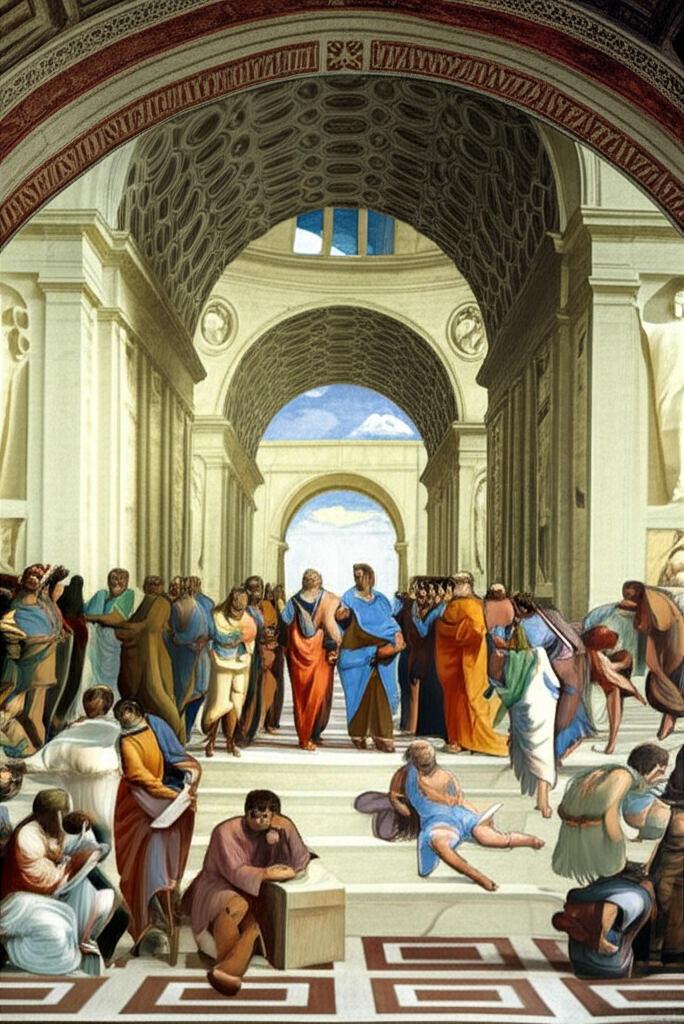
- Socrates, Plato, Aristotle: Revolutionized philosophy and science. Socrates emphasized ethical inquiry and critical thinking. Plato's theory of Forms posited an ideal, intelligible reality. Aristotle, a towering figure, established formal logic, conducted extensive biological observations, and systematized knowledge across countless fields, from physics to ethics, forming the backbone of Western thought for centuries. His emphasis on observation and classification was a precursor to empirical science.
The Medieval Bridges: Preservation and Expansion
Following the decline of the Roman Empire, the torch of knowledge was carried and further illuminated by diverse cultures.
- The Islamic Golden Age (8th-13th Centuries): A period of unparalleled intellectual vibrancy. Scholars meticulously translated and preserved Greek, Roman, and Indian texts, preventing their loss. They didn't just preserve; they innovated significantly in:
- Mathematics: Algebra (al-Khwarizmi), algorithms, trigonometry.
- Astronomy: Refined instruments, observatories, detailed star charts.
- Medicine: Advanced surgical techniques, pharmacology (Avicenna's Canon of Medicine).
- Optics: Ibn al-Haytham (Alhazen) pioneered experimental optics, challenging Ptolemaic theories of vision.
- This era was crucial for the progress of science and knowledge, serving as a vital link between ancient wisdom and the European Renaissance.
- European Scholasticism: In medieval Europe, figures like Thomas Aquinas grappled with reconciling Aristotelian reason with Christian theology. While often constrained by dogma, scholasticism fostered rigorous logical debate and intellectual frameworks that would later support the growth of independent scientific inquiry.
The Scientific Revolution: A Paradigm Shift
The 16th and 17th centuries witnessed a radical transformation in how knowledge was acquired and validated, marking the true birth of modern science.
| Key Figures & Contributions | Impact on Science & Knowledge |
|---|---|
| Nicolaus Copernicus (1473-1543) | Heliocentric model of the solar system, challenging geocentric dogma. |
| Galileo Galilei (1564-1642) | Pioneered telescopic observation, experimental method, mechanics; challenged Aristotelian physics. |
| Francis Bacon (1561-1626) | Championed inductive reasoning and empiricism ("New Organon"), advocating for systematic observation. |
| René Descartes (1596-1650) | Emphasized rationalism, deductive reasoning ("Cogito, ergo sum"), and a mechanistic view of the universe. |
| Isaac Newton (1642-1727) | Formulated laws of motion and universal gravitation, unifying celestial and terrestrial mechanics with mathematics. |
This period wasn't just about new discoveries; it was a fundamental shift in methodology, emphasizing observation, experimentation, and mathematical description. The idea of progress through systematic scientific endeavor became a central tenet of Western thought.
The Enlightenment and Beyond: Systematizing Knowledge
The intellectual ferment of the Scientific Revolution blossomed into the Enlightenment, a period dedicated to reason, individual liberty, and the systematic application of science to all aspects of human life.
- Empiricism vs. Rationalism: The philosophical debates of John Locke, George Berkeley, and David Hume (empiricists) against Baruch Spinoza and Gottfried Leibniz (rationalists) explored the origins and limits of knowledge. Immanuel Kant later attempted a synthesis, arguing that knowledge arises from the interaction of sensory experience and innate mental categories.
- Specialization of Sciences: The 18th and 19th centuries saw the formalization and specialization of various scientific disciplines:
- Chemistry: Lavoisier, Dalton.
- Biology: Linnaeus, Lamarck, Darwin.
- Geology: Lyell.
- The meticulous collection of data, the formulation of theories, and the peer review process solidified the framework for modern scientific progress.
Modern Science: Reshaping Reality
The 20th and 21st centuries have witnessed an explosion of knowledge that has profoundly challenged our intuitive understanding of the universe.
- Relativity (Einstein): Revolutionized our understanding of space, time, gravity, and energy.
- Quantum Mechanics: Unveiled the bizarre and probabilistic nature of reality at the subatomic level, leading to profound philosophical questions about causality and observation.
- Genetics and Molecular Biology: Deciphered the code of life, transforming medicine and our understanding of evolution.
- Information Science and Computing: Ushered in the digital age, creating unprecedented tools for knowledge acquisition, processing, and dissemination, accelerating scientific progress exponentially.
These developments have not only expanded our knowledge but have also forced philosophers and scientists alike to re-examine fundamental concepts of reality, consciousness, and the very nature of truth.
The Philosophical Echoes: What Does it All Mean?
The history of science and knowledge is a continuous dialogue with philosophy. Each major scientific advancement has profound philosophical implications, reshaping our worldview.
- How certain can we be of our knowledge?
- Does science reveal an objective reality, or does it construct one?
- What are the ethical responsibilities that accompany scientific progress?
- Can science answer all questions, or are there domains beyond its reach?
These enduring questions remain at the heart of planksip's inquiry, urging us to reflect not just on what we know, but how we know, and why it matters.
The Unfolding Tapestry of Progress
The concept of progress in science and knowledge is complex. While we undeniably possess more detailed information and more powerful predictive models than ever before, the journey is not without its detours, paradigm shifts, and moments of profound uncertainty. The history teaches us humility, the importance of critical thinking, and the perpetual need to question assumptions. True progress lies not just in accumulating facts, but in refining our methods of inquiry and deepening our philosophical understanding of our place in the cosmos.
Conclusion: A Continuous Journey
The history of science and knowledge is the epic saga of human intellectual adventure. From the first spark of curiosity to the cutting edge of quantum computing, it is a testament to our innate drive to comprehend. This journey, richly documented in the Great Books of the Western World and continually updated by contemporary research, reminds us that knowledge is not a destination but a continuous process of discovery and re-evaluation. As we stand on the shoulders of giants, we are called to continue this vital work, fostering critical inquiry and embracing the philosophical challenges that accompany every new frontier of understanding.
📹 Related Video: ARISTOTLE ON: The Nicomachean Ethics
Video by: The School of Life
💡 Want different videos? Search YouTube for: "The History of Western Science Documentary"
📹 Related Video: What is Philosophy?
Video by: The School of Life
💡 Want different videos? Search YouTube for: "Philosophy of Science Explained"