

The Enduring Echoes: Unpacking the Historical Cycles of Revolution
Summary: The grand tapestry of human History reveals a persistent, often violent, pattern of societal upheaval: the Revolution. Far from isolated incidents, these transformative moments often follow discernible cycles, driven by the inherent desire for Change, the failings of existing Government, and the perennial philosophical struggle for justice and order. This article delves into the recurring phases of revolutionary movements, drawing insights from the enduring wisdom of the Great Books of the Western World, to understand why societies repeatedly find themselves at the precipice of profound transformation.
I. The Perpetual Motion of Society: An Introduction to Revolutionary Change
From the ancient polis to the modern nation-state, the quest for an ideal, or at least tolerable, form of Government has been a central preoccupation of humanity. Yet, no system, however well-conceived or justly administered, seems immune to the forces that eventually lead to its dramatic overthrow. Revolution, therefore, is not merely an event but a recurring motif in the human story, a powerful engine of Change that reshapes institutions, redefines power, and often re-evaluates the very foundations of societal existence.
The philosophers of antiquity, observing the rise and fall of empires and constitutions, were among the first to articulate the cyclical nature of political life. Plato, in his Republic, outlined a progression from aristocracy to timocracy, oligarchy, democracy, and finally, tyranny, each stage containing the seeds of its own destruction. Aristotle, in his Politics, meticulously cataloged various constitutional forms and their inherent instabilities, noting how imbalances – particularly those between rich and poor – frequently precipitate radical Change. These foundational insights remind us that the forces driving Revolution are deeply embedded in human nature and social structure.
II. The Genesis of Upheaval: Why Governments Fall
Every Revolution is born from a crucible of discontent. While specific triggers vary across History, the underlying causes often resonate with timeless grievances, echoing the critiques found in the great philosophical texts concerning justice, liberty, and the proper role of Government.
A. Seeds of Discontent: Preconditions for Revolution
- Systemic Injustice and Inequality: When the existing Government fails to uphold a basic sense of fairness, or when economic disparities become too vast and entrenched, the moral legitimacy of the ruling order erodes. Thinkers like Jean-Jacques Rousseau, in The Social Contract, argued that legitimacy stems from the general will, and when a government acts against the common good, its authority becomes null.
- Weak or Corrupt Governance: An ineffective or openly corrupt Government loses the trust and respect of its populace. When institutions designed to serve the people instead serve only a select few, the call for Change grows louder. Niccolò Machiavelli, ever the pragmatist, understood that a prince must avoid being hated, for hatred is a primary cause of his downfall.
- Suppression of Liberties: The denial of fundamental rights, such as freedom of speech, assembly, or conscience, often fuels the revolutionary fire. John Locke’s Two Treatises of Government famously asserted the people's right to resist and overthrow a tyrannical Government that violates their natural rights.
- Economic Distress: Widespread poverty, famine, or economic stagnation can act as a powerful catalyst, turning simmering resentment into active rebellion, as seen in countless historical episodes.
- Rise of New Ideas and Intellectual Ferment: Periods preceding Revolution are often characterized by a vibrant exchange of ideas that challenge the status quo, providing a philosophical framework and moral justification for radical Change. The Enlightenment, for instance, directly inspired the American and French Revolutions.
B. Common Triggers of Revolution
| Category | Specific Examples | Philosophical Link |
|---|---|---|
| Economic | Food shortages, hyperinflation, oppressive taxation | Aristotle (imbalance between rich/poor), Marx (class struggle) |
| Political | Arbitrary arrests, electoral fraud, foreign domination | Locke (tyranny), Rousseau (loss of general will) |
| Social/Moral | Religious persecution, caste discrimination, censorship | Plato (degeneration of justice), Mill (liberty) |
| External | Defeat in war, foreign intervention, colonial exploitation | Machiavelli (fortuna and virtù), Thucydides (power dynamics) |
III. The Arc of Upheaval: From Idealism to Instability
Once initiated, a Revolution rarely follows a straight path. The initial fervor, fueled by shared ideals and a unified opposition to the old order, often gives way to internal strife, radicalization, and a struggle for power among the revolutionaries themselves.
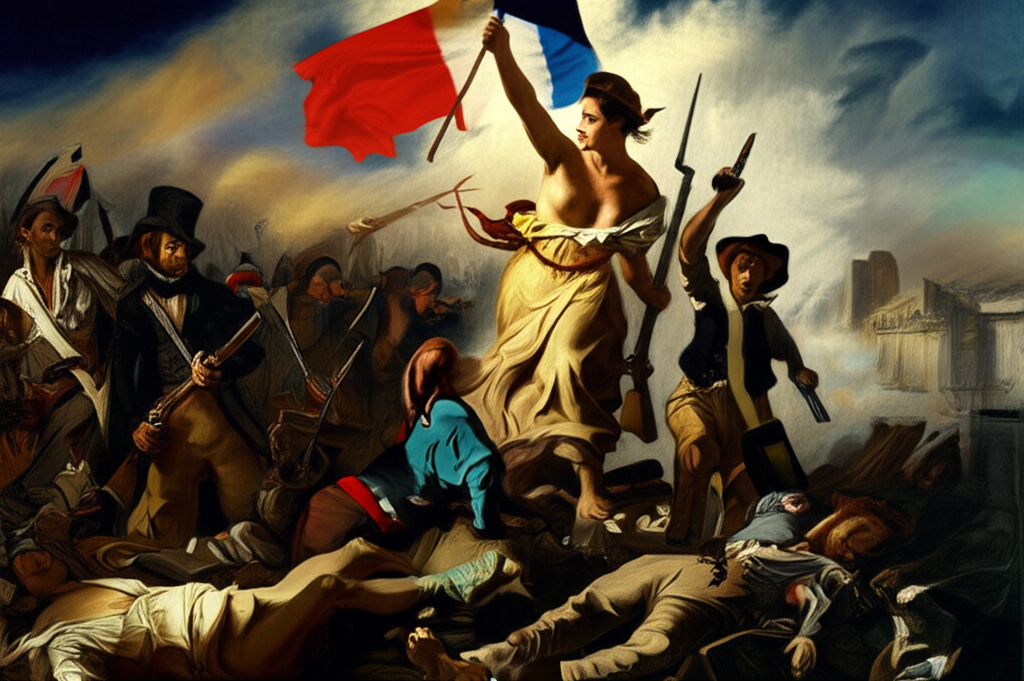
A. The Promise and Peril of Radical Change
The early phase of a Revolution is often marked by profound idealism, a belief in the possibility of creating a truly just and equitable society. However, the very act of dismantling an established order creates a power vacuum, leading to intense ideological battles. As the struggle intensifies, moderation often gives way to extremism, and those who were once allies can become bitter enemies. This internal dynamic, where the Revolution begins to "devour its own children," is a tragic but common pattern, exemplified by the Reign of Terror during the French Revolution.
B. The Search for a New Order: Experimentation and Reaction
The overthrow of the old Government necessitates the construction of a new one. This phase is characterized by experimentation with different constitutional forms, often reflecting the diverse philosophical currents that inspired the Revolution. Yet, the challenges of governing a society in flux, coupled with external threats and internal divisions, can lead to instability. The pendulum often swings violently, from liberal reforms to authoritarian crackdowns, before a new equilibrium, however tenuous, is found.
IV. The Cycle's Turn: Aftermath and the Seeds of the Next Revolution
What follows a Revolution is rarely a permanent utopia. Instead, History suggests a return to a new form of order, which, over time, can itself become rigid, unjust, and ripe for future Change. This completes the cycle, though often on a new, higher, or at least different, spiral.
A. The Consolidation of Power and the New Government
The revolutionary period typically concludes with the consolidation of power by a new Government, whether it be a republic, a constitutional monarchy, or even a new form of authoritarianism. This new regime often justifies its authority by appealing to the ideals of the Revolution or by promising stability after a period of chaos. Yet, the very act of consolidating power can lead to abuses, echoing the criticisms that brought down the previous regime. Machiavelli's observations on the necessity of maintaining power, even through ruthless means, often find their grim realization here.
B. The Enduring Legacy and Future Echoes
While no two Revolutions are identical, their study reveals enduring patterns of human behavior and governance. Each Revolution leaves an indelible mark on History, altering the course of nations and influencing subsequent movements for Change. The ideas that fuel them—liberty, equality, justice—remain persistent aspirations, even if their full realization often proves elusive. Karl Marx, in his analysis of historical materialism, posited that each societal Revolution (e.g., from feudalism to capitalism) lays the groundwork for the next, driven by inherent class conflicts, ultimately leading to a communist society. Whether one agrees with his teleology, the idea of historical progression through conflict remains a powerful lens.
V. Philosophical Reflections on Revolutionary Cycles
The Great Books offer profound insights into these historical cycles, urging us not merely to observe events but to understand their underlying philosophical currents.
- Plato and Aristotle: Their analyses of political degeneration remind us that perfect governance is fleeting, and that the seeds of decay are often present within the very structures meant to ensure stability.
- Locke and Rousseau: Their theories of legitimate Government and the social contract provide the moral and philosophical justifications for Revolution when the contract is broken, framing Change as a right, not just an inevitability.
- Machiavelli: His pragmatic view underscores the brutal realities of power, suggesting that while ideals may inspire Revolution, the cold calculus of control often dictates its outcome and the nature of the subsequent Government.
- Hegel and Marx: These philosophers offered grand narratives of historical progression, seeing Revolution not just as cyclical but as a dialectical process driving humanity towards a specific, albeit contested, future.
YouTube: "Plato's Cycle of Governments Explained"
YouTube: "John Locke's Philosophy of Revolution and Government"
Conclusion: Understanding the Unfolding Drama
The historical cycles of Revolution are a testament to humanity's perpetual struggle for a more just and ordered existence, even as we grapple with our own imperfections and the inherent challenges of collective governance. By examining these cycles through the lens of philosophy and History, we gain a deeper appreciation for the forces that drive societal Change, the enduring questions that ignite revolutions, and the complex, often tragic, journey toward a more perfect union. The cycles may repeat, but with each turn, we are offered the opportunity to learn, adapt, and perhaps, with wisdom, guide the next Revolution toward a more enduring and benevolent outcome.
📹 Related Video: What is Philosophy?
Video by: The School of Life
💡 Want different videos? Search YouTube for: "The Historical Cycles of Revolution philosophy"