

The Unfolding Tapestry of Life: A Philosophical Journey Through Animal Evolution
The concept of Evolution, the gradual change in the inherited characteristics of biological populations over successive generations, stands as one of humanity's most profound intellectual achievements. Yet, beyond the scientific mechanisms, lies a rich philosophical landscape, compelling us to reconsider our understanding of Nature, the very essence of Animal existence, and the inexorable dance of Life and Death. This article embarks on a philosophical exploration of animal evolution, tracing its intellectual currents from ancient musings to modern insights, and reflecting on what this grand narrative implies for our place in the cosmos.
Ancient Whispers of Change: Pre-Darwinian Thought
Before the meticulous observations and syntheses of the 19th century, philosophers and naturalists grappled with the apparent diversity and order of the Animal kingdom. From the Great Books of the Western World, we encounter figures like Aristotle, who, in his History of Animals and Parts of Animals, meticulously classified species, discerning patterns of form and function. While Aristotle posited a fixed hierarchy of Nature – the scala naturae – with each species having an inherent telos or purpose, his detailed anatomical comparisons hinted at relationships and variations within life forms. Later, Roman thinkers like Lucretius, in De Rerum Natura, offered a proto-evolutionary perspective, suggesting that only those forms best adapted to their environment survived and reproduced, a stark vision of Life and Death as a selective force, albeit one without a clear mechanism for species transformation. These early inquiries, though lacking the modern understanding of genetics or deep time, laid the philosophical groundwork for questioning the static nature of species and pondering the dynamic forces shaping Life.
Darwin's Unsettling Revelation: A New Lens on Nature
The mid-19th century brought a seismic shift with Charles Darwin's On the Origin of Species. While a scientific treatise, its philosophical implications were immediate and profound. Darwin's theory of natural selection presented a mechanism for Evolution that did not require divine intervention or a predetermined telos. Instead, it posited that variation, inheritance, and differential survival in the struggle for existence gradually transform species over vast stretches of time.
- The Mechanism of Natural Selection: This process, driven by environmental pressures, ensures that individuals best suited to their surroundings are more likely to survive, reproduce, and pass on their advantageous traits. It is a relentless, impersonal force, highlighting the ever-present shadow of Death in the perpetuation of Life.
- The Unsettling Implications: For many, Darwin's theory challenged deeply held beliefs about creation, purpose, and humanity's unique status. It suggested a continuity between all Animal life, placing humans firmly within the grand Nature of things, rather than above it. The beauty and brutality of Nature were now seen through the lens of adaptation and survival, underscoring the constant flux of Life and Death.
The Dance of Life and Death: A Philosophical Perspective
Evolution fundamentally reframes our understanding of Life and Death. It reveals that individual Animal life, while precious, is merely a transient vessel for the propagation of genetic information. Death is not merely an end, but an integral part of the evolutionary process, clearing the way for new adaptations and preventing stasis.
- Existence as a Continuous Becoming: Species are not fixed entities but fluid populations constantly adapting. This constant state of becoming, of Life perpetually renewing itself through the filter of Death, resonates with ancient philosophical ideas of change and impermanence found in Heraclitus or Buddhist thought.
- The Inevitable Enduring Cycle: The fossil record eloquently testifies to countless species that have flourished and then vanished, a testament to the dynamic interplay of Life and Death. Extinction is not a failure of Nature, but an inherent part of the evolutionary cycle, making space for the diversification of new forms of Animal life. This grand, cyclical narrative underscores the fragility and resilience inherent in Nature.
Our Place in the Grand Narrative: Humanity and the Animal Kingdom
One of the most enduring philosophical questions arising from Evolution concerns humanity's unique position. If we are products of the same evolutionary forces that shaped all Animal life, what then distinguishes us?
- A Shared Heritage, A Unique Consciousness: Evolution reveals our deep kinship with all living things, challenging anthropocentric biases. We share common ancestors with the simplest bacteria and the most complex primates. Yet, our capacity for abstract thought, moral reasoning, and the creation of complex cultures – traits that, while having evolutionary roots, seem to transcend mere survival – compels us to ponder our distinctive consciousness. This duality invites us to embrace our biological heritage while exploring the unique dimensions of human existence.
- The Responsibility of Awareness: Understanding our evolutionary journey imbues us with a profound responsibility towards Nature. As the only species capable of comprehending the intricate processes of Life and Death on a planetary scale, we are called to be stewards, not just participants, in the ongoing Evolution of life on Earth.
Conclusion: Embracing the Dynamic Cosmos
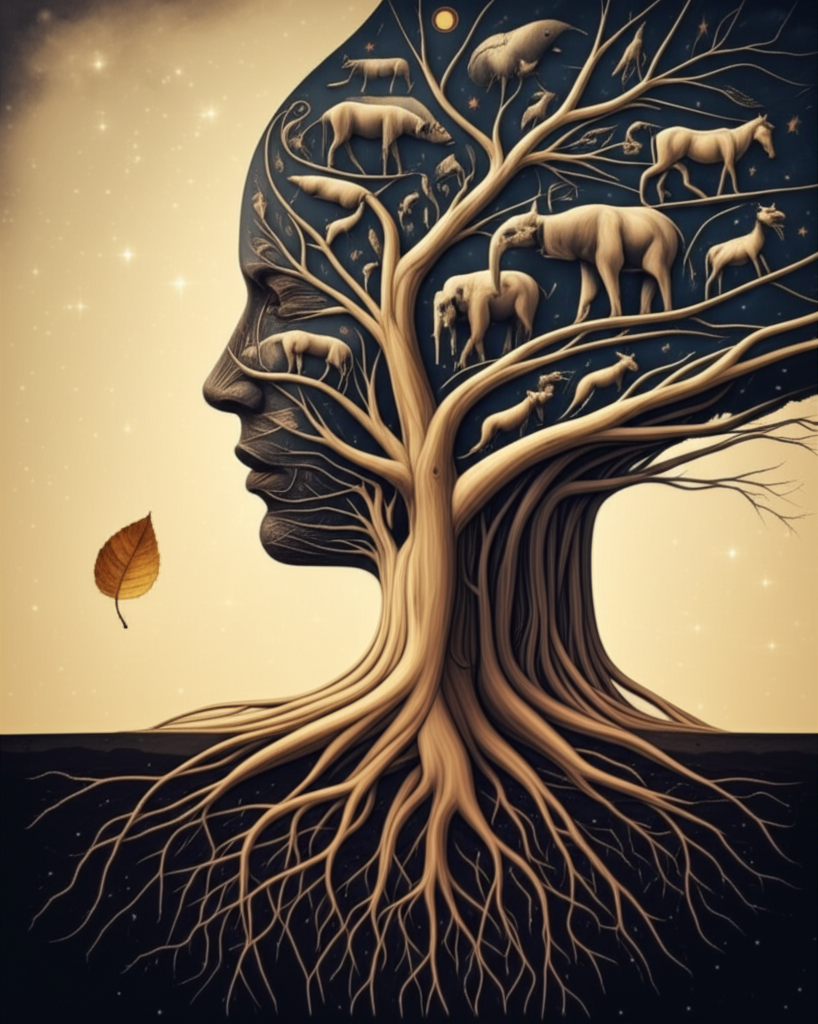
The Evolution of Animal species is more than a biological theory; it is a foundational philosophical narrative that reshapes our worldview. It reveals a Nature that is not static but perpetually in motion, driven by forces of Life and Death. It challenges us to reconsider our assumptions about purpose, design, and our own identity. By embracing the insights of Evolution, we gain a deeper appreciation for the interconnectedness of all Animal life, the profound beauty of adaptation, and the humbling reality of our place within the grand, unfolding tapestry of existence.
📹 Related Video: PLATO ON: The Allegory of the Cave
Video by: The School of Life
💡 Want different videos? Search YouTube for: ""Philosophical implications of Darwin's theory""
📹 Related Video: What is Philosophy?
Video by: The School of Life
💡 Want different videos? Search YouTube for: ""Humanity's place in nature philosophy""