

The Enduring Dilemma: Unpacking the Ethics of Slavery and Human Labor
The history of humanity is, in many respects, a history of labor. From the earliest hunter-gatherer societies to our complex industrial and post-industrial worlds, the effort individuals exert to transform their environment and sustain themselves has been central to existence. Yet, entwined with this fundamental aspect of human life is the dark shadow of slavery – a practice that denies the very autonomy and dignity inherent in labor, transforming it into a form of profound moral sin. This article delves into the ethical quagmire of slavery and forced labor, examining why it stands as one of humanity's most egregious failures to distinguish between Good and Evil, drawing insights from the enduring philosophical questions found within the Great Books of the Western World.
The Unmistakable Mark of Evil: Why Slavery Transcends Mere Injustice
Slavery, at its core, represents the absolute subjugation of one human being by another. It is not merely a legal or economic arrangement, but a fundamental ethical transgression that strips an individual of their inherent worth, reducing them to property. This act, the denial of personhood, is the very definition of evil in its most direct and brutal form.
- The Violation of Self-Ownership: Philosophers from John Locke to Immanuel Kant have articulated the concept of self-ownership and inherent human dignity. To enslave another is to deny this foundational right, claiming ownership over their body, their mind, and their very capacity for choice. This is the ultimate theft, far exceeding the seizure of material possessions.
- The Perversion of Labor: Labor, when freely given, is a source of purpose, creativity, and self-realization. It is how we engage with the world, contribute to society, and express our unique capabilities. Forced labor, however, transforms this noble activity into a tool of oppression. It becomes a means to an end for the enslaver, devoid of meaning or benefit for the enslaved, except the barest continuation of existence under duress.
- The Moral Sin Against Humanity: Regardless of theological perspective, the act of enslavement can be understood as a profound sin – a radical departure from what is right and just. It is a deliberate assault on the shared humanity that binds us, creating a hierarchy based on arbitrary power rather than mutual respect. The Great Books contain numerous reflections on the nature of sin and transgression, and slavery consistently emerges as a primary example of humanity's fallibility.
Historical Echoes: Ancient Justifications and Their Modern Rejection
Historically, slavery was a pervasive institution across virtually all major civilizations, from ancient Egypt and Mesopotamia to Greece, Rome, and beyond. What is perhaps most troubling is that even some of history's greatest minds struggled with, and at times even condoned, the practice.
Consider Aristotle's discussion of "natural slaves" in his Politics. He posited that some individuals were inherently suited to be ruled, lacking the full capacity for reason required for self-governance. While Aristotle's overall philosophical contributions are immense and foundational, this particular argument is now universally rejected as morally bankrupt. It represents a dangerous attempt to rationalize an institution that inherently contradicts the principles of justice and human equality.
Table: Contrasting Views on Human Labor and Freedom
| Philosophical Concept | Free Labor | Enslaved Labor |
|---|---|---|
| Autonomy & Dignity | Upholds individual choice and inherent worth. | Violates self-ownership, reduces to property. |
| Purpose of Labor | Self-realization, contribution, sustenance. | Exploitation, forced production for another's gain. |
| Ethical Standing | Embodies Good, mutual respect. | Embodies Evil, profound injustice. |
| Human Relationship | Partnership, cooperation, shared endeavor. | Master-slave, power imbalance, dehumanization. |
The Ongoing Struggle: From Abolition to Modern Exploitation
The path from widespread acceptance of slavery to its global condemnation has been long and arduous, marked by profound moral awakening and courageous advocacy. The Enlightenment, with its emphasis on natural rights and individual liberty, played a crucial role in laying the philosophical groundwork for abolition movements. Thinkers like Jean-Jacques Rousseau and his concept of the "social contract" further underscored the idea that legitimate governance must stem from the consent of the governed, a principle utterly incompatible with slavery.
Yet, the fight against slavery is not merely a historical footnote. Modern forms of human trafficking, forced labor, and bonded servitude persist globally, demonstrating that the temptation to exploit others for economic gain remains a potent force. These practices, though often hidden, are no less abhorrent than historical chattel slavery. They represent the continued manifestation of evil in our world, demanding constant vigilance and ethical commitment.
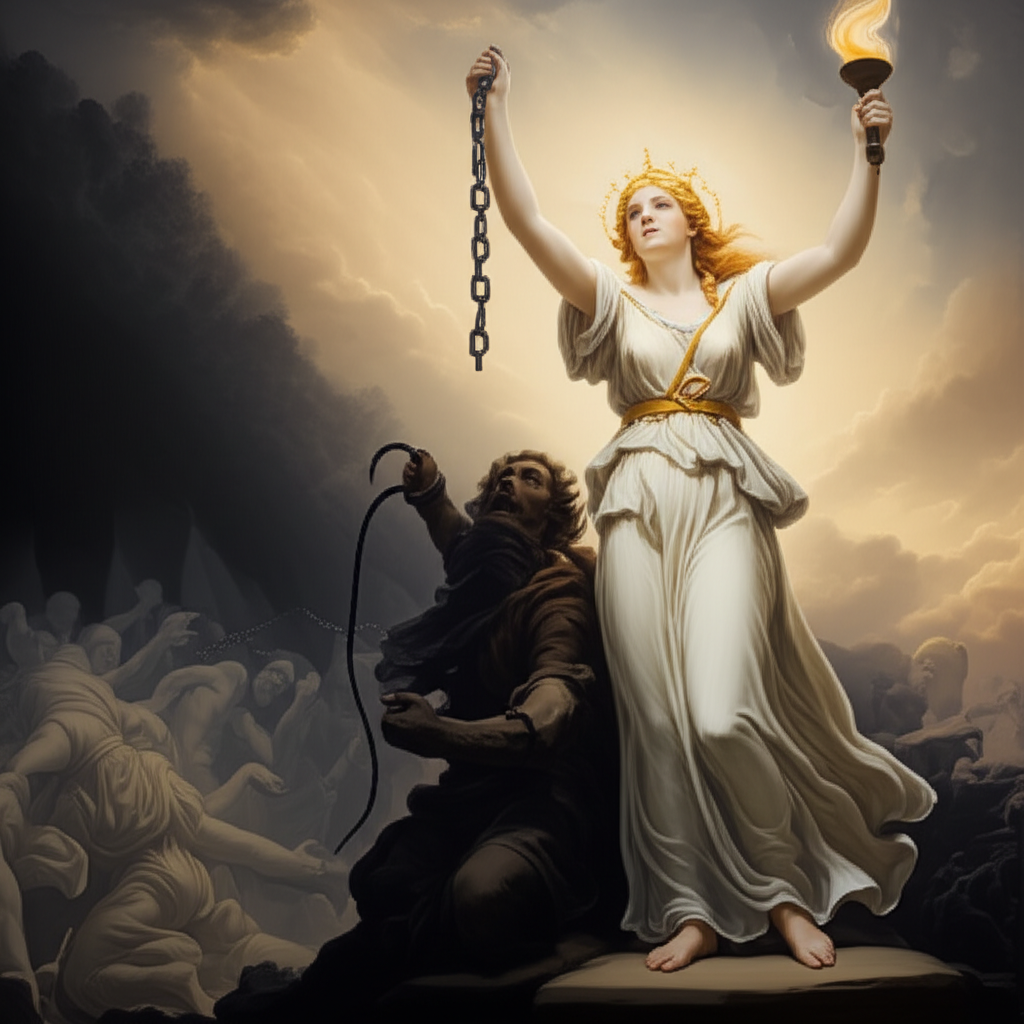
The ethical imperative is clear: any system that denies human freedom, that compels labor through force or coercion, and that reduces individuals to mere instruments for another's benefit, is fundamentally flawed and morally indefensible. It is a profound sin against the very essence of what it means to be human, and a stark embodiment of evil. Our ongoing task, as individuals and as a society, is to ensure that the lessons learned from the history of slavery continue to inform our understanding of Good and Evil in all forms of human labor and interaction.
YouTube Video Suggestions:
- "The Philosophy of Slavery: Aristotle to Abolition"
- "Natural Rights and the Ethics of Labor: Locke's Influence"
📹 Related Video: ARISTOTLE ON: The Nicomachean Ethics
Video by: The School of Life
💡 Want different videos? Search YouTube for: "The Ethics of Slavery and Human Labor philosophy"