

The Ethical Labyrinth of Endless Existence
Summary:
The dream of Immortality, long a staple of myth and philosophy, presents a profound ethical quandary. While escaping Life and Death's ultimate decree seems desirable, an unending existence would fundamentally reshape our understanding of Duty, challenge the very foundations of Good and Evil, and impose a new set of moral burdens. This article delves into the intricate ethical dilemmas that would arise if humanity were to conquer mortality, exploring how such a triumph might paradoxically diminish the value of life itself.
For millennia, humanity has grappled with the ephemeral nature of Life and Death. From the Epic of Gilgamesh to modern transhumanist visions, the aspiration for Immortality has been a persistent whisper in the collective consciousness. Yet, as we edge closer to theoretical pathways for extending human lifespan indefinitely, the philosophical and ethical implications loom larger than ever. Is an unending existence truly a blessing, or might it usher in a new era of profound moral challenges, forcing us to re-evaluate our most cherished concepts of humanity, Duty, and the very essence of Good and Evil?
The Burden of Eternal Life: A Diminished Horizon?
Imagine a world where the finality of death is no longer a certainty. How would this shift impact our perception of time, experience, and the very value we place on each moment?
The Diminishment of Value and the Price of Finitude
Our current understanding of life's preciousness is intrinsically linked to its finite nature. The scarcity of time compels us to make choices, to pursue goals, and to cherish relationships. As Aristotle might suggest in his Nicomachean Ethics, eudaimonia—human flourishing—is often achieved through the virtuous navigation of a finite existence, where each action carries weight because there are limited opportunities.
- The Paradox of Immortality: If Life and Death no longer dictate our journey, would the impetus for striving, for creating, for experiencing deeply, begin to wane? Would the urgency that fuels innovation and love evaporate, replaced by an endless, perhaps monotonous, stretch of time?
- The Weight of Experience: An immortal being would accumulate an unimaginable store of memories, triumphs, and losses. How would the human psyche cope with such an eternal burden? Would the sheer volume of experience lead to a kind of psychological entropy, dulling sensation and meaning?
The Stagnation of Progress and the Loss of Renewal
Death, in a peculiar way, is a catalyst for renewal. It clears the stage for new generations, new ideas, and new perspectives. Without this natural cycle, society could become rigid and resistant to change.
- Resistance to Innovation: Those who have lived for centuries might become entrenched in their ways, seeing little need for radical shifts. The young, often the engine of progress, would struggle to gain influence or introduce novel paradigms.
- Cultural Homogenization: With an unchanging population, cultural evolution might slow to a crawl, leading to a static, perhaps even sterile, global culture. The vibrant interplay of new ideas emerging from different generations could cease.
Societal Implications: A World Remade
An immortal society would necessitate a radical re-evaluation of our social structures, resource management, and ethical frameworks.
Resource Scarcity and the New Face of Duty
Even with technological advancements, the Earth's resources are finite. An ever-growing, never-dying population would place unimaginable strain on these resources, forcing humanity to confront difficult choices.
- Population Control: The most immediate and stark ethical dilemma would be population management. Would procreation become a privilege, heavily regulated or even forbidden? What Duty would individuals have to the collective in managing their own existence?
- Distribution of Immortality: If Immortality were achievable, it's highly probable it would not be universally accessible at first. This would create an unprecedented divide, a chasm between the "mortal" and the "immortal," exacerbating existing inequalities and raising profound questions of justice, akin to Plato's concerns about the just city in The Republic.
Power Dynamics and the Shifting Landscape of Good and Evil
The concentration of power in an immortal elite would have chilling implications for governance and individual liberty.
- Eternal Rulers: Imagine leaders who never relinquish power, accumulating centuries of experience and influence. The checks and balances designed for mortal governance would crumble, potentially leading to eternal tyrannies.
- Re-defining Good and Evil: What constitutes Good and Evil in a world where perpetrators of heinous acts might live forever? Would punishment become eternal? Would our understanding of justice need to be entirely re-written? The concept of retribution and rehabilitation would be stretched beyond recognition.
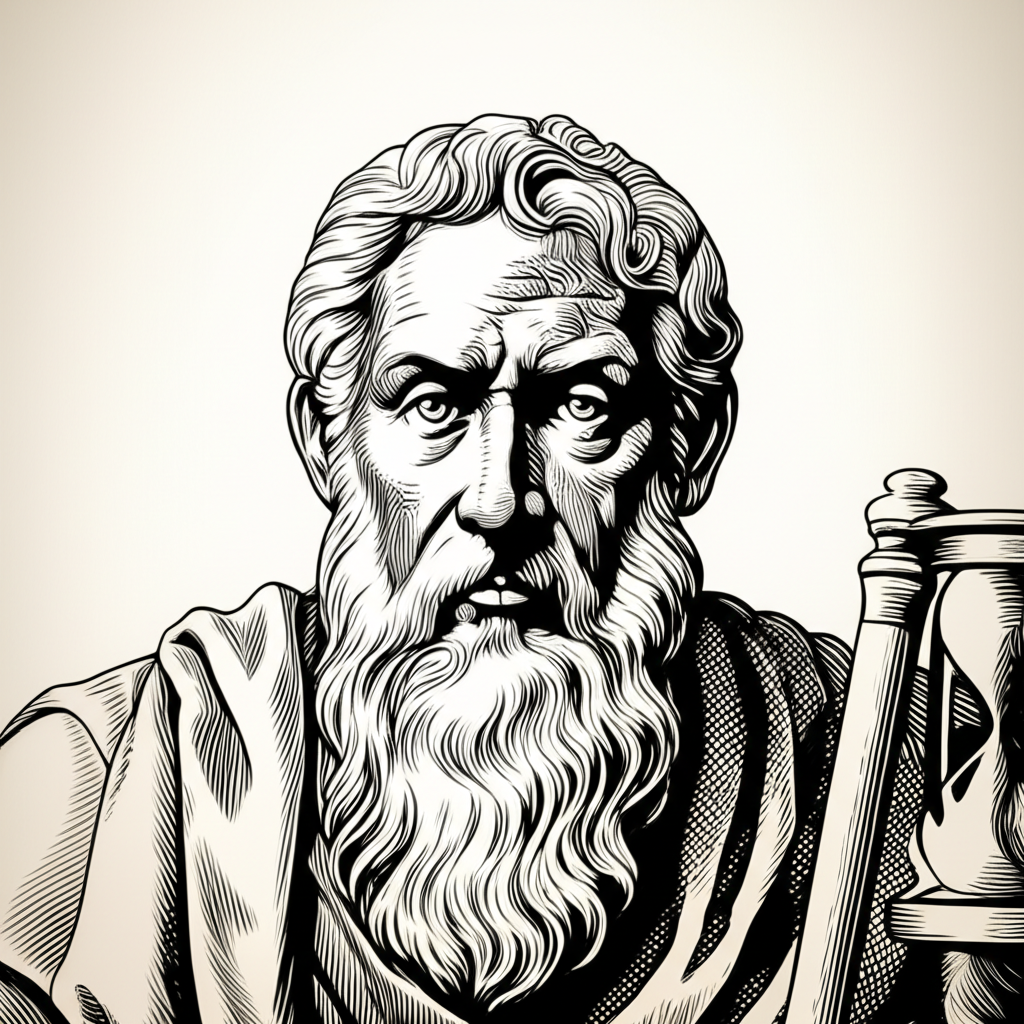 with an hourglass, but instead of the sand flowing downwards, it appears to be flowing back up, subtly suggesting a reversal of time or an endless cycle. The background shows a serene, yet slightly melancholic, landscape with a single ancient tree, symbolizing endurance and perhaps isolation.)
The Personal Conundrum: The Search for Meaning
Beyond the societal, the individual experience of Immortality presents its own existential crises.
The Erosion of Purpose and the Pursuit of Meaning
Many philosophical traditions, from the Stoics to existentialists, emphasize that the awareness of our finitude sharpens our focus on purpose and meaning. Without a natural end, what drives us?
- Existential Boredom: The prospect of endless repetition, of experiencing every possible joy and sorrow countless times, could lead to a profound and inescapable ennui. Would the search for new experiences become a desperate, endless quest, or would it simply cease?
- Loss of Identity: Our identities are often shaped by our journey through life, by our growth, and by our eventual acceptance of mortality. If we never die, do we ever truly "become"? Does identity itself become fluid to the point of dissolution, or rigidly fixed by early experiences?
The Nature of Attachment and Loss
An immortal would inevitably witness the passing of countless loved ones, friends, and entire generations of mortals. This constant cycle of loss would be a perpetual source of grief.
- Eternal Bereavement: The capacity for empathy and attachment might be severely tested. Would immortals become detached, emotionally numb, as a survival mechanism against endless sorrow?
- The Value of Relationships: Would mortal-immortal relationships even be possible? The vast disparity in lifespan would make true companionship difficult, if not impossible, raising questions about the ethics of forming such bonds.
Re-evaluating Our Understanding of "Good"
The pursuit of Immortality forces us to reconsider what constitutes a "good life" and a "good society." Is the ultimate Good the prolongation of existence at any cost, or is it the quality and meaningfulness of that existence, however brief? The Great Books of the Western World consistently point to the cultivation of virtue, wisdom, and justice within the human condition as we know it. An endless lifespan might not, by itself, guarantee these virtues; in fact, it might threaten them. Our Duty to ourselves and to future generations might lie not in escaping Life and Death, but in embracing its inherent structure and striving for excellence within its bounds.
Conclusion:
The allure of Immortality is undeniable, a siren song promising escape from the ultimate unknown. Yet, upon closer philosophical inspection, the ethical landscape of endless existence reveals a treacherous terrain. The very qualities that give Life and Death their profound meaning – urgency, purpose, the capacity for renewal – might be irrevocably altered or lost. The ethical dilemmas surrounding resource allocation, power dynamics, and the redefinition of Good and Evil demand rigorous scrutiny. Perhaps our greatest Duty lies not in conquering death, but in deepening our understanding and appreciation for the precious, finite journey we are given, and in striving for a just and flourishing society within those natural confines.
YouTube Video Suggestions:
-
📹 Related Video: ARISTOTLE ON: The Nicomachean Ethics
Video by: The School of Life
💡 Want different videos? Search YouTube for: ""Philosophical dilemmas of immortality" or "The ethics of eternal life""
2. ## 📹 Related Video: PLATO ON: The Allegory of the Cave
Video by: The School of Life
💡 Want different videos? Search YouTube for: ""Plato's Republic justice immortality" or "Aristotle meaning of life death""