

Defining Beauty in Abstract Art
The quest to define Beauty has captivated philosophers for millennia, a journey through the very essence of human perception and understanding. When we turn our gaze to abstract Art, this ancient pursuit takes on a new, perhaps more profound, dimension. No longer anchored by mimetic representation, abstract works challenge our preconceived notions, forcing us to reconsider where Beauty truly resides. This article posits that defining Beauty in abstract Art requires a shift from objective, representational criteria to an appreciation of internal coherence, emotional resonance, and the transformative power of pure Form, drawing heavily on the philosophical insights gleaned from the Great Books of the Western World. It is a Definition not of what is depicted, but of how the Artwork engages the mind and spirit through its fundamental elements.
The Elusive Nature of Beauty and the Abstract Challenge
Beauty, that sublime quality that evokes pleasure and admiration, has always been a subject of intense philosophical debate. From Plato's transcendent Forms to Kant's disinterested judgment, thinkers have grappled with its objective versus subjective nature. Abstract Art, by its very nature, strips away the familiar, the recognizable, and the narrative, leaving us with color, line, texture, and composition. This intentional departure from representation compels us to ask: Where, then, is the Beauty in a canvas devoid of discernible objects or figures?
For Henry Montgomery, the answer lies not in a rejection of classical aesthetics, but in an expansion of their principles. Abstract Art does not abandon Beauty; it redefines its parameters, inviting us to perceive Form in its purest, most unadulterated state.
Philosophical Underpinnings: From Ideal Forms to Aesthetic Judgment
To understand Beauty in abstraction, we must first revisit its classical foundations. The Great Books provide an invaluable lens through which to view this modern challenge.
Plato's Ideal Forms and the Echo of Beauty
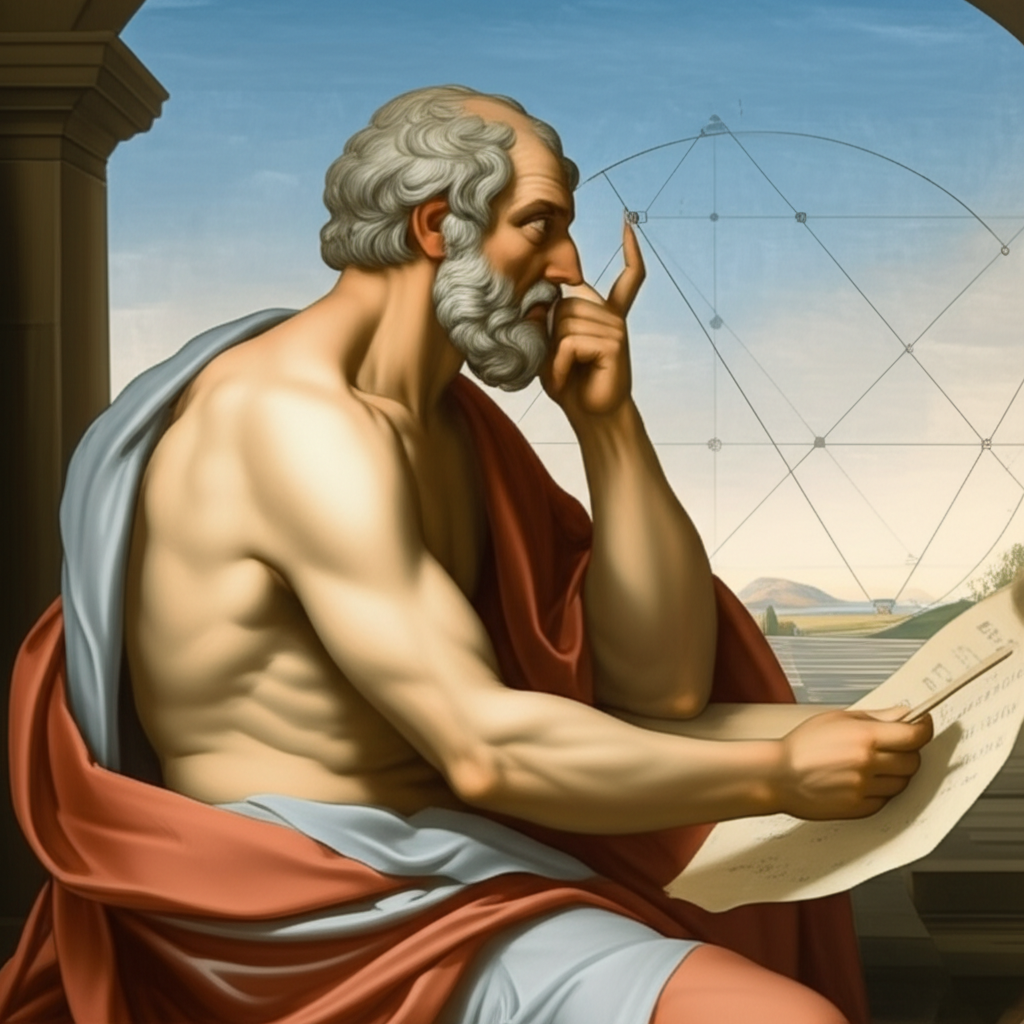
Plato, in his dialogues, posited that true Beauty resides in the eternal, unchanging Forms (eidos) – perfect archetypes of which all earthly manifestations are mere shadows. While abstract Art does not depict a horse or a tree, it might, in its arrangement of colors and shapes, evoke a sense of perfect balance, harmony, or rhythm that resonates with an underlying, universal Form of order. The Beauty is not in the object, but in the underlying mathematical or spiritual order it might suggest.
Aristotle's Emphasis on Form, Order, and Magnitude
Aristotle, ever the empiricist, emphasized that Beauty in Art is often found in the arrangement of parts, in their proportion, symmetry, and magnitude. For him, a beautiful object possessed an inherent order and completeness. In abstract Art, this translates directly to the composition:
- Unity: How do the disparate elements cohere into a unified whole?
- Balance: Is there a visual equilibrium, even if asymmetrical?
- Rhythm: Does the repetition or variation of elements create a sense of movement or cadence?
Even without a recognizable subject, a well-composed abstract piece adheres to these Aristotelian principles of Form, demonstrating an internal logic and coherence that can be profoundly beautiful.
Kant's Aesthetic Judgment: Purposiveness Without Purpose
Immanuel Kant offered a pivotal perspective on aesthetic judgment, suggesting that our experience of Beauty is a "disinterested pleasure." We appreciate a beautiful object not for its utility or concept, but for its Form alone. Crucially, Kant spoke of "purposiveness without purpose" – the artwork appears to be designed for a purpose, yet that purpose remains indeterminate. This concept is particularly relevant to abstract Art:
- The viewer perceives an intentional arrangement of elements.
- This arrangement evokes a feeling of harmony or rightness.
- Yet, there is no specific external purpose or meaning that can be definitively assigned, allowing for pure aesthetic contemplation.
Abstract Art: A New Definition of Beauty
With these philosophical lenses, we can forge a working Definition of Beauty in abstract Art. It is not about what is seen, but what is felt, what is understood, and how the Artwork functions as a pure aesthetic object.
The Elements of Abstract Beauty
Abstract Art liberates the fundamental elements of visual expression, allowing them to communicate directly. The Beauty often lies in the masterful handling of these components:
| Element | Contribution to Beauty in Abstract Art
📹 Related Video: What is Philosophy?
Video by: The School of Life
💡 Want different videos? Search YouTube for: "Defining Beauty in Abstract Art philosophy"