

Beyond the Roar: Unpacking the Essence of Courage in Battle
The concept of courage, particularly in the crucible of battle, has captivated philosophers and poets for millennia. It is far more than a simple absence of fear; it is a complex interplay of emotion, reason, and will, often determining the fine line between virtue and vice. This article delves into the philosophical underpinnings of courage on the battlefield, exploring its multifaceted nature, its relationship to the broader themes of War and Peace, and how the human spirit confronts its deepest anxieties in the face of mortal danger, drawing insights from the rich tapestry of the Great Books of the Western World.
The Battlefield as a Crucible of the Soul
The theatre of war and peace presents humanity with its starkest challenges and most profound moral dilemmas. In battle, the ordinary rules of engagement with the world are suspended, and individuals are pushed to the absolute limits of their physical and psychological endurance. It is in this extreme environment that the true nature of courage is revealed, not merely as an act of bravery, but as a deeply philosophical phenomenon. Here, the raw, visceral emotion of fear confronts the rational or moral imperative to act, to stand firm, or to advance. The battlefield, therefore, serves as an unparalleled laboratory for examining human virtue and vice.
Courage as a Philosophical Problem
For centuries, thinkers have grappled with the precise definition of courage. Is it an innate quality, a learned behavior, or a deliberate choice? The Great Books offer a spectrum of perspectives.
Emotion and Rationality in Action
At its core, courage in battle involves confronting fear, a primal emotion designed for self-preservation. Yet, true courage is not the absence of fear, but the ability to act rightly despite it. As Aristotle suggests in his Nicomachean Ethics, courage is a mean between two extremes: the vice of cowardice (excessive fear, deficient confidence) and the vice of rashness or recklessness (deficient fear, excessive confidence). The courageous person experiences fear, but their reason guides them to face it appropriately, for a noble cause.
Plato, in his Laches, explores courage as a form of knowledge – knowing what is truly to be feared and what is not. For him, courage isn't merely about facing danger, but about doing so wisely, in service of the good. The rational soul, like the charioteer, must guide the spirited and appetitive parts, ensuring that the emotion of fear does not overwhelm the pursuit of justice or duty.
Virtue and Vice: Distinguishing True Valor
The distinction between genuine courage and its lesser imitations is crucial.
- True Courage: Rooted in reason and a commitment to a higher purpose (duty, justice, comrades). It is a virtue that seeks the good.
- Recklessness: A vice driven by impulsivity, ignorance of danger, or a misguided desire for glory, often leading to unnecessary harm.
- Cowardice: A vice characterized by an excessive yielding to fear, resulting in the abandonment of duty or comrades.
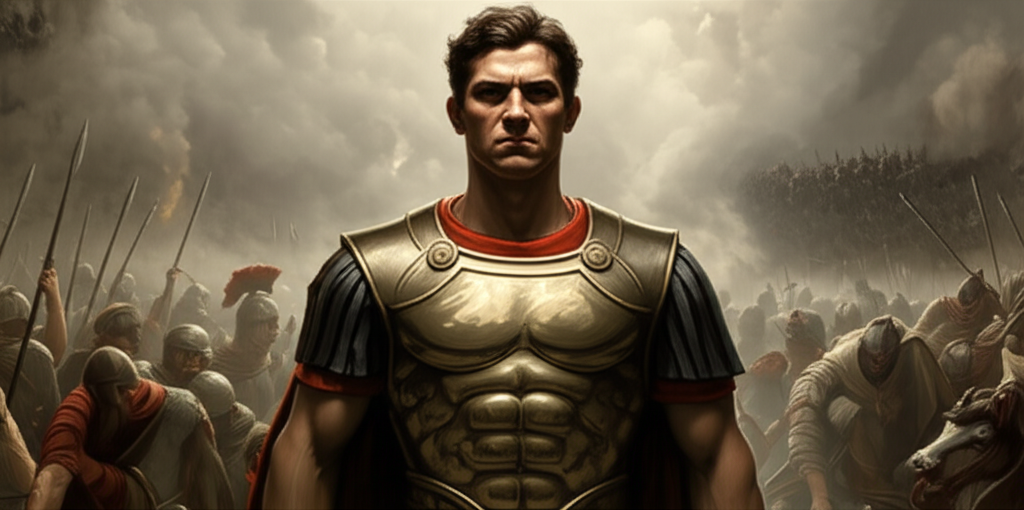
Dimensions of Battlefield Courage
Courage in battle manifests in various forms, each essential to the overall enterprise of war and peace:
- Physical Courage: The most readily recognized form, involving the willingness to face bodily harm, injury, or death. This is the courage to stand in the line of fire, to charge, or to endure physical suffering.
- Moral Courage: The strength to uphold one's principles, to speak truth to power, or to refuse unjust orders, even when facing severe consequences from one's own side. This often requires defying societal pressure or institutional authority.
- Intellectual Courage: The ability to think clearly, make sound judgments, and maintain strategic perspective amidst the chaos and stress of combat. It's the courage to adapt, to innovate, and to admit mistakes.
- Emotional Courage: The capacity to manage and process intense emotions like fear, grief, anger, and despair, preventing them from paralyzing action or leading to irrational behavior.
| Type of Courage | Description | Rooted In |
|---|---|---|
| Physical | Facing bodily danger, pain, and death | Instinct, discipline, commitment |
| Moral | Upholding principles, defying unjust authority | Conscience, ethical reasoning, integrity |
| Intellectual | Clear thinking, sound judgment under extreme pressure | Reason, training, adaptability |
| Emotional | Managing fear, grief, and stress without breaking | Resilience, self-awareness, psychological strength |
Historical and Philosophical Perspectives
From Homer's depiction of Achilles' wrath and Hector's noble defiance, to the Roman Stoics' emphasis on inner fortitude, the Great Books consistently explore the nature of courage. Augustine, in his City of God, might view true courage as a divine gift, a willingness to suffer for faith, aligning earthly battles with spiritual warfare. Machiavelli, in The Prince, though less concerned with virtue for its own sake, implicitly acknowledges the necessity of a leader's boldness and decisive action—a form of practical courage—to maintain power and stability in a world often defined by war and peace.
Ultimately, the essence of courage in battle is not a monolithic concept but a dynamic interplay of human faculties. It is a testament to the human capacity to transcend primal emotion, to choose virtue over vice, and to act with purpose even when faced with the ultimate test of existence. It reminds us that while war may bring out the worst in humanity, it also provides the starkest canvas for its most profound and admirable displays of the human spirit.
YouTube: "Plato Laches Courage Philosophy"
YouTube: "Aristotle Nicomachean Ethics Courage Virtue"
📹 Related Video: What is Philosophy?
Video by: The School of Life
💡 Want different videos? Search YouTube for: "The Essence of Courage in Battle philosophy"