

The Essence of Courage in Battle: A Philosophical Inquiry
The battlefield, with its chaos and ultimate stakes, has always served as a stark arena for examining the human spirit. At its heart lies the enigmatic quality we call courage. But what, precisely, is this virtue that compels individuals to face mortal danger? Is it merely the absence of fear, or something far more profound? This article delves into the philosophical underpinnings of courage in combat, drawing upon the wisdom of the Great Books of the Western World to illuminate its complex nature as an Emotion, a Virtue and Vice, and a cornerstone of human experience in times of War and Peace.
Defining Courage: More Than Just the Absence of Fear
To speak of courage in battle is to immediately conjure images of defiance, resilience, and unwavering resolve in the face of overwhelming odds. Yet, true courage is not the irrational rush of a madman, nor the cold detachment of a machine. Instead, it is a conscious, often agonizing, choice made amidst fear. It is the capacity to act rightly and nobly despite the powerful emotion of terror, prioritizing duty, honor, or the protection of others over self-preservation. This distinction is crucial, elevating courage from a mere biological impulse to a profound moral and intellectual endeavor.
Ancient Voices on Valor: From Homer to Aristotle
The classical world, steeped in conflict, offered fertile ground for philosophical contemplation on courage.
-
Homer's Heroes: In the Iliad, we witness the raw, often visceral, courage of Achilles, Hector, and Odysseus. Their valor is intertwined with the pursuit of kleos (glory) and the acceptance of a noble death. This is a courage born of heroic ethos, where individual prowess and fate are inextricably linked. It is often driven by powerful emotions like rage and pride, yet it also demands steadfastness.
-
Plato's Intellectual Courage: Plato, particularly in his dialogue Laches, grapples with the definition of courage. He questions whether it is simply endurance or a form of knowledge – the knowledge of what truly ought to be feared and what ought not. For Plato, true courage (ἀνδρεία, andreia) is not just about facing physical danger but about standing firm in one's convictions, even against popular opinion or the threat of social ostracism. It's an intellectual and moral fortitude that transcends the physical.
-
Aristotle's Golden Mean: Perhaps the most enduring analysis comes from Aristotle in his Nicomachean Ethics. He posits courage as a virtue that lies as a mean between two vices:
- Deficiency: Cowardice – an excessive fear, leading to inaction or flight.
- Excess: Rashness or Recklessness – a deficiency of fear, leading to foolish exposure to danger.
Aristotle clarifies that the truly courageous person faces danger for the sake of the noble (to kalon), not out of ignorance, passion, or compulsion. They feel fear, but they endure it rationally and for a worthy purpose.
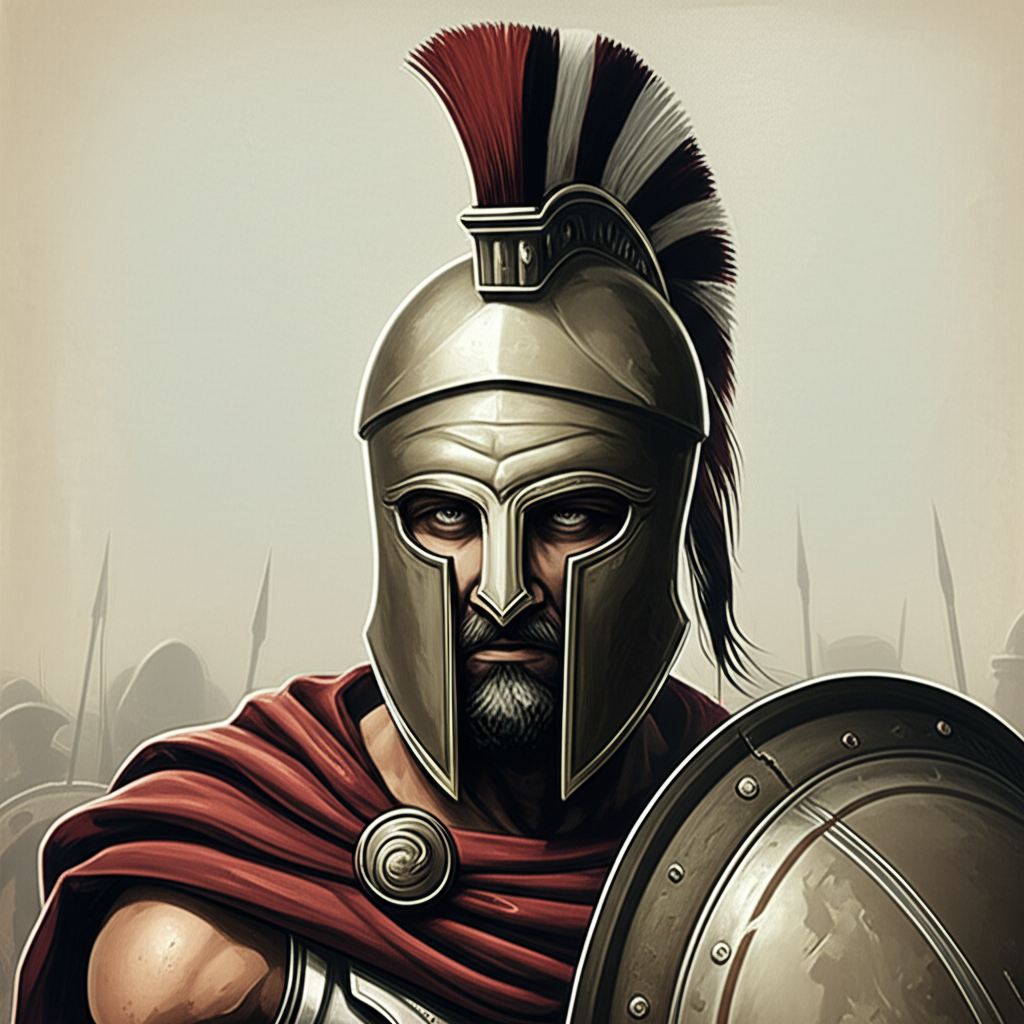
The Crucible of Emotion: Fear, Reason, and Resolve
Battle is a maelstrom of emotions: fear, anger, desperation, hope, and even a strange exhilaration. It is here that the true nature of courage is tested. Fear is a natural, often life-saving, response to danger. The courageous individual is not one who feels no fear, but one who acknowledges it, understands its source, and chooses to act despite it. This requires a profound exercise of reason and will. The soldier who charges forward, heart pounding, adrenaline surging, but with a clear objective and a commitment to their comrades, embodies this intricate dance between primal instinct and rational resolve. It is the triumph of the rational soul guiding the spirited and appetitive parts, as Plato might describe it.
Courage as a Cardinal Virtue: Navigating the Mean
As a cardinal virtue, courage is intrinsically linked to wisdom, temperance, and justice. Without courage, wisdom remains theoretical, temperance lacks conviction, and justice cannot be upheld in the face of opposition. The battlefield, then, becomes a practical laboratory for this ethical framework.
| Aspect of Courage | Description | Philosophical Link (Great Books) |
|---|---|---|
| Physical Courage | Facing bodily harm, pain, or death. | Homer (Achilles), Aristotle (facing noble death) |
| Moral Courage | Standing for one's beliefs, even under threat; resisting injustice. | Plato (Laches, Socrates' example), often transcends direct battle. |
| Intellectual Courage | Challenging conventional wisdom; pursuing truth despite unpopularity or difficulty. | Plato (Socrates), crucial for leaders to make difficult decisions. |
| The Golden Mean (Virtue) | The balanced state between cowardice (excessive fear) and rashness (insufficient fear or recklessness). | Aristotle (Nicomachean Ethics) |
| Vices | Cowardice: Retreating from necessary danger. Rashness: Seeking unnecessary danger. | Aristotle's clear delineation of the extremes that fail to embody true courage. |
Beyond the Spear: Courage in War and Peace
While often discussed in the context of armed conflict, the essence of courage extends far beyond the battlefield. The lessons learned about resilience, self-sacrifice, and moral fortitude in War and Peace apply to civilian life, to political leadership, and to personal challenges. The courage to speak truth to power, to endure hardship for a greater good, or to face a terminal illness with dignity, all echo the philosophical principles articulated by the ancients concerning courage in battle. It is the capacity to confront significant threats—physical, moral, or existential—with a steady heart and a clear purpose.
Reflecting on Enduring Valor
The essence of courage in battle, as elucidated by the great thinkers, is not a simple concept but a rich tapestry woven from emotion, reason, and ethical choice. It is a fundamental human virtue that allows individuals to transcend their natural fears and act in accordance with a higher purpose. In understanding this profound human capacity, we gain not only insight into the nature of conflict but also into the enduring strength and dignity of the human spirit, whether facing the enemy on a distant field or the quiet challenges of everyday life.
YouTube: "Plato Laches Courage Explained"
YouTube: "Aristotle Nicomachean Ethics Courage Virtue"
📹 Related Video: What is Philosophy?
Video by: The School of Life
💡 Want different videos? Search YouTube for: "The Essence of Courage in Battle philosophy"