

The Essence of Courage in Battle
Courage in battle is more than mere fearlessness; it is a profound philosophical virtue, a deliberate choice amidst overwhelming emotion, deeply explored in the Great Books of the Western World. This article unpacks courage not as an absence of fear, but as the rational mastery of it, distinguishing it from reckless bravado and examining its vital role in the grim crucible of War and Peace. We delve into its ancient definitions, its manifestation in the face of Emotion, and its enduring significance as a fundamental Virtue and Vice within the human experience of conflict.
The clang of steel, the roar of cannon, the silent terror of waiting – these are the visceral realities that strip away pretense and reveal the naked core of human character. In the crucible of combat, the concept of courage is not merely tested but forged, its meaning illuminated with stark clarity. But what, precisely, is this elusive quality that compels individuals to stand firm when every instinct screams for flight? For centuries, philosophers, poets, and historians, whose works form the bedrock of the Great Books of the Western World, have grappled with this profound question, seeking to understand the true essence of courage in its most extreme manifestation.
This article endeavors to dissect courage, moving beyond the superficial understanding of simple daring to explore its philosophical depth, its intricate relationship with emotion, and its enduring status as a paramount virtue and vice within the grand narrative of war and peace.
Defining Courage: Beyond Recklessness and Fearlessness
To speak of courage in battle is often to conjure images of unyielding resolve, of heroes charging into the fray. Yet, true philosophical courage is far more nuanced than mere bravado or the absence of fear. As Aristotle meticulously argued in his Nicomachean Ethics, courage is a mean between two extremes: the vice of rashness (excess of confidence) and the vice of cowardice (deficiency of confidence). The truly courageous person, according to Aristotle, experiences fear – indeed, it is the very presence of fear that makes courage possible – but acts rightly despite it, for the sake of the noble.
It is not the man who feels no fear who is courageous, but the man who, feeling fear, chooses to stand his ground for a worthy cause. This distinction is critical. Fear is a natural human emotion, a survival mechanism. To deny its presence in battle is to deny reality. The courageous individual acknowledges this primal emotion but does not allow it to dictate their actions.
Table 1: Courage and its Extremes (Aristotelian View)
| Quality | Description | Philosophical Standing |
|---|---|---|
| Rashness | Excess of confidence; acting without proper regard for danger. | Vice (Excess) |
| Courage | The mean; acting rightly despite fear, for a noble purpose. | Virtue (Mean) |
| Cowardice | Deficiency of confidence; yielding to fear excessively. | Vice (Deficiency) |
The Crucible of Conflict: Courage in War and Peace
The narratives of war and peace provide the most potent theatre for the examination of courage. From Homer’s depiction of Hector and Achilles in The Iliad, where personal honor and tribal loyalty drive men to incredible acts, to Thucydides’ dispassionate recounting of the Peloponnesian War, where strategic necessity and civic duty compel citizens to fight, the battlefield has always been the ultimate test.
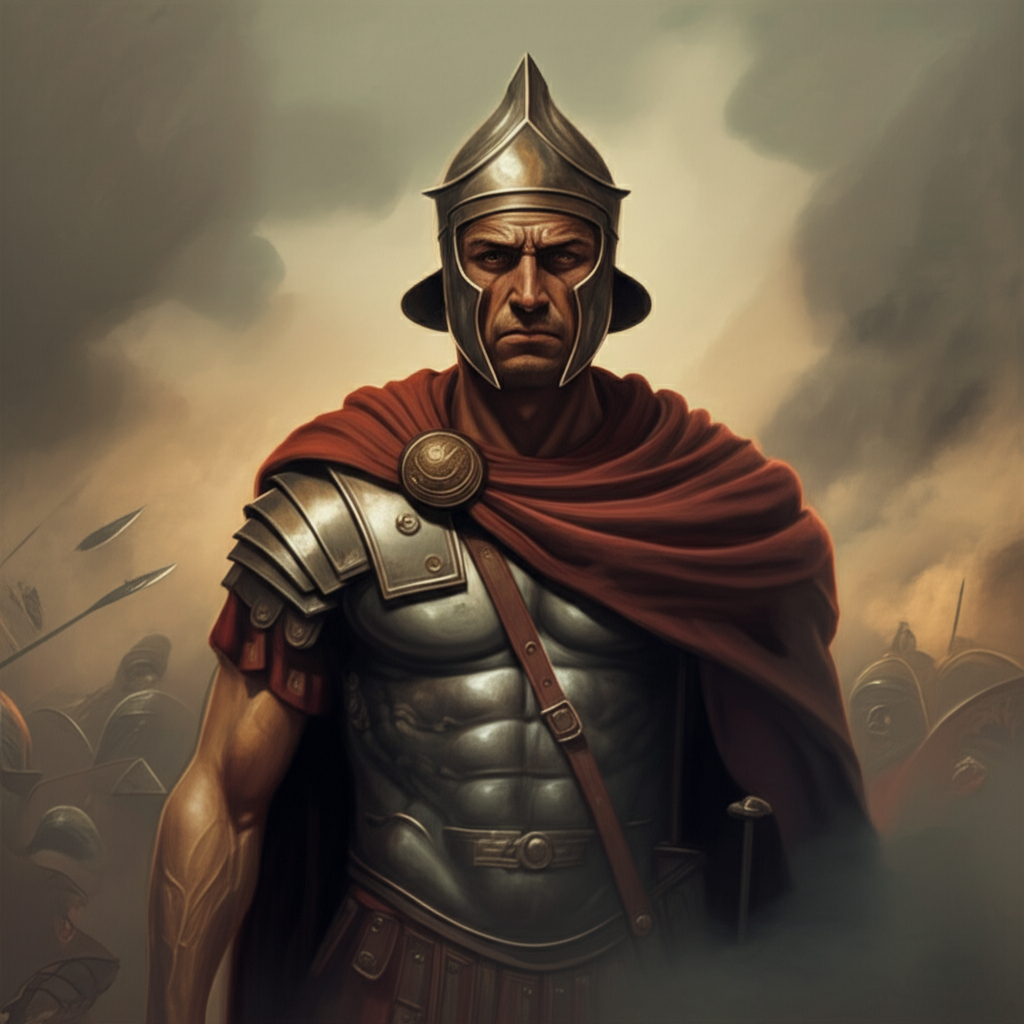
It is in these moments of profound crisis that the human spirit is laid bare. The choice to confront danger, to protect comrades, or to uphold a principle, even at the cost of one's life, transcends mere physical prowess. It is a deeply moral and intellectual act, a testament to the power of the human will over the most fundamental of instincts. Leo Tolstoy, in War and Peace, offers a sprawling panorama of human experience during conflict, demonstrating how courage manifests not only in grand, heroic gestures but also in the quiet endurance of ordinary soldiers, facing daily privation and the constant threat of death.
Courage as a Philosophical Virtue
Plato, in his dialogue Laches, directly grapples with the definition of courage (andreia). Socrates, through his relentless questioning, seeks to move beyond simplistic definitions like "standing firm in battle" to a deeper understanding. He suggests that true courage involves knowledge – the knowledge of what is truly to be feared and what is not. It is not merely a visceral reaction but an informed choice, a form of wisdom. A courageous person understands the true nature of danger and acts appropriately, rather than blindly.
This perspective elevates courage from a mere psychological trait to a profound virtue, integral to a well-lived life. It is intertwined with temperance, justice, and wisdom, forming a quartet of cardinal virtues that guide human conduct. Conversely, the vice of cowardice, the failure to act when action is required, represents a significant moral failing, undermining not only individual integrity but also the collective strength of a community.
The Inner Landscape of the Warrior: Emotion and Resolve
The internal struggle is perhaps the most defining aspect of courage in battle. It is here that emotion plays its most crucial role. Fear, terror, anxiety, and even despair are omnipresent companions on the battlefield. The truly courageous individual doesn't suppress these emotions entirely but rather acknowledges them and then, through sheer force of will and a commitment to higher principles, chooses to act despite them.
This internal mastery is what distinguishes the courageous soldier from the reckless one. The reckless individual might act due to ignorance of danger, a desire for glory, or even a lack of imagination regarding consequences. The courageous individual, however, makes a conscious, deliberate choice, often born of discipline, training, and a profound sense of duty or love for their fellow human beings. They confront their own mortality and choose purpose over preservation.
List of Elements Contributing to Battlefield Courage:
- Rational Deliberation: Understanding the risks and the purpose of action.
- Mastery of Emotion: Acknowledging fear but not being paralyzed by it.
- Commitment to Duty/Principle: Acting for a cause greater than oneself.
- Discipline and Training: Building the habits of resilience.
- Solidarity: Drawing strength from comrades and collective purpose.
Conclusion: The Enduring Significance
The essence of courage in battle, therefore, is not a simple phenomenon but a complex interplay of philosophical insight, emotional fortitude, and moral conviction. It is a profound virtue that shines brightest when confronted by the dire realities of war and peace. As illuminated by the enduring wisdom of the Great Books of the Western World, courage is the deliberate act of facing what is truly terrible, not out of foolishness, but out of a deep understanding of what is truly good and noble. It is the triumph of rational will over primal instinct, a testament to the remarkable capacity of the human spirit to transcend its own limitations in the face of ultimate peril.
This understanding of courage remains as vital today as it was in ancient Greece or on the Napoleonic battlefields. It reminds us that true strength lies not in the absence of fear, but in the unwavering decision to act rightly despite it.
YouTube Video Suggestions:
-
📹 Related Video: ARISTOTLE ON: The Nicomachean Ethics
Video by: The School of Life
💡 Want different videos? Search YouTube for: ""Aristotle Nicomachean Ethics Courage Explained""
-
📹 Related Video: PLATO ON: The Allegory of the Cave
Video by: The School of Life
💡 Want different videos? Search YouTube for: ""Plato Laches Courage Philosophy Discussion""