

The Unseen Hand: Exploring the Element of Force in Mechanics
Summary: The concept of force stands as a cornerstone not only of mechanics and physics but also of our philosophical understanding of the universe. Far from being a mere mathematical quantity, force represents a fundamental element that compels change, dictates motion, and underpins the very fabric of reality, prompting profound questions about causality, agency, and the nature of existence itself. This article delves into its historical evolution and enduring philosophical significance, drawing from the rich intellectual tradition of the Great Books of the Western World.
Introduction: The Invisible Architect of Change
From the subtle nudge that shifts a feather to the gravitational pull that binds galaxies, force is the ubiquitous orchestrator of change in the physical world. In the realm of mechanics, it is the primary actor, the invisible hand guiding every interaction. Yet, to confine force solely to its mathematical definitions—Newton's second law, for instance—is to overlook its profound elemental nature, its deep philosophical resonance that has captivated thinkers for millennia. This journey into the heart of force is not merely an exercise in physics; it is an exploration of how we perceive causality, understand agency, and interpret the very dynamism of being.
The Historical Arc of Force: From Impetus to Interaction
Our understanding of force has undergone a fascinating evolution, mirroring the broader shifts in scientific and philosophical thought documented in the Great Books of the Western World. The conceptualization of force has always been intertwined with how we explain motion and change.
- Aristotle's View: For Aristotle, motion required a continuous force or mover. A projectile, once thrown, continued its flight not due to an inherent momentum, but because the air disturbed by its passage continued to push it. This teleological perspective saw force as an external, often purposeful, agent.
- Medieval Impetus Theory: Scholars like John Philoponus and Jean Buridan began to challenge Aristotle, proposing the concept of impetus—an internal quality imparted to a moving body that sustained its motion even after the initial mover ceased contact. This was a crucial step towards modern inertia.
- Galileo Galilei's Insight: Galileo, through meticulous observation and experimentation, laid the groundwork for the principle of inertia, suggesting that a body in motion would remain in motion unless acted upon by an external force. This shift began to detach force from the necessity of continuous contact, moving towards a more abstract understanding.
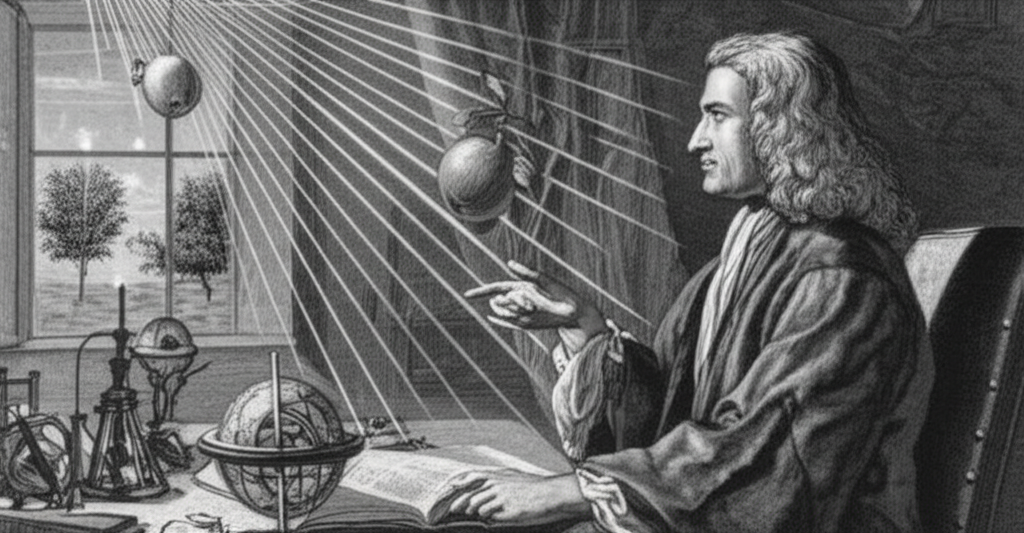
- Isaac Newton's Grand Synthesis: Newton codified the concept of force with unprecedented precision. His three laws of motion defined force as that which causes a change in motion (acceleration), linked it to mass, and established the principle of action-reaction. Gravitational force became the universal glue of the cosmos, a quantifiable interaction between all bodies, a profound revelation in physics.
This progression highlights a fundamental philosophical shift: from force as an inherent quality or a direct, continuous mover, to force as an interaction, a measurable influence that alters a state of motion.
Defining the Element of Force: Beyond F=ma
While physics provides precise mathematical tools to describe force (F = ma), the philosophical inquiry asks: What is force, fundamentally? Is it merely a description of an effect, or does it possess a deeper ontological status? As an element in mechanics, force is understood as:
- The Agent of Change: It is the direct cause of acceleration, the impetus behind every alteration in velocity or direction. Without force, the universe would be static or unchanging in its motion, a truly inert state.
- An Interaction: Newton's third law emphasizes that forces always occur in pairs, as interactions between two or more bodies. This highlights an interconnectedness, a constant dialogue between entities, making the universe a dynamic system.
- A Fundamental Quantity: Alongside mass, length, and time, force is a primary concept necessary to describe the physical world. It's not reducible to more basic elements within the framework of classical mechanics, making it a foundational building block.
- Perceptible Yet Intangible: We feel the effects of force (a push, a pull, gravity's embrace), but we cannot directly grasp force itself. It exists as an abstract yet profoundly real element shaping our experience, much like consciousness itself.
The Philosophical Resonance: Force, Causality, and Determinism
The profound implications of force extend far beyond the laboratory. The Newtonian conception of a universe governed by precise, quantifiable forces led to the rise of mechanical determinism. If all forces and initial conditions were known, the future state of the universe could, in theory, be predicted with absolute certainty. This worldview, deeply influential in Enlightenment thought, challenged notions of free will and divine intervention.
- Causality: Force is intrinsically linked to causality. It is the 'why' behind motion, the 'what' that makes things happen. Understanding force helps us to delineate cause and effect in the physical world, a crucial aspect of philosophical inquiry into the nature of reality.
- Agency: When we apply a force, we exert agency. This connection between physical force and human will raises questions about our place in a mechanically ordered universe. Are our actions merely the result of antecedent forces, or is there a genuine, non-physical element of choice that transcends physics?
- The Unseen: The very nature of force as an invisible yet powerful element encourages philosophical reflection on other unseen influences—ideas, beliefs, social structures—that shape our lives, reminding us that not all forces are physical.
Conclusion: The Enduring Mystery of Force
The element of force in mechanics is far more than a simple concept in physics. It is a lens through which we explore the very nature of existence, causality, and change. From the earliest philosophical ponderings to the sophisticated equations of modern science, force remains a fundamental, almost mystical, element that compels our intellectual curiosity. It reminds us that beneath the surface of observable phenomena lie profound principles that continue to challenge and inspire our understanding of the universe and our place within it, always inviting deeper philosophical reflection.
YouTube Video Suggestions:
-
📹 Related Video: What is Philosophy?
Video by: The School of Life
💡 Want different videos? Search YouTube for: ""History of Force Concept Philosophy Physics""
-
📹 Related Video: KANT ON: What is Enlightenment?
Video by: The School of Life
💡 Want different videos? Search YouTube for: ""Newton's Laws Philosophical Implications Determinism""