

The concept of infinity, though often relegated to the abstract realms of mathematics and metaphysics, profoundly shapes our understanding of the World we inhabit. From the boundless Space of the cosmos to the intricate philosophical dilemmas it presents, infinity is not merely an intellectual curiosity but a fundamental aspect of reality that has captivated thinkers for millennia. This article delves into how this elusive concept manifests within our World, drawing from the rich intellectual tradition of the Great Books of the Western World to explore its philosophical dimensions and practical implications.
The Elusive Nature of Infinity: A Philosophical Primer
The concept of infinity challenges the very limits of human comprehension, presenting a notion of endlessness that defies our finite experience. In philosophy, infinity is not just "very large" but truly without limit, without end, and without boundary. This distinction is crucial for understanding its presence in the World, both physically and metaphysically. Our journey into this concept begins with acknowledging its inherent paradox: how can the finite mind grasp the infinite? Yet, throughout history, philosophers have dared to try, pushing the boundaries of thought.
- Potential Infinity: A process that can be continued indefinitely, but never completed. Think of counting numbers – you can always add one more.
- Actual Infinity: A completed totality of an infinite number of things. This is far more contentious in philosophy, as it implies the existence of a truly endless set or magnitude.
Ancient Echoes: Aristotle and the Limits of the World
The Great Books of the Western World offer a foundational perspective on infinity, particularly through the works of Aristotle. In his Physics, Aristotle grappled extensively with the concept, distinguishing between potential and actual infinity. For Aristotle, actual infinity could not exist in the physical World. He argued that while a process could be infinitely divisible (potential infinity), there could not be an actually infinite number of parts existing simultaneously.
Aristotle's View on Infinity
| Aspect | Description | Example |
|---|---|---|
| Potential Infinity | A capacity for endless addition or division; never fully realized. | The number line extending indefinitely; dividing a line segment into smaller and smaller parts. |
| Actual Infinity | A completed, boundless totality; a state of having an infinite number of parts or elements simultaneously. | (Aristotle argued against its existence in the physical world) An infinite set of objects existing all at once. |
This distinction profoundly influenced Western thought, suggesting that while our World might present phenomena that tend towards the infinite, it never truly is infinite in a complete sense. This perspective framed the discussion of Space and time for centuries, asserting that while the universe might be vast, it was not actually infinite in extent.
Infinity in the Cosmos: Unbounded Space
The concept of infinity finds perhaps its most tangible manifestation in the vastness of the cosmos, particularly concerning Space. For centuries, the question of whether the universe is finite or infinite has been a cornerstone of cosmological and philosophical inquiry.
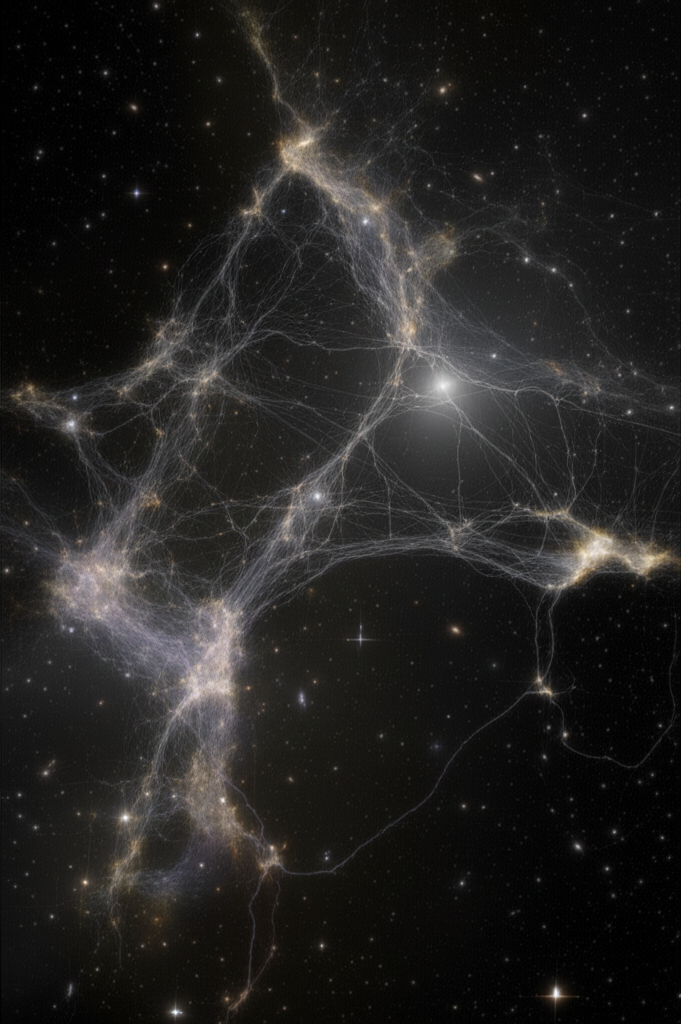
Modern cosmology, while still debating the ultimate fate and shape of the universe, often grapples with models that suggest an unbounded or even infinite Space. The idea that Space itself might be infinite, or at least expanding infinitely, forces us to confront the concept of infinity not just as an abstract idea, but as a potential characteristic of our physical World. This challenges Aristotelian notions and opens new philosophical questions: If Space is infinite, what does that imply about the nature of existence, causality, and our place within it?
The Philosophical Implications of the Infinite
Beyond the physical World, the concept of infinity permeates various philosophical domains, shaping our understanding of knowledge, ethics, and even the divine.
- Infinite Regress: This philosophical problem arises when a series of justifications, causes, or explanations goes on forever, without a first cause or ultimate ground. If every event requires a prior cause, and that cause requires another, and so on, we face an infinite regress. This often leads to arguments for a "first mover" or uncaused cause, as seen in the cosmological arguments of Aquinas, a central figure in the Great Books tradition.
- The Divine and Infinity: For many theological and metaphysical systems, God is often conceived as infinite – infinite in power, knowledge, and being. This attributes actual infinity to a supreme entity, providing a grounding for existence that transcends the limitations of the finite World.
- Human Understanding: The very act of contemplating infinity stretches the human mind, revealing the limits of our perception and the vastness of what lies beyond our immediate experience. It encourages humility and a perpetual quest for knowledge, acknowledging that there will always be more to understand about the World and its underlying principles.
The profound questions posed by infinity compel us to reconsider our assumptions about reality, pushing us to think beyond the immediate and the measurable. It is a concept that at once humbles us and elevates our philosophical inquiry.
Conclusion: Our Finite Grasp of the Infinite
The concept of infinity is not a mere theoretical construct; it is deeply woven into the fabric of the World we experience and the philosophical traditions that seek to understand it. From the ancient insights of Aristotle on potential infinity to modern cosmological debates about the boundless nature of Space, infinity challenges, inspires, and confounds us. It remains a testament to the enduring power of philosophical inquiry, reminding us that while our existence may be finite, our capacity for thought can reach for the infinite. The Great Books of the Western World serve as a timeless guide in this exploration, offering perspectives that continue to resonate as we strive to comprehend the ultimate nature of reality.
📹 Related Video: ARISTOTLE ON: The Nicomachean Ethics
Video by: The School of Life
💡 Want different videos? Search YouTube for: ""Philosophy of Infinity Aristotle""
📹 Related Video: KANT ON: What is Enlightenment?
Video by: The School of Life
💡 Want different videos? Search YouTube for: ""Is Space Infinite? Philosophical Implications""