

The Distinction Between Logic and Dialectic
Welcome, fellow travelers on the path of Philosophy! Today, we're diving into a fascinating and often misunderstood corner of philosophical inquiry: the precise distinction between logic and dialectic. While both are indispensable tools for sound reasoning and the pursuit of truth, they operate with different aims, methods, and scopes. In essence, logic provides the foundational rules for valid inference and consistent thought, ensuring our arguments hold together structurally, while dialectic is a dynamic method of inquiry, involving dialogue and critical examination, designed to explore ideas, expose contradictions, and arrive at deeper understanding through the clash of perspectives. Understanding this difference is crucial for anyone seeking to engage deeply with the Great Books of the Western World and the broader philosophical tradition.
Understanding Logic: The Architect of Sound Reasoning
At its core, logic is the systematic study of valid inference and correct reasoning. It's concerned with the structure of arguments, ensuring that if the premises are true, the conclusion must also be true. Think of it as the architect of thought, meticulously designing frameworks that guarantee structural integrity.
Historically, much of our understanding of formal logic stems from Aristotle, whose foundational work, compiled in the Organon, laid out the principles of syllogistic reasoning. For Aristotle, logic was not just a branch of Philosophy but a prerequisite for all inquiry—a tool (organon) for clear thinking.
Key Aspects of Logic:
- Focus on Validity: Logic primarily assesses the relationship between premises and conclusions, independent of the actual truth of the premises themselves (though sound arguments require true premises).
- Formal Structure: It deals with the forms of arguments, using symbols and rules to represent propositions and inferences.
- Principles of Consistency: Adherence to principles like the law of non-contradiction and the law of excluded middle is paramount.
- Truth Preservation: A valid logical argument guarantees that truth is preserved from premises to conclusion.
When we engage in logic, we are asking: Does this argument follow? Is it coherent? Are the steps of reasoning sound? It's about building an unshakeable intellectual edifice.
Exploring Dialectic: The Art of Philosophical Inquiry
In contrast, dialectic is a more dynamic and often interactive method of philosophical investigation. Rather than focusing solely on the formal validity of an argument, dialectic is concerned with the exploration of ideas, the resolution of contradictions, and the advancement of understanding through a process of argument and counter-argument.
The roots of dialectic can be traced back to ancient Greece, most famously with Socrates, whose method involved a series of questions and answers designed to expose inconsistencies in an interlocutor's beliefs and lead them to a deeper, more refined understanding. Plato's dialogues are prime examples of dialectic in action, where characters engage in rigorous debate to uncover the nature of justice, beauty, or truth. Later, philosophers like Hegel developed complex dialectical systems involving thesis, antithesis, and synthesis to explain the evolution of ideas and historical processes.
Key Aspects of Dialectic:
- Focus on Content and Concepts: Dialectic delves into the substance of ideas, critically examining their meanings, implications, and relationships.
- Interactive and Dynamic: It often involves dialogue, debate, and the consideration of multiple perspectives.
- Resolution of Contradictions: A primary aim is to identify and resolve internal inconsistencies or conflicts between ideas, leading to a more comprehensive understanding.
- Evolution of Understanding: Dialectic is a journey, not just an assessment. It seeks to refine, challenge, and develop knowledge.
When we engage in dialectic, we are asking: What do we truly mean by this? What are the hidden assumptions? How do these ideas relate to each other, and where do they conflict? How can we move beyond these conflicts to a higher truth?
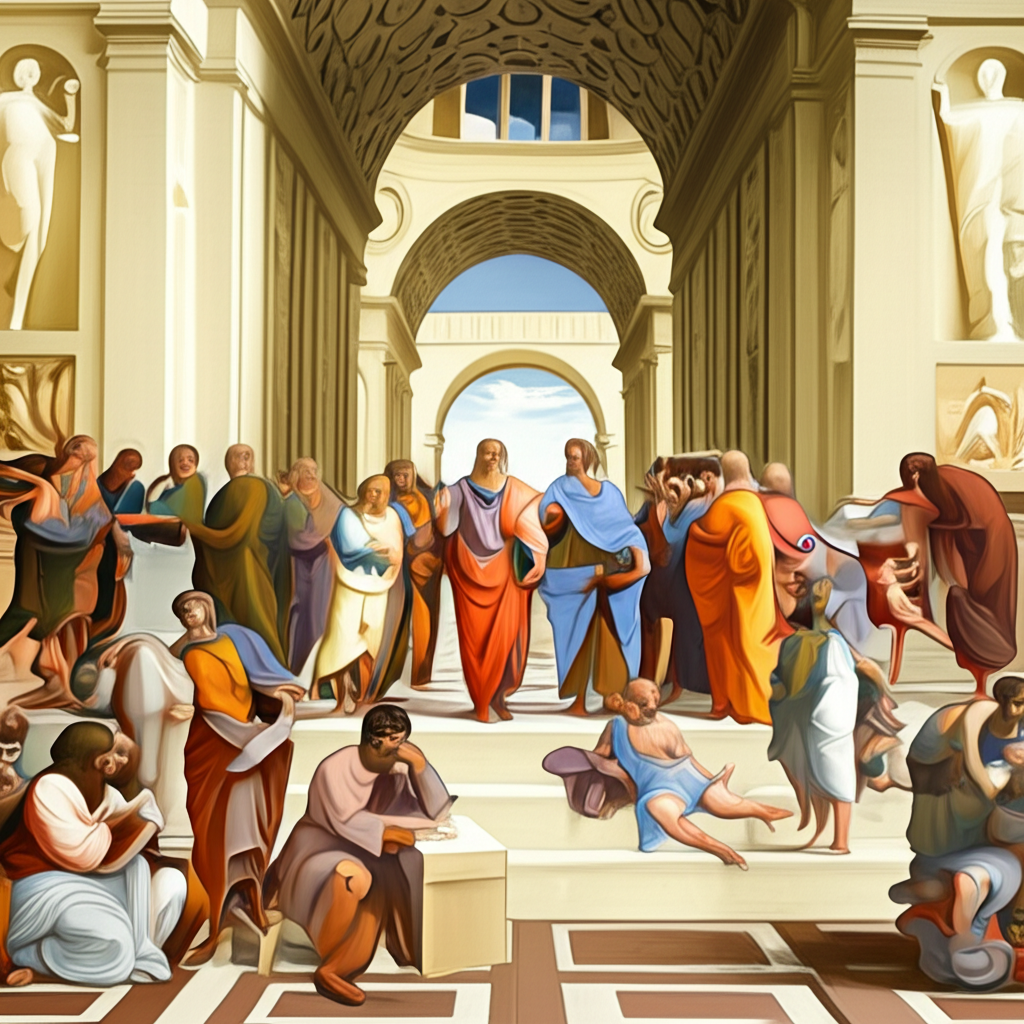
The Fundamental Differences: A Side-by-Side View
To crystallize the distinction, let's look at their core characteristics:
| Feature | Logic | Dialectic |
|---|---|---|
| Primary Goal | Validate arguments, preserve truth | Explore ideas, resolve contradictions, advance understanding |
| Method | Formal inference, systematic deduction/induction | Dialogue, debate, critical examination, synthesis |
| Focus | Form, structure, consistency of reasoning | Content, concepts, meaning, evolution of ideas |
| Nature | Analytical, foundational, often static | Synthetic, exploratory, dynamic |
| Scope | Rules for correct thinking | Method for philosophical inquiry and discovery |
| Concern | If premises are true, conclusion must be true | Are the premises true? What are their implications? |
Their Interplay in Philosophy: Complementary Paths to Wisdom
It's crucial to understand that logic and dialectic are not mutually exclusive; rather, they are deeply complementary, especially within Philosophy. Logic provides the indispensable tools for ensuring that the individual steps within a dialectical argument are sound. Without logical rigor, a dialectical exchange risks becoming a muddled debate rather than a genuine pursuit of truth.
Conversely, dialectic often sets the stage for logic. It's through dialectical inquiry that we challenge our premises, uncover hidden assumptions, and refine our definitions—all of which are essential before we can even begin to apply logic to construct sound arguments. A dialectical process might reveal a contradiction that logic then helps us to precisely articulate and resolve.
For instance, a Socratic dialogue (a form of dialectic) might lead to the realization that a commonly held belief is logically inconsistent. At that point, logic steps in to analyze why it's inconsistent and how to construct a more coherent argument. Both are vital for effective reasoning and the enduring quest for wisdom that defines Philosophy.
📹 Related Video: PLATO ON: The Allegory of the Cave
Video by: The School of Life
💡 Want different videos? Search YouTube for: ""Aristotle Logic Introduction" and "Plato Socratic Method Explained""
In conclusion, while logic serves as the bedrock of valid reasoning, ensuring our intellectual structures are sound, dialectic acts as the engine of philosophical progress, driving us to question, explore, and ultimately deepen our understanding. Together, they form a powerful intellectual toolkit, allowing us to not only think correctly but also to think meaningfully and creatively about the profound questions that shape our world.