

The Intricate Dance of Existence: Unpacking Quality and Relation
Philosophical inquiry often begins with the seemingly simple, yet profoundly complex, task of defining the fundamental building blocks of reality and thought. Among these foundational concepts, Quality and Relation stand as pillars, shaping not only our understanding of individual things but also how those things interact within the grand tapestry of existence. This pillar page delves into the crucial distinction between these two concepts, exploring their historical roots, their implications for logic and metaphysics, and why grasping their difference is essential for any serious philosophical pursuit.
The Essence of Being: A Summary of Quality vs. Relation
At its heart, the difference between Quality and Relation lies in whether a characteristic is intrinsic to a thing or extrinsic, defining how it stands in respect to something else. A quality describes what a thing is in itself—its inherent nature, its properties, its attributes. Think of the blueness of the sky or the sweetness of honey. A relation, on the other hand, describes how one thing stands to another—its connection, its comparison, its interaction. Consider "taller than," "father of," or "to the left of." While qualities define individual entities, relations weave them into a coherent whole. Understanding this distinction is not merely an academic exercise; it's a fundamental step in clarifying our definitions of reality and the logic we use to navigate it.
What is Quality? Defining the Intrinsic Nature
When we speak of Quality, we are probing the very fabric of a thing's being. It's about what makes a thing what it is, independently of anything else.
The Philosophical Definition of Quality
In philosophy, particularly stemming from Aristotle's Categories, Quality is one of the ten fundamental ways in which being can be predicated. It refers to the inherent characteristics, properties, or attributes that belong to an individual substance. These are features that define the kind of thing it is or its particular modifications.
- Intrinsic Properties: Qualities are often considered intrinsic—they reside within the object itself. They are not dependent on another object for their existence.
- Attributes and Characteristics: They tell us how a thing is. Is it hot or cold? Large or small? Virtuous or vicious?
- Examples:
- The redness of an apple.
- The sharpness of a knife.
- The intelligence of a person.
- The courage of a warrior.
Quality in the Great Books Tradition
From Plato's Forms, which posited ideal qualities like "Beauty Itself" or "Justice Itself," to Aristotle's meticulous categorization, the concept of quality has been central. Thinkers in the Great Books of the Western World consistently grapple with how qualities are perceived, whether they are objective or subjective, and how they contribute to the identity of a thing. Locke, for instance, distinguishes between primary qualities (inherent, like extension) and secondary qualities (perceived, like color), furthering the debate on what truly belongs to an object.
What is Relation? Unpacking the Extrinsic Connection
If quality tells us what a thing is, Relation tells us how a thing stands to another. It's about the connections, comparisons, and interactions that bind entities together.
The Philosophical Definition of Relation
Relation is another of Aristotle's Categories, denoting how one substance or attribute stands in reference to another. Unlike qualities, relations are inherently dyadic or polyadic; they require at least two terms to exist. A relation describes an external connection, a comparison, or an interaction between distinct entities.
- Extrinsic Connections: Relations are extrinsic—they exist between objects, not solely within one. They describe a state of affairs involving multiple entities.
- Comparisons and Interactions: They tell us how a thing is situated with respect to others. Is it bigger than? Next to? Caused by?
- Examples:
- Taller than (requires two objects to compare height).
- Father of (requires a father and a child).
- To the left of (requires an object and a reference point).
- Cause and effect (requires an action and a consequence).
Relation in Philosophical Discourse
The study of relations has profound implications for logic, metaphysics, and even ethics. Leibniz's monads, for instance, are often seen as having no external relations in the traditional sense, only internal perceptions that mirror the universe. Hume's analysis of causation as a constant conjunction, rather than a necessary relation, fundamentally challenged our understanding of how things are connected. These historical debates, documented extensively in the Great Books, underscore the complexity of defining and understanding relational existence.
The Crucial Distinction: Quality vs. Relation
The distinction between quality and relation, while seemingly straightforward, underpins much of our philosophical reasoning and how we construct our understanding of the world.
Intrinsic vs. Extrinsic: The Core Divide
The most fundamental difference is one of inherence:
- Quality: Inherent to a single entity. It's a property of the thing itself.
- Relation: External to single entities, existing between two or more. It's a property of a pair or group of things.
Consider a red ball. Its redness is a quality. If it's next to a blue box, "next to" is a relation. The ball can be red whether or not it's next to anything, but it cannot be "next to" without another object to be next to.
Impact on Logic and Metaphysics
This distinction is vital for clear philosophical logic. Confusing a quality with a relation can lead to significant errors in reasoning about existence and causality.
- Logic: When we make a statement like "Socrates is wise," "wise" is a quality predicated of Socrates. When we say "Socrates is the teacher of Plato," "teacher of" is a relation between Socrates and Plato. The logical structure of these statements differs, impacting how we analyze truth and inference.
- Metaphysics: How we conceive of qualities and relations shapes our understanding of the fundamental nature of reality. Do relations ultimately reduce to qualities (e.g., "A is taller than B" means A has the quality of 'being-taller-than-B')? Or are relations irreducible constituents of reality? This debate has occupied philosophers for centuries.
A Comparative Look: Quality vs. Relation
To further clarify, let's delineate their characteristics:
| Feature | Quality | Relation |
|---|---|---|
| Nature | Intrinsic, inherent, internal | Extrinsic, external, connecting |
| Dependence | Independent of other entities | Dependent on at least two entities |
| Description | What a thing is or has | How a thing stands to or interacts with others |
| Singularity | Can be predicated of a single subject | Requires multiple subjects (at least two) |
| Examples | Red, heavy, intelligent, virtuous, square | Taller than, friend of, cause of, next to, similar to |
The Nuance and Complexity: When the Lines Blur
While the distinction is critical, philosophy thrives on challenging clear-cut categories. Are there instances where qualities seem relational, or relations seem qualitative?
Relational Qualities?
Consider the "quality" of being a leader. Does this reside purely within an individual, or does it inherently imply a relation to followers? Similarly, being beautiful often implies a relation to an observer or a standard. These examples suggest that some qualities, while attributed to an individual, are deeply intertwined with their interactions or comparisons with others.
Qualitative Relations?
Conversely, is the quality of a relationship—say, a loving or hostile one—itself a kind of relation? The "love" between two people is a relation, but the depth or intensity of that love might be described as a quality of that relation. This highlights how complex phenomena often involve both aspects simultaneously.
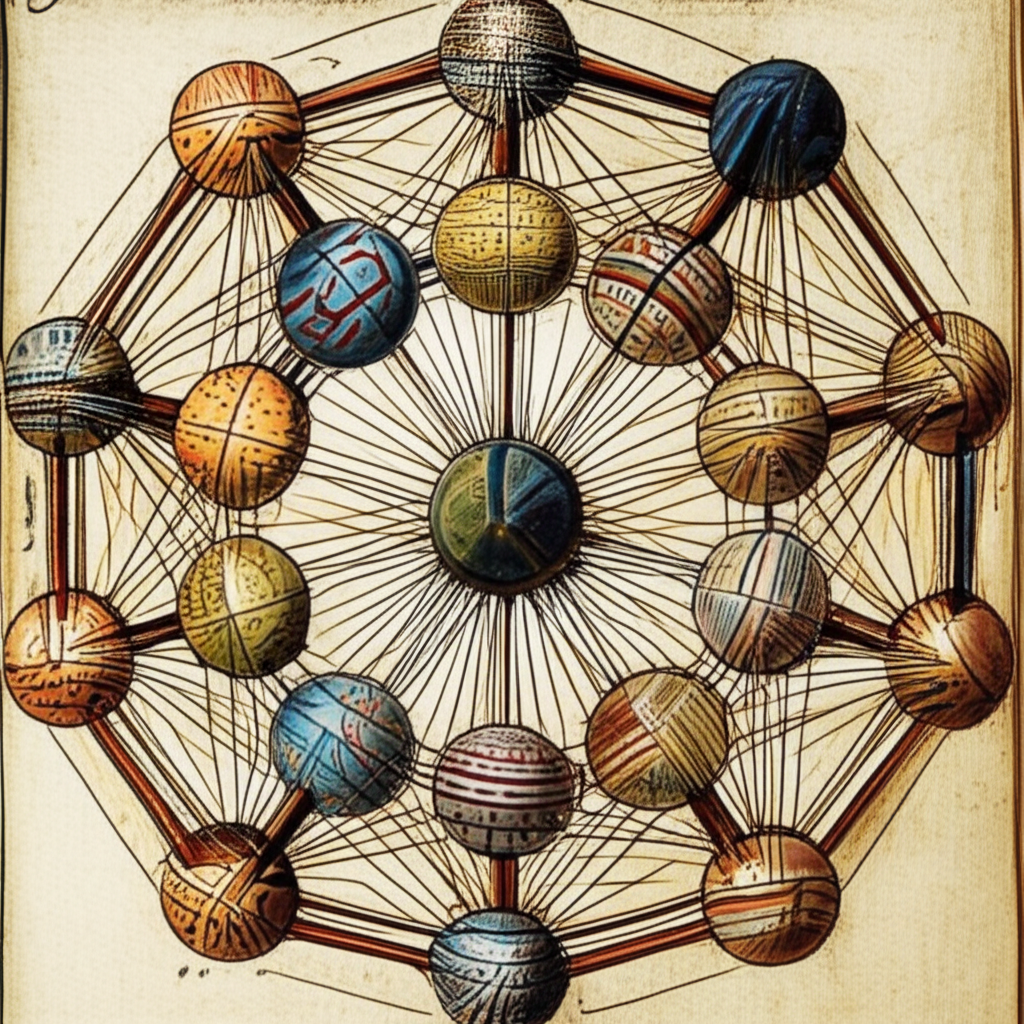
Why This Distinction Matters: Shaping Our Worldview
Grasping the difference between quality and relation is not just an academic exercise for parsing ancient texts; it profoundly impacts how we understand reality, construct arguments, and even navigate our daily lives.
For Logic and Clear Thinking
Without this distinction, our logic falters. If we confuse "being tall" (a quality) with "being taller than" (a relation), we can make erroneous inferences. Clear definitions are the bedrock of sound reasoning. This philosophical precision, honed by centuries of thought in the Great Books, empowers us to analyze arguments, identify fallacies, and articulate our own ideas with greater clarity.
For Metaphysics and the Nature of Reality
The debate over whether relations are "real" entities or merely mental constructs continues to shape metaphysical inquiry. If relations are fundamental, then reality is inherently interconnected. If they are reducible to qualities, then our understanding of individual substances takes precedence. This distinction helps us categorize and understand the fundamental furniture of the universe.
For Science and Understanding Phenomena
In scientific inquiry, carefully distinguishing between the inherent properties of a system (qualities) and how it interacts with its environment or other systems (relations) is paramount. From physics to biology, this conceptual clarity allows for precise measurement, experimentation, and the formulation of robust theories.
Conclusion: The Enduring Significance of Quality and Relation
The philosophical journey through Quality and Relation reveals them not as mere abstract terms, but as essential tools for dissecting and understanding the world. From the inherent qualities that define an individual entity to the intricate relations that bind it to everything else, these concepts are fundamental to our definitions of existence. The insights gleaned from the Great Books of the Western World, from Aristotle's initial categorizations to modern philosophical debates, underscore their enduring importance. By appreciating this distinction, we sharpen our logic, deepen our metaphysical insights, and ultimately gain a richer, more nuanced perspective on the complex dance of being.
Further Exploration:
📹 Related Video: ARISTOTLE ON: The Nicomachean Ethics
Video by: The School of Life
💡 Want different videos? Search YouTube for: "Aristotle's Categories Explained - Philosophy Core Concepts"
📹 Related Video: PLATO ON: The Allegory of the Cave
Video by: The School of Life
💡 Want different videos? Search YouTube for: "The Problem of Universals - Quality and Relation in Metaphysics"