

The Unfolding Path to Truth: Exploring the Dialectic Method of Philosophical Inquiry
The dialectic method stands as a cornerstone of philosophical inquiry, a dynamic and rigorous process of reasoning through dialogue and critical examination to arrive at deeper understanding and knowledge. Far from a mere debate, it is a structured intellectual journey, engaging opposing viewpoints or ideas to reveal their inherent contradictions, leading to a more comprehensive and refined truth. This article delves into the essence of the dialectic, tracing its historical evolution and underscoring its indispensable role in the pursuit of philosophy.
Unpacking the Essence of Dialectic
At its heart, the dialectic is a method of argumentation for resolving disagreement, or for discovering truth, through rational discussion. It involves the presentation of a thesis, followed by an antithesis (a counter-argument or opposing idea), which through critical reasoning and synthesis, leads to a new, more advanced understanding. This process isn't about winning an argument but about the collaborative or internal pursuit of clarity and knowledge.
Historical Roots: Shaping Philosophical Thought
The dialectic has a rich and varied history, evolving significantly across different philosophical epochs, as richly documented in the Great Books of the Western World.
Socrates and the Elenctic Method
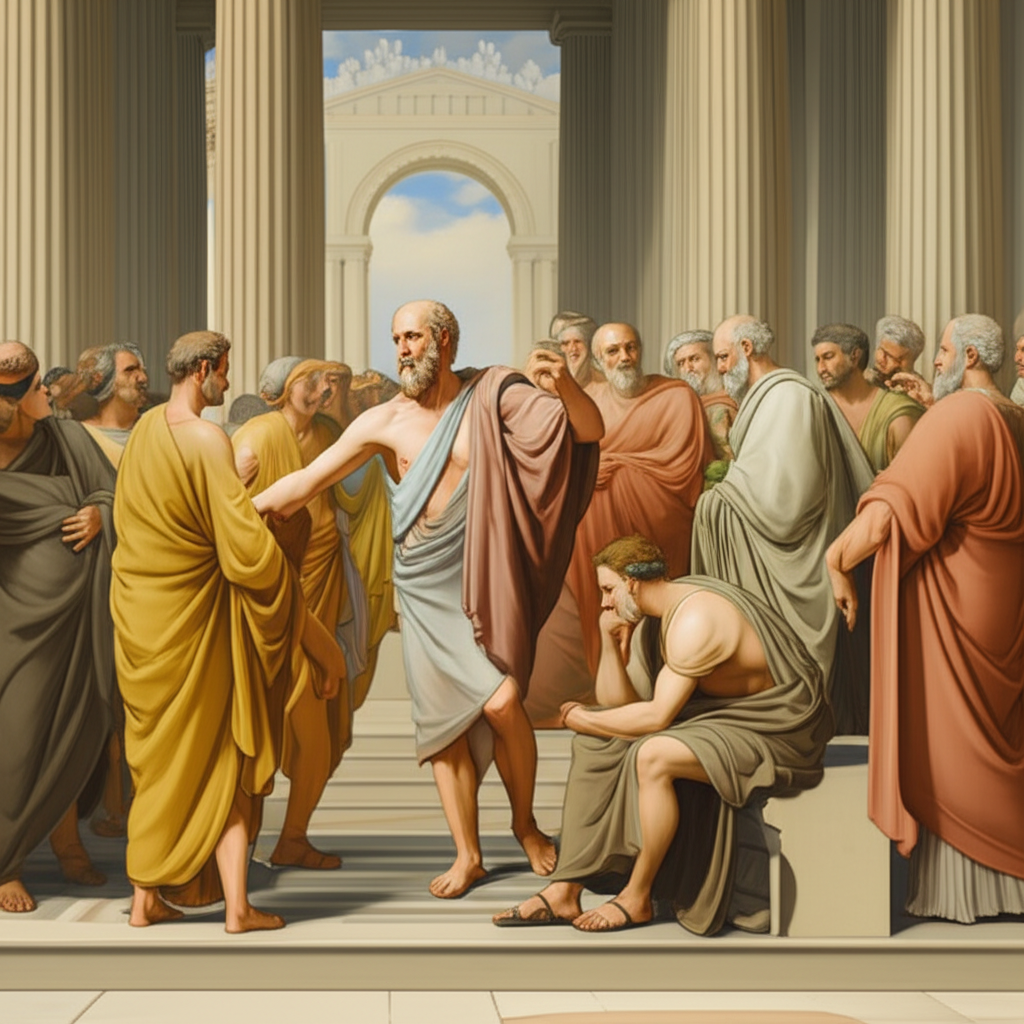
The foundational figure, Socrates, famously employed the elenchus – a method of cross-examination – to expose inconsistencies in his interlocutors' beliefs. Through a series of questions, he would challenge assumptions, revealing ignorance and paving the way for genuine inquiry. This Socratic dialectic was less about imparting knowledge and more about demonstrating the limits of existing knowledge, thus igniting the desire for true understanding.
Plato's Ascent to the Forms
Plato, Socrates' most famous student, elevated the dialectic to the highest form of intellectual activity, essential for ascending from mere opinion to true knowledge of the Forms. For Plato, the dialectic was the philosophical method by which one could grasp the eternal and unchanging essences of reality. It was a rigorous intellectual training, moving beyond sensory perception to pure thought and reasoning.
Aristotle's Logical Framework
While Aristotle systematized logic, he also recognized the importance of dialectic for certain kinds of inquiry, especially in areas where perfect demonstration was not possible, such as ethics or politics. For Aristotle, dialectic was a method of probable reasoning, working with generally accepted opinions (endoxa) to arrive at plausible conclusions, serving as a valuable preparatory step for scientific or demonstrative knowledge.
Hegel's Dynamic Triad: Thesis, Antithesis, Synthesis
In modern philosophy, Georg Wilhelm Friedrich Hegel profoundly reinterpreted the dialectic. For Hegel, it was not merely a method of argument but the very movement of thought and reality itself. Ideas (thesis) generate their own opposition (antithesis), and through a dynamic process of conflict and resolution, they give rise to a higher, more comprehensive idea (synthesis). This Hegelian dialectic describes the historical unfolding of spirit and the development of knowledge.
The Process of Dialectical Inquiry
Engaging in the dialectic requires a commitment to rigorous intellectual discipline. While its specific application varies, the general steps often include:
- Articulation of a Thesis: Presenting an initial idea, belief, or proposition.
- Introduction of an Antithesis: Presenting a counter-argument, an opposing viewpoint, or identifying internal contradictions within the thesis.
- Critical Examination and Reasoning: Thoroughly analyzing both the thesis and antithesis, scrutinizing their premises, implications, and logical coherence. This often involves:
- Questioning assumptions.
- Identifying ambiguities in language.
- Exploring different perspectives.
- Synthesis: Arriving at a new, more nuanced, and comprehensive understanding that incorporates insights from both the thesis and antithesis, resolving or transcending their initial conflict. This synthesis then often becomes a new thesis, restarting the dialectic at a higher level of knowledge.
Why the Dialectic Matters for Knowledge and Philosophy
The enduring relevance of the dialectic lies in its capacity to foster genuine intellectual growth and the advancement of knowledge.
- Combats Dogmatism: By constantly challenging assumptions and seeking out opposing viewpoints, the dialectic prevents intellectual stagnation and dogmatic adherence to unchallenged beliefs.
- Deepens Understanding: It forces thinkers to examine concepts from multiple angles, leading to a richer, more comprehensive grasp of complex issues.
- Refines Reasoning Skills: Participation in dialectical exchange hones critical thinking, logical analysis, and the ability to construct coherent arguments.
- Drives Philosophical Progress: The iterative nature of the dialectic allows philosophy to evolve, building upon previous ideas and continuously refining its pursuit of truth. It is the engine of philosophical development, pushing the boundaries of human knowledge.
Conclusion: An Enduring Legacy
From the bustling agora of ancient Athens to the intricate conceptual systems of modern German philosophy, the dialectic has proven itself an indispensable tool for unlocking deeper knowledge. It is more than a method; it is a mindset, an intellectual posture that embraces questioning, contradiction, and the ongoing pursuit of clarity through rigorous reasoning. For those committed to the life of the mind, the dialectic remains the illuminated path to genuine philosophical insight.
📹 Related Video: SOCRATES ON: The Unexamined Life
Video by: The School of Life
💡 Want different videos? Search YouTube for: ""Socratic Method Explained" and "Hegel's Dialectic Simplified""